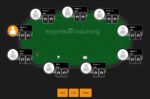


When you sit down at a physical casino, you look for sweaty palms, nervous chatter, or shaking hands. But what happens when your opponent is just an anonymous avatar on a screen? In the realm of the digital felt, reading poker opponents requires a completely different skillset. Mastering the art of spotting online poker tells is a cornerstone of a profitable poker strategy. It empowers you to observe and understand your opponents' behavior through data, timing, and betting patterns, while strategically managing your own actions to avoid divulging information.

Understanding the Most Common Online Poker Tells?
Traditional poker tells are non-verbal signals or physical actions driven by uncertainty, insecurity, or emotions like anxiety. The dynamics change entirely when playing online. Traditional visual or auditory cues become obsolete, which may initially feel disconcerting for live players. However, embracing the intricacies of virtual poker opens up entirely new opportunities. Instead of reading body language, you must learn to read pixels, algorithms, and digital habits.
Mastering Poker Timing Tells
In online poker, each room imposes a fixed time limit for players to make decisions. This makes poker timing tells incredibly valuable for astute observers:
- The “Pre-Action” Insta-Check: An instantaneous check the fraction of a second the action reaches a player is a massive tell. It almost always indicates they have pre-selected the “auto-check/fold” box because they completely missed the flop and have zero interest in the hand.
- Rapid Calls: A very quick call often signals a mediocre hand, like a middle pair or a drawing hand, as it reflects minimal contemplation of raising or folding.
- Fake Tanking: While a deliberate, long pause from a novice can indicate they are excitedly staring at a monster hand, beware of “fake tanking”. Experienced multi-tablers often wait a few seconds before making even the easiest decisions simply to balance their timing and confuse opponents.
Decoding Poker Bet Sizing
Poker bet sizing emerges as one of the most prevalent and significant indicators of hand strength. Experienced players balance their bets across a range of hand strengths, while novices often exhibit tendencies that exploitably reveal their cards:
- The Post-Flop Min-Raise: A classic amateur tell is the minimum raise post-flop. This usually indicates a player who holds a marginal hand and is afraid to commit real chips, but wants to “see where they stand” to gather information. This makes them a prime target for an aggressive re-raise.
- The 1BB Donk Bet: Leading out into the pre-flop aggressor with a minimum 1 big blind bet is a classic amateur move. This “donk bet” acts as a defensive blocking mechanism. Recreational players typically do this with weak 2nd or 3rd pairs or marginal draws, hoping to see the turn card cheaply without facing a large continuation bet.
- The 1BB Exception: Modern poker theory requires nuance. While an arbitrary minimum bet from a recreational player is a sign of weakness, be aware that in Heads-Up matches or highly optimized solver strategies, a tiny 1bb continuation bet (c-bet) is actually a standard mathematical play on certain dry board textures.
- Overbetting as a Bluff: Players who consistently bet massive amounts as bluffs but use small sizing for value risk having their entire strategy exposed.

Buying-In Patterns as Online Poker Tells
Another revealing tell involves the size of a player's stack and their use of the auto-rebuy feature. Skilled grinders typically buy-in for the maximum amount (usually 100 big blinds) and have the auto-top-up feature enabled to ensure they can always extract maximum value when they hit a big hand. In contrast, less experienced players may opt for random buy-in amounts (like $38.50 at a $50 table) and fail to top up after losing a pot, signaling a recreational player on a limited bankroll.
The Chat Box: Silence Speaks Volumes
The chat box can serve as a subtle psychological tell. Professional players generally keep their chat turned off entirely to maintain unshakeable focus. However, if a recreational player who usually engages in constant banter suddenly falls completely silent, they are often hyper-focused on a very strong hand. Conversely, a player becoming overly hostile or talkative in the chat box while pushing all-in could be attempting to project false confidence to force a fold.
From Passive Play to Poker HUD Stats
Identifying an amateur player online goes beyond single actions; it is about recognizing overarching tendencies. Players who frequently call preflop but fold to any post-flop aggression exhibit a highly exploitable passive style.
Today, you do not have to rely solely on your memory to spot these tendencies. Using poker HUD stats (Heads-Up Displays) is the ultimate method for reading opponents online. A HUD instantly reveals numerical data on your opponents' tendencies. By analyzing metrics like VPIP (Voluntarily Put Money In Pot) and PFR (Pre-Flop Raise), you can instantly spot a passive calling station or an overly aggressive maniac, replacing the need for physical tells with cold, hard data.
While you may not be able to look your opponent in the eye, the virtual felt is overflowing with information. By paying close attention to timings, sizings, and software statistics, you can master online poker tells and gain a definitive edge at the tables.
FAQ About Online Poker Tells