

Televised poker has evolved significantly over the years, but most modern poker broadcasts still rely on familiar elements: high-stakes action, expert commentary, and hole-card graphics. Deepstack Poker is an upcoming high-stakes cash game show that aims to take the viewing experience further by combining cinematic production, a new poker format, and AI-powered heart rate monitoring.
Created by Elton Tsang and Jelle Moene, Deepstack will feature some of the biggest names in poker playing deep-stacked cash games with an added twist: the BLUVV Game. Its most distinctive innovation, however, may be the ability to display players' heart rates during crucial hands, giving viewers another way to follow the tension at the table.
In this article, we'll explore what makes Deepstack Poker different, how its heart rate monitoring technology works, and what these innovations could mean for the future of televised poker.
What Is Deepstack Poker?
Deepstack is a new episodic cash game poker show set to debut later in 2026. Created by high-stakes poker player Elton Tsang and Managing Director Jelle Moene, the show aims to present high-stakes cash games in a different format from traditional poker streams and broadcasts.
Unlike many televised poker events that focus on tournaments, Deepstack will be built entirely around cash games played deep-stacked. The show will also use the BLUVV Game, a variation of the Squid Game format designed to create more action, wider ranges, and more frequent bluffing at the table.
Deep-Stack Cash Games
One of the defining features of Deepstack Poker is the depth of the cash games. The show is built around players competing with much deeper stacks than viewers would typically see in a tournament, with the format capable of reaching stacks of 1,000 big blinds or more.
Deep stacks can create very different strategic situations from those found in tournament poker. With more chips behind, players have greater room to make decisions across multiple streets, which can lead to larger pots, more complex postflop situations, and increased opportunities for creative play.
This focus on deep-stacked cash games is also central to the show's entertainment concept. Rather than relying on tournament progression and changing stack sizes, Deepstack can build its episodes around the dynamics of a high-stakes cash game and the personalities sitting at the table.
The BLUVV Game
Deepstack will use the BLUVV Game, a poker variant created by Elton Tsang and Jelle Moene. The format incorporates a Squid Game-inspired token system designed to encourage players to compete for pots and create additional action.
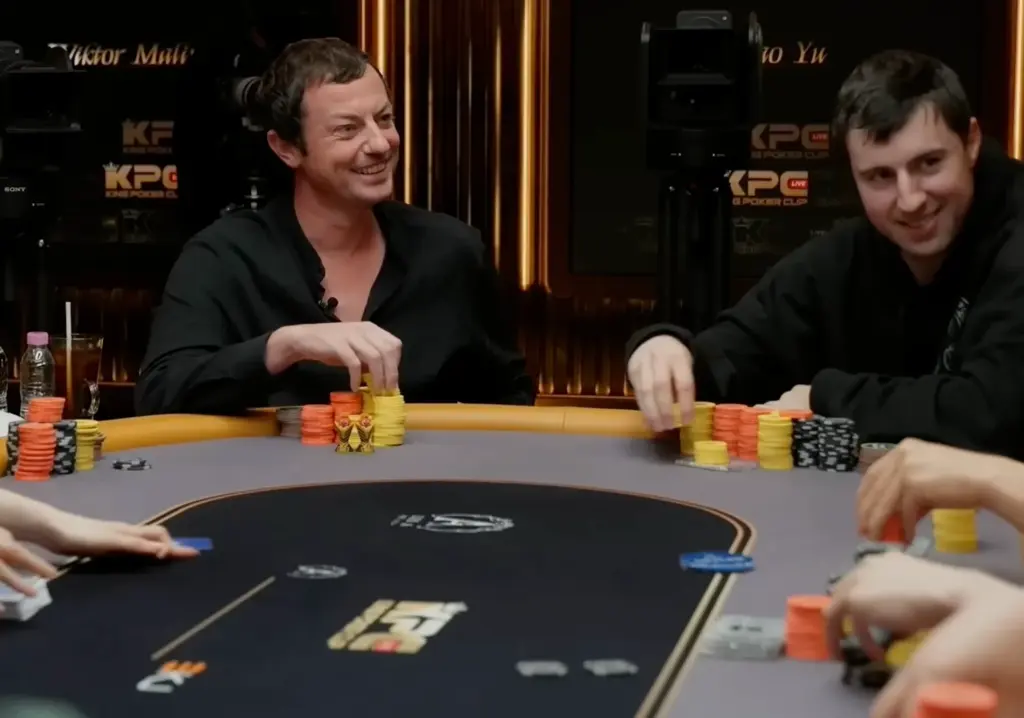
Players can earn Squid tokens by winning pots, while players who fail to win pots can face penalties. Multiple tokens can also create multipliers, adding another layer to the incentives at the table. According to the show's creators, these mechanics are intended to encourage wider play, more bluffing, and more aggressive action.
This means viewers are not simply watching a standard cash game with different production. The game itself has been designed with entertainment in mind, giving the show another way to create action and distinguish itself from traditional televised poker.
A More Cinematic Production
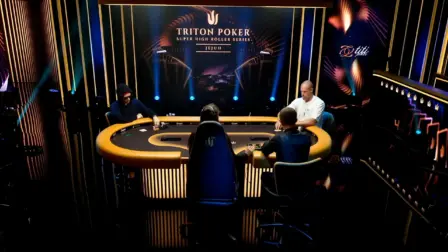
Deepstack is also taking a different approach to production. The show is being produced as an edited episodic program rather than a conventional live poker stream, with three camera crews, dedicated production and technology teams, and additional graphics and on-screen elements.
The production team has described the format as closer to the storytelling approach used in modern sports documentaries, with the goal of making individual hands and players more engaging for viewers who may not already be dedicated poker fans. The episodes can also be supported by shorter pieces of content built around the same footage.
This production approach sets up one of the most unusual parts of Deepstack: using technology to give viewers information they normally cannot see at a poker table.
How Does Deepstack Poker Heart Rate Monitoring Work?
One of the most unusual features of Deepstack is its heart rate monitoring technology. The system uses remote photoplethysmography (rPPG), a method that can estimate heart rate from video without requiring a smartwatch, chest strap, or other wearable device. The technology was developed by Deepvision, Deepstack's sister technology company.
The system works by using a camera to focus on a player's face and analyze subtle changes in the skin that occur as blood flows through the body. From these changes, the software can estimate the player's pulse and display the heart rate on screen alongside the player during a hand.
Using Heart Rate Data in Poker Broadcasts
Heart-rate monitoring is not entirely new to poker content. Online poker streamers have experimented with displaying their heart rate during sessions, while BBZ Poker featured the concept in a 2020 video recorded during a $5,200 World Poker Tour event.
Watching a player's heart rate change during a difficult decision can add another layer to the action. Over time, viewers may also notice patterns in how individual players react to pressure, although those patterns can vary significantly from one player to another.
The same idea has long existed in live poker through physical and behavioral tells. Changes in speech, posture, facial expressions, breathing, or betting timing can all provide information about a player's state of mind. Heart-rate data could essentially give viewers another, more measurable signal to watch for.
Deepstack takes this concept into a different type of poker production by incorporating biometric information directly into the broadcast. The team has also discussed developing technology that could identify timing tells and blinking patterns, potentially creating a broader technology layer around the action.
However, heart rate should not be interpreted as a direct indicator of a player's hand strength or whether they are bluffing. A higher pulse can reflect excitement, stress, anticipation, or a number of other factors unrelated to the strength of a player's hand. Its value may therefore come less from a single reading and more from identifying patterns over time.
How Has Televised Poker Changed?
Televised poker has gone through several major changes since the game first began appearing regularly on television. What started as relatively simple coverage of poker tournaments gradually evolved into a more accessible form of entertainment, with hidden-card cameras, recognizable personalities, high-stakes cash games, live streaming, and increasingly sophisticated production techniques.
Traditional Televised Poker
In the early years of televised poker, viewers had limited access to the information available to the players at the table. Tournament broadcasts were largely focused on the action itself, with commentary and edited highlights providing context around important hands.
That changed significantly in the early 2000s with the introduction of hole-card cameras. The World Poker Tour, which began broadcasting in 2003, was among the first major poker productions to consistently show viewers players' hidden cards, allowing audiences to understand decisions that would otherwise have been impossible to follow.
This was a fundamental change in how poker could be presented on television. Instead of simply watching players bet and fold, viewers could now follow the complete story of a hand and understand the decisions being made from both sides of the table.
The Poker Boom
The introduction of hole-card cameras coincided with one of the biggest moments in poker history. In 2003, Chris Moneymaker won the WSOP Main Event after qualifying through an online satellite, while ESPN significantly expanded its coverage of the tournament. The combination of Moneymaker's story, televised poker, and the ability to see players' hole cards helped turn poker into a mainstream spectator sport.
The impact was visible almost immediately. The WSOP Main Event grew from 839 entries in 2003 to 2,576 in 2004, while poker programming reached an audience well beyond the established poker community.
Televised poker at this stage was therefore about more than showing the game. It was also about storytelling. Players became characters, important hands became narratives, and commentators helped explain the action to viewers who might have had little previous experience with poker.
Poker After Dark and High Stakes Poker
As televised poker developed, the focus gradually expanded beyond major tournaments. Cash games became an important part of poker entertainment, particularly through shows such as High Stakes Poker and Poker After Dark.
High Stakes Poker, which premiered in 2006, put some of the game's biggest names and deepest-pocketed recreational players around the same table. The show helped demonstrate that poker could be compelling even without the structure of a tournament, with large cash-game pots and recognizable personalities providing the drama.
Poker After Dark, which first aired in 2007, took a somewhat different approach, combining high-profile players with a more compact, personality-driven format. Over time, both shows helped establish televised cash games as a major part of poker entertainment.
The appeal of televised poker was no longer based exclusively on who would win a tournament. The players themselves, their personalities, table dynamics, and willingness to play large pots became part of the entertainment.
The Rise of Live Poker Streams
The next major change came with the rise of online streaming. Instead of waiting for a television network to edit and broadcast a poker session, audiences could watch cash games and tournaments online, often with hole cards displayed on a short delay.
Streaming also changed the relationship between poker and its audience. Viewers could follow games for hours, interact through chat, and watch players they already followed online. Platforms such as Twitch helped establish poker streaming as a format in its own right, while dedicated poker productions increasingly began broadcasting high-stakes cash games online.
Modern productions such as Hustler Casino Live have pushed this format further, combining high-stakes cash games with dedicated commentary, multiple cameras, graphics, social media content, and personalities that viewers can follow from one stream to the next.
The result is a much broader poker-viewing landscape. Traditional television still plays a role, but poker fans can now choose between edited tournament shows, televised cash games, long-form live streams, YouTube content, and short-form clips.
Deepstack enters this landscape with a different approach, combining an episodic format with deep-stacked cash games and technology-driven production.
Deepstack Poker vs. Traditional Poker Streams
While traditional poker streams have evolved significantly, Deepstack Poker takes a more structured and technology-driven approach to presenting high-stakes cash games. Here are some of the key differences:
| Feature | Traditional Poker Streams | Deepstack Poker |
|---|---|---|
| Format | Primarily live, real-time broadcasts | Pre-edited episodic show |
| Game Format | Cash games and tournaments, typically No-Limit Hold'em or PLO | Deep-stacked cash games featuring the BLUVV Game |
| Stack Depth | Varies depending on the game and players | Designed around extremely deep stacks, potentially reaching 1,000+ BB |
| Viewer Information | Hole cards, board, action, and commentary | Hole cards and standard information plus heart-rate data and other technology-driven elements |
| Content Format | Long-form live streams and broadcasts | Edited episodes supported by shorter-form content |
How Technology Could Change Televised Poker
Deepstack Poker's use of heart-rate monitoring highlights a broader possibility for televised poker: technology could give viewers access to information that would normally remain invisible during a hand. As production techniques continue to evolve, future broadcasts could combine traditional poker information with biometric, behavioral, and visual data to make the action easier to follow and more engaging.
Heart Rate as a New Layer of Information
Heart-rate data could add another layer to the information already available to viewers through hole cards, betting action, and commentary. Seeing a player's heart rate change during a difficult decision could give audiences a better sense of the pressure involved in a hand and create additional tension around important moments.
However, biometric data would need to be presented carefully. A higher heart rate does not necessarily mean that a player is bluffing, holding a strong hand, or feeling uncomfortable. It can be influenced by many factors unrelated to the cards. For that reason, heart-rate monitoring is better viewed as an additional piece of context rather than a direct poker tell.
Timing and Behavioral Tells
Heart rate is only one possible use of technology in poker broadcasts. Deepstack has also discussed technology that could identify timing tells and blinking patterns, potentially giving viewers information about player behavior that would otherwise be difficult to notice.
This could make the viewing experience more analytical. Instead of simply watching how long a player takes to make a decision, viewers could potentially see that timing represented alongside the action. Similarly, behavioral information could help highlight moments that might otherwise pass unnoticed during a long cash-game session.
The challenge will be distinguishing useful information from noise. Poker players are already aware that their behavior can reveal information, and displaying more data does not necessarily make that data easier to interpret.
More Information Without Making Poker Harder to Follow
Technology could also change how information is presented rather than simply adding more of it. Dynamic graphics, additional camera angles, dual-screen elements, and edited sequences could help broadcasts explain important hands while maintaining the pace of the action.
This could be particularly useful for audiences who understand poker but do not follow every decision at a high level. Instead of requiring viewers to interpret every piece of information themselves, future productions could use technology and visual storytelling to highlight the most important moments.
Deepstack's approach suggests that the next stage of televised poker may not be about replacing the traditional broadcast format, but about adding more layers to it. The challenge for producers will be finding the right balance between information, entertainment, and the unpredictability that makes poker compelling in the first place.
Conclusion
Deepstack Poker brings together several elements that have shaped the evolution of televised poker, including deep-stacked cash games, cinematic production, and new ways of presenting information to viewers. Its use of remote heart-rate monitoring adds another layer to the viewing experience, offering audiences information that would normally remain invisible during a poker hand.
Whether technologies such as biometric and behavioral monitoring become a regular part of poker broadcasts remains to be seen. However, Deepstack demonstrates how poker production can move beyond simply showing the action and use technology and storytelling to give viewers a deeper understanding of what is happening at the table.
As televised poker continues to evolve, the balance between information, entertainment, and authentic poker action will likely remain central to the viewing experience.
FAQ about Deepstack Poker