

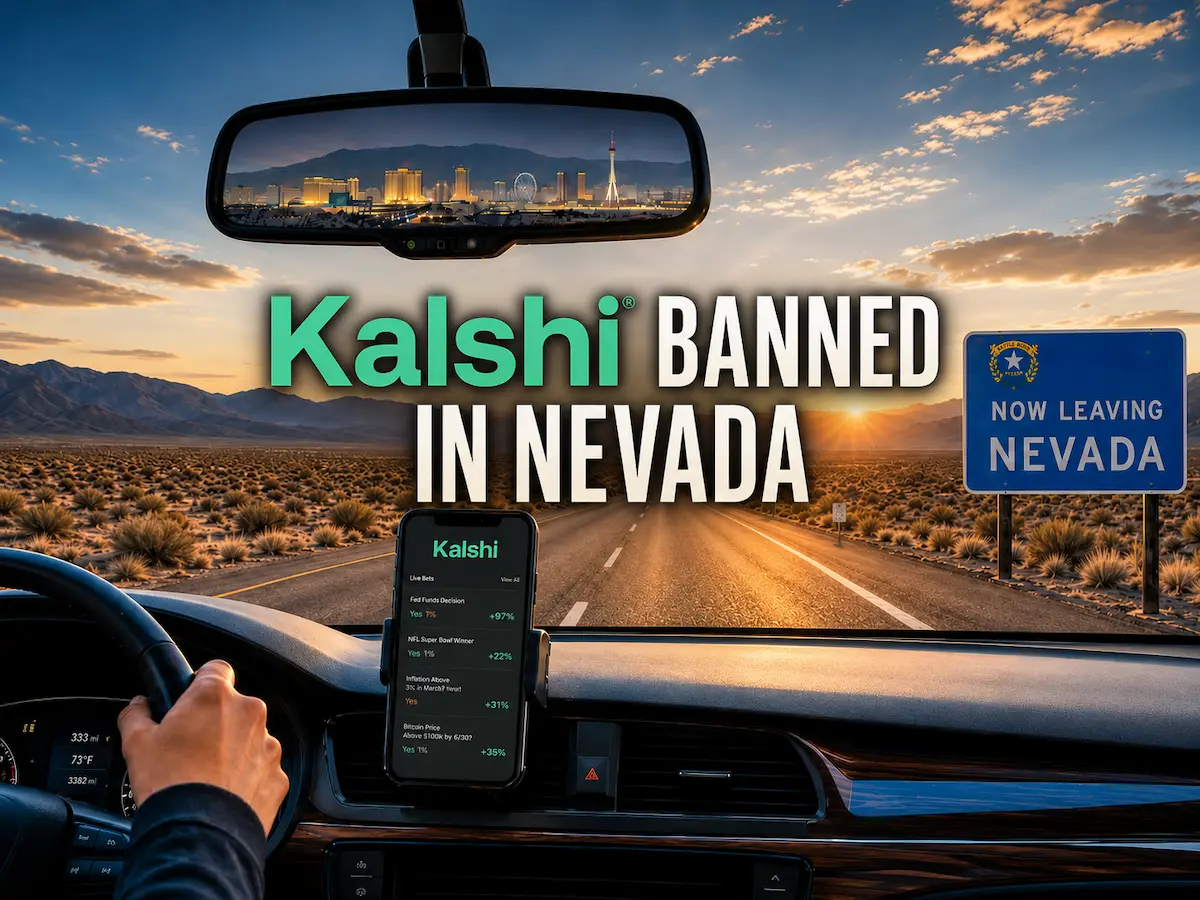
The Kalshi Nevada ban has become one of the latest flashpoints in the rapidly growing battle over prediction markets in the United States. And poker players have a good reason to pay attention.
Nevada has shut down Kalshi’s sports prediction market business within the state. The restrictions also cover election and entertainment-related event contracts.
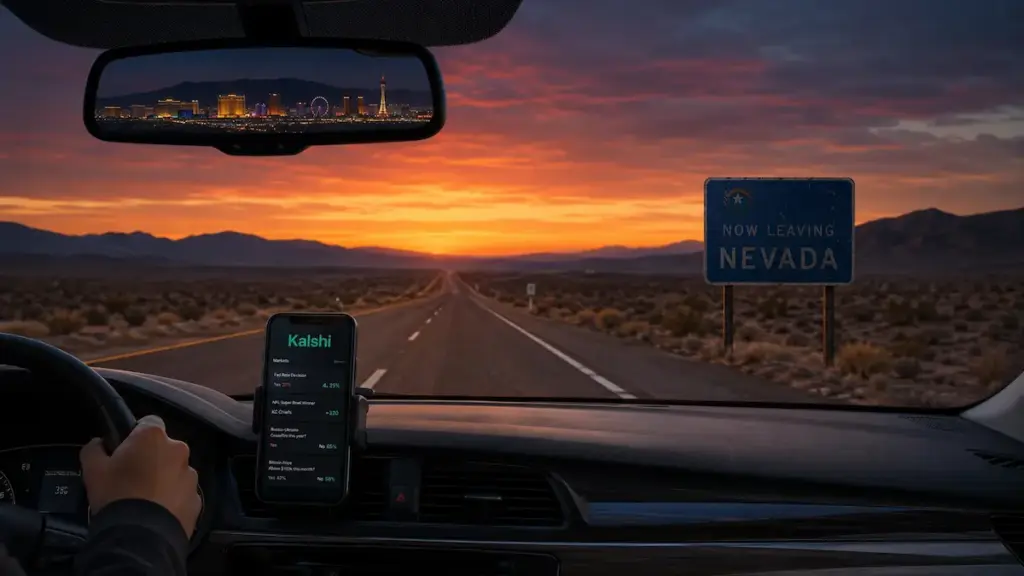
Under an agreement announced by the Nevada Gaming Control Board on July 24, Kalshi must use enhanced geofencing to stop people physically located in Nevada from entering prohibited markets. That matters particularly in Las Vegas.
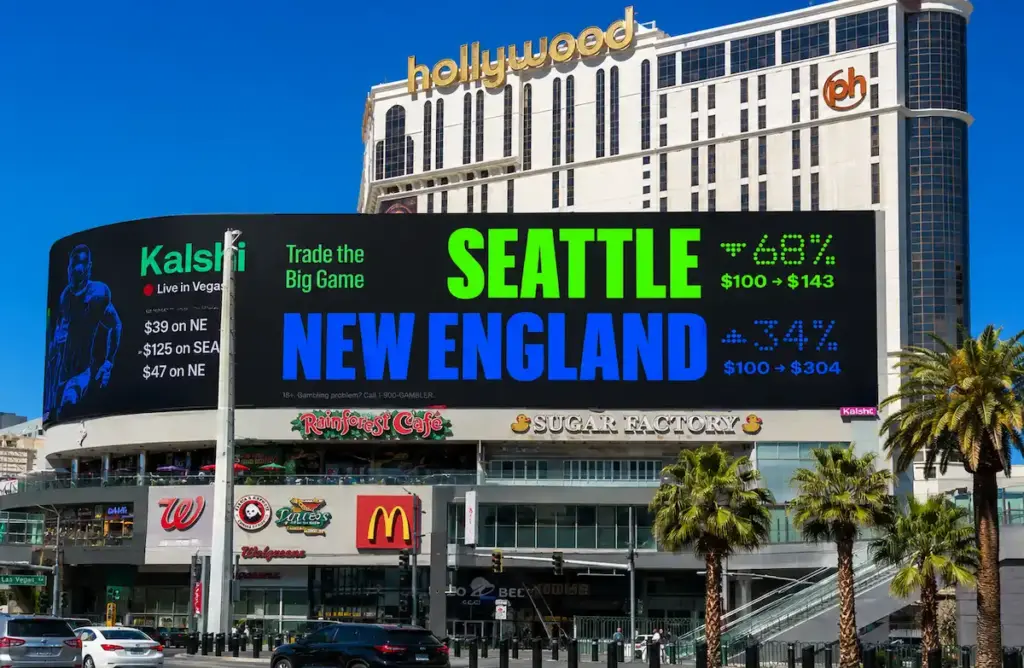
Nevada is home to the World Series of Poker (WSOP) and the most important live poker ecosystem in the United States.
More importantly, Kalshi has already started experimenting with poker prediction markets. During the 2026 WSOP, the platform offered a market asking whether the Main Event would attract more than 10,000 entries. It did not. The tournament finished with 9,208 entries, meaning the “No” side won. By settlement, more than $433,000 had been traded on the market.
That turned the Nevada dispute into something more relevant for poker players than another legal battle involving sports betting.
Kalshi had started turning poker events themselves into tradeable markets. Now, in America's most important poker destination, access to those markets is being blocked.
Nevada Shuts Down Kalshi Prediction Markets
Nevada regulators have taken one of the strongest positions in the country against prediction markets offering sports-style contracts without a state gaming license. The dispute centers on a simple but important question.
Is a sports prediction market a federally regulated financial product, or is it effectively sports betting?
Kalshi's position is based on federal regulation. KalshiEX operates as a Designated Contract Market under the oversight of the Commodity Futures Trading Commission, or CFTC. The CFTC itself continues to recognize Kalshi as a federally regulated contract market.
Nevada sees the issue differently. The state argues that contracts based on sports and certain other events fall under Nevada gaming law when they are offered to people within the state. On May 18, a Nevada court entered a preliminary injunction preventing Kalshi from offering sports-, election- and entertainment-related contracts in Nevada.
According to the Nevada Gaming Control Board, investigators were subsequently still able to enter prohibited contracts. The regulator then sought to have Kalshi held in contempt. The parties eventually reached an agreement in July. Instead of continuing that particular contempt fight, Kalshi agreed to implement a third-party, multi-source geofencing system.
The system is intended to identify users physically located within Nevada and prevent them from accessing prohibited contracts. So describing the situation simply as “Nevada banned Kalshi” misses some legal nuance. Kalshi itself has not disappeared. The restriction specifically targets categories of event contracts that Nevada considers unlawful without appropriate state gaming authorization.
For users interested primarily in sports markets, however, the practical result is much closer to a ban.
What Is Kalshi and How Does It Work?
Kalshi is not structured like a traditional sportsbook. It is a prediction market where users buy and sell contracts based on whether real-world events will happen.
A market might ask: Will Event X happen?
Users can take a Yes or No position. Contracts generally trade between $0 and $1. The market price changes as traders buy and sell. A contract trading around $0.65, for example, can roughly be interpreted as the market assigning a 65% probability to that outcome. A correct contract eventually settles at $1. An incorrect one settles at $0.
That structure allows prediction markets to cover an enormous range of subjects. Markets can involve politics, economic data, weather, entertainment, sports and other measurable events. The distinction between that model and conventional gambling has become increasingly controversial as sports contracts have expanded. That expansion has also been huge.
Reuters reported that Kalshi generated around $27 billion in trading volume during the 2026 FIFA World Cup, citing a source familiar with the figures. The same source said the platform attracted roughly three million users during the tournament.
Those numbers reportedly came in at about twice Kalshi's pre-tournament expectations. Sports Business Journal separately reported the same $27 billion World Cup trading volume figure. That scale helps explain why state gaming regulators are paying close attention. Prediction markets are no longer a small financial experiment sitting outside mainstream sports.
They are increasingly competing for the same consumers as sportsbooks. And now they are beginning to enter poker as well.
What Does the Kalshi Nevada Ban Mean for Poker Players?
At first glance, the Nevada-Kalshi dispute appears to have little to do with poker. Kalshi is not an online poker room. But the connection became much more interesting during the 2026 World Series of Poker. Kalshi opened a market asking whether the WSOP Main Event would exceed 10,000 entries.
This was not simply a theoretical poker-related contract. Real money was traded on it. By the time registration closed and the contract settled, volume had grown to $433,029.
The market ultimately resolved in favor of No. The 2026 Main Event attracted 9,208 entries, 792 short of the 10,000 required for Yes traders to win. The interesting part for poker players is not simply who won that particular market.
It is why a poker player might have had an edge in evaluating it.
Experienced poker players follow information that the average prediction market user might overlook. They watch WSOP turnout, understand satellite activity, follow international poker traffic, know which tournament series are growing or declining, see how accommodation costs, travel conditions and competing events can affect recreational players, they may also have a better understanding of registration patterns and late-entry behavior.
All of that information can help estimate how large a tournament field might become. That creates a very natural crossover between poker and prediction markets.
Poker players already spend much of their time thinking in probabilities. Even basic tournament decisions are often built around mathematical thresholds rather than intuition alone. Short-stack play is a good example: tools such as a push fold chart translate stack depth, position and ranges into mathematically sound decisions.
A successful poker decision is rarely about knowing exactly what will happen.It is about assigning probabilities and comparing them with the price being offered. Suppose you face a river bet. You estimate how often your opponent is bluffing, compare that estimate with your pot odds, and decide whether calling has positive expected value.
Prediction markets involve a similar thought process. The question is not simply whether an event will happen. The important question is whether your estimated probability differs from the probability implied by the market price.
If a contract implies a 30% chance and you believe the true probability is 45%, you may believe the market is mispriced. That mindset should feel extremely familiar to serious poker players.
There is also a cultural connection. Poker has always had a strong tradition of prop bets, bracelet bets, last-longer bets and private action surrounding major tournaments. Prediction markets potentially formalize part of that behavior.
Imagine liquid markets asking:
Will the WSOP Main Event break its attendance record?
Will a specific player win a bracelet?
Which country will produce the most bracelet winners?
Will a player reach a specific stage of the Main Event?
Not every possible contract would necessarily be approved or legally available. But Kalshi has already shown that poker can become an underlying subject for prediction markets. In fact, the 2026 Main Event was not its first poker experiment.
Nevada's action therefore creates an unusual contradiction. A player can travel to Las Vegas and enter some of the biggest poker tournaments in the world. The same player can visit a licensed Nevada sportsbook and bet on professional sports.
Yet while physically located in Nevada, that person can now be blocked from trading certain event contracts on Kalshi.That contradiction is at the heart of the regulatory fight.
What Are the Alternatives for Poker Players?
The obvious reaction might be to look for another prediction market. But for players physically located in Nevada, the situation is not that simple.
Polymarket is one of Kalshi's biggest competitors. However, Nevada has also taken action against Polymarket.
In June 2026, Nevada Attorney General Aaron Ford announced that a state judge would grant a preliminary injunction preventing Polymarket from offering sports-, election- and entertainment-related event contracts within Nevada while enforcement proceedings continue.
The Nevada Attorney General specifically noted that Polymarket joined Kalshi and Coinbase among prediction market operators facing injunctions in the state.
So switching from Kalshi to another prediction market is not automatically a solution.
The key factor is where the user is physically located and what local rules apply. Availability can vary significantly by state.
The legal picture is also changing rapidly. Recent court cases have produced different results in different jurisdictions.
For example, a federal judge temporarily blocked Minnesota from enforcing its new prediction-market ban in July, finding that Kalshi and Polymarket were likely to succeed in their argument that federal law pre-empts the state's restrictions.
Nevada has taken the opposite path so far. That means poker players should avoid assuming that one nationwide rule applies everywhere. For players specifically looking for poker action, Nevada offers a much clearer regulated alternative. Online poker is legal in Nevada, and players can access licensed real-money games while physically located within the state.
Players looking for the current options can check our complete guide to legal online poker sites in Nevada.
For sports bettors, licensed Nevada sportsbooks remain available. For players specifically interested in prediction markets, however, there may not be a straightforward Nevada-based alternative while the current restrictions remain in place. And that is what makes this story particularly interesting.
Prediction markets appeared to be creating another arena where poker knowledge, probability analysis and expected-value thinking could potentially be useful. Nevada has now placed a major geographic barrier in front of that crossover.
Verdict: Poker and Prediction Markets Are Only Starting to Collide
The Kalshi Nevada ban is bigger than one prediction market losing access to sports traders in one state. It highlights a much larger argument over what prediction markets actually are. Kalshi operates through the federally regulated derivatives framework.
Nevada considers certain event contracts gaming activity that requires state authorization. Neither side views that distinction as minor. And with billions of dollars now flowing through prediction markets during major sporting events, the financial stakes are getting much larger.
For poker players, however, there is another story developing underneath the regulatory battle. Poker itself is becoming something that can be traded.
The 2026 WSOP Main Event market offered an early example. It allowed traders to turn their opinion about tournament attendance into a financial position. More than $433,000 eventually changed hands in that single niche market. For poker players, the concept makes intuitive sense.
Poker is built around incomplete information. It rewards accurate probability estimates. It rewards finding mispriced situations and making better decisions than the people on the other side.
Prediction markets are different from poker, but many of the underlying analytical skills overlap. That makes poker an unusually natural fit for this emerging industry. The biggest obstacle may not be player interest. It may be regulation.
Nevada has now demonstrated exactly how powerful that obstacle can be.
The strange result is that Las Vegas – arguably the gambling capital of the world and unquestionably the center of American live poker – may become one of the hardest places to participate in this new form of event trading.
For anyone heading to Nevada, the immediate takeaway is straightforward. Your physical location matters.
Kalshi must prevent people within Nevada from entering the sports-, election- and entertainment-related markets covered by the court order and subsequent agreement.The long-term question is far more interesting.
Was Kalshi's WSOP market simply an experimental novelty? Or was it an early glimpse of a future where major poker tournaments generate active prediction markets alongside the action at the tables?
The $433,000 traded on the 2026 Main Event suggests there is at least an audience willing to find out.
For a community that has spent decades studying odds, hunting for small edges and making side bets on almost anything, that should hardly come as a surprise.
FAQ: Kalshi in Nevada