

Poker tournament results usually tell you who won and how much everyone earned. They rarely tell you why the tournament ended that way.
ACR Poker's new Final Table Replayer takes a different approach. It lets you replay completed final tables hand by hand while seeing every player's hole cards.
That makes folds visible. Bluffs are no longer guesses. You can also see which players applied pressure around major pay jumps.
More importantly, ACR says every completed final table is added automatically.
With OSS XL currently running 336 events and more than $50 million in guarantees, that could turn the tool into a sizeable library of real tournament hands.
I think that is much more interesting than simply watching another highlight reel.
What Is the ACR Final Table Replayer?
The ACR Final Table Replayer is a free browser-based tool for reviewing completed ACR Poker final tables.
You do not need an ACR Poker account. You also do not need to download the poker client.
The standalone Replayer lets you search completed tournaments and watch the final-table action from start to finish.
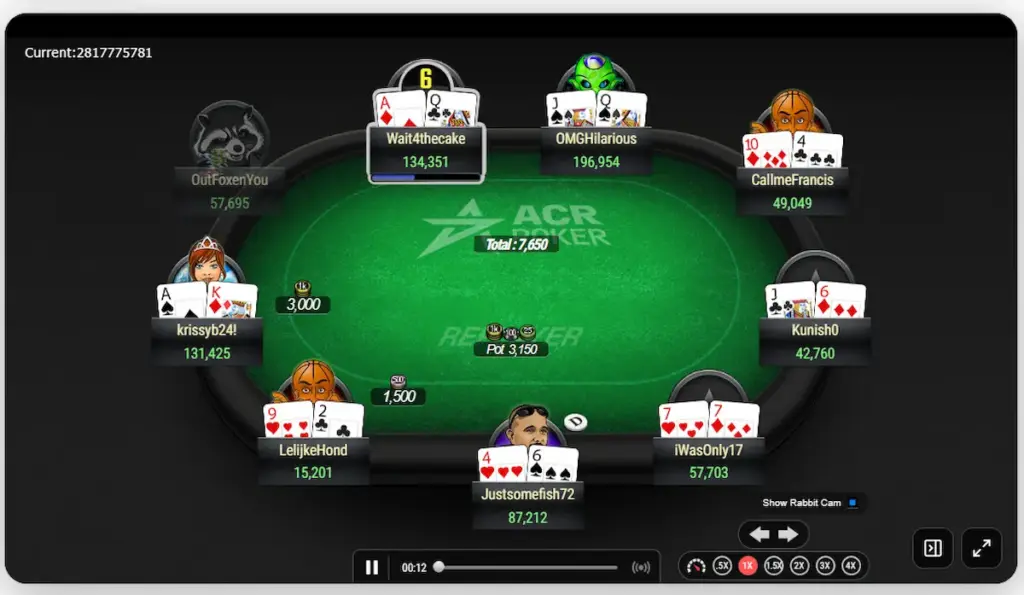
The crucial difference is that every player's hole cards are revealed. That means you see information the players themselves did not have during the tournament.
You can access the official ACR Final Table Replayer directly in your browser.
How Does the ACR Final Table Replayer Work?
The interface is relatively straightforward.
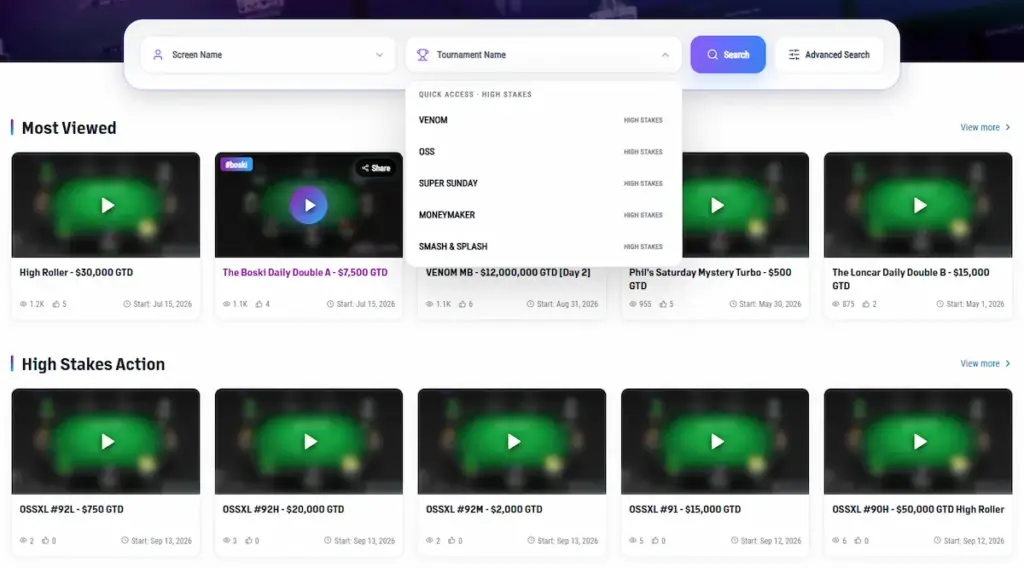
You can search by player or tournament. Advanced filters also let you narrow results by screen name, tournament name, date, and buy-in.
Once you open a completed final table, the action can be reviewed hand by hand with all cards exposed.
ACR says completed final tables are automatically published after they finish. There is no manual selection process deciding which tables are worth saving.
That distinction matters. A library containing only spectacular final tables would naturally suffer from selection bias.
Automatically storing every final table gives players access to much more ordinary tournament situations as well. And ordinary situations are often more useful for studying poker.
Why Seeing Every Hole Card Changes the Analysis
Watching a final table normally leaves you with incomplete information.
Suppose the button raises and the big blind folds. You might assume the button had a reasonable hand.
With the cards revealed, you may discover it was a complete bluff. Likewise, a player making what looks like an extremely tight fold may actually be reacting correctly to stack sizes and pay jumps.
This is particularly important around final tables because ICM pressure can dramatically change optimal decisions.
Our ICM poker strategy guide explains why tournament chips do not have a fixed cash value.
Seeing everyone's cards gives you another layer of context when studying those situations.
Five Things I Would Look for When Studying a Replay
Simply watching exposed cards is entertaining.
Studying them with a specific question in mind is much more useful.
1. Which Players Are Raising the Widest?
Final tables often create opportunities for large stacks to pressure medium stacks.
Look for players opening hands that initially seem surprisingly weak.
Then check stack sizes and upcoming pay jumps.
The cards may reveal a much wider raising range than you expected.
2. Who Is Avoiding Marginal All-Ins?
The opposite situation is just as useful.
A player may fold a hand that looks strong enough to continue in a normal tournament spot.
Final-table pressure can change that decision.
Compare the fold with stack distribution and the remaining payouts.
3. How Wide Are Blind-vs-Blind Ranges?
Short-handed poker creates more frequent blind battles.
Ranges can become extremely wide as fewer players remain.
The Replayer lets you see exactly how far individual players were willing to push that adjustment.
4. Which Bluffs Actually Worked?
Highlight videos naturally focus on spectacular bluffs that get called or create enormous pots.
Successful small bluffs often disappear completely.
With every hole card exposed, you can identify raises and three-bets that won without showdown.
Those spots can be far more instructive.
5. How Did the Winner Build Their Stack?
Do not only watch the final hand. Go back further.
Look at where the eventual winner accumulated chips, where they avoided unnecessary risk, and how their approach changed as the table became shorter.
That tells you much more than the final payout screen.
The Replayer Is Not the Same as a Solver
This distinction is important. The Final Table Replayer shows you what happened.
It does not automatically tell you whether each decision was theoretically correct.
Seeing someone's cards after the hand creates perfect hindsight. The player making the decision did not have that information.
For example, discovering that an opponent was bluffing does not automatically mean calling would have been correct.
The decision still depends on ranges, pot odds, stack sizes, payouts, and the information available at the time.
I would therefore use the Replayer to find interesting situations, not to declare every winning play good and every losing decision bad.
Those hands can then become starting points for deeper study.
Phil Nagy's Final Tables Are Already Available to Study
OSS XL produced an interesting early example.
ACR Poker CEO Phil Nagy plays under the screen name Justsomefish72.
On September 6, he reached two final tables on the opening Sunday of OSS XL.
Nagy finished runner-up in the $10,300 Phil's Thrill for $78,000. He also finished fifth in Mini Phil's Thrill for another $10,800.
That produced $88,800 in combined cashes.
Those results would normally leave us with two finishing positions and two payouts.
The Replayer changes that. Players can now go back and examine how Nagy actually approached those final tables.
If he bluffed, you can see it. If he made a light call, you can see that too.
The ACR CEO effectively has his own high-stakes final-table decisions available for public review.
OSS XL Could Become a Large Tournament Study Library
The timing of the Replayer launch is particularly useful.
OSS XL runs from September 6 through September 29 with 336 events and more than $50 million guaranteed.
The series includes three Main Events and four major multi-flight tournaments. A later high-stakes section also features 10 Nosebleed events.
That means the Replayer should eventually contain final tables from very different environments.
There will be smaller buy-in tournaments. There will also be high rollers and Main Events where payout pressure becomes significant.
If you are following the current festival, my ACR OSS XL September multi-day guide breaks down the major multi-flight events.
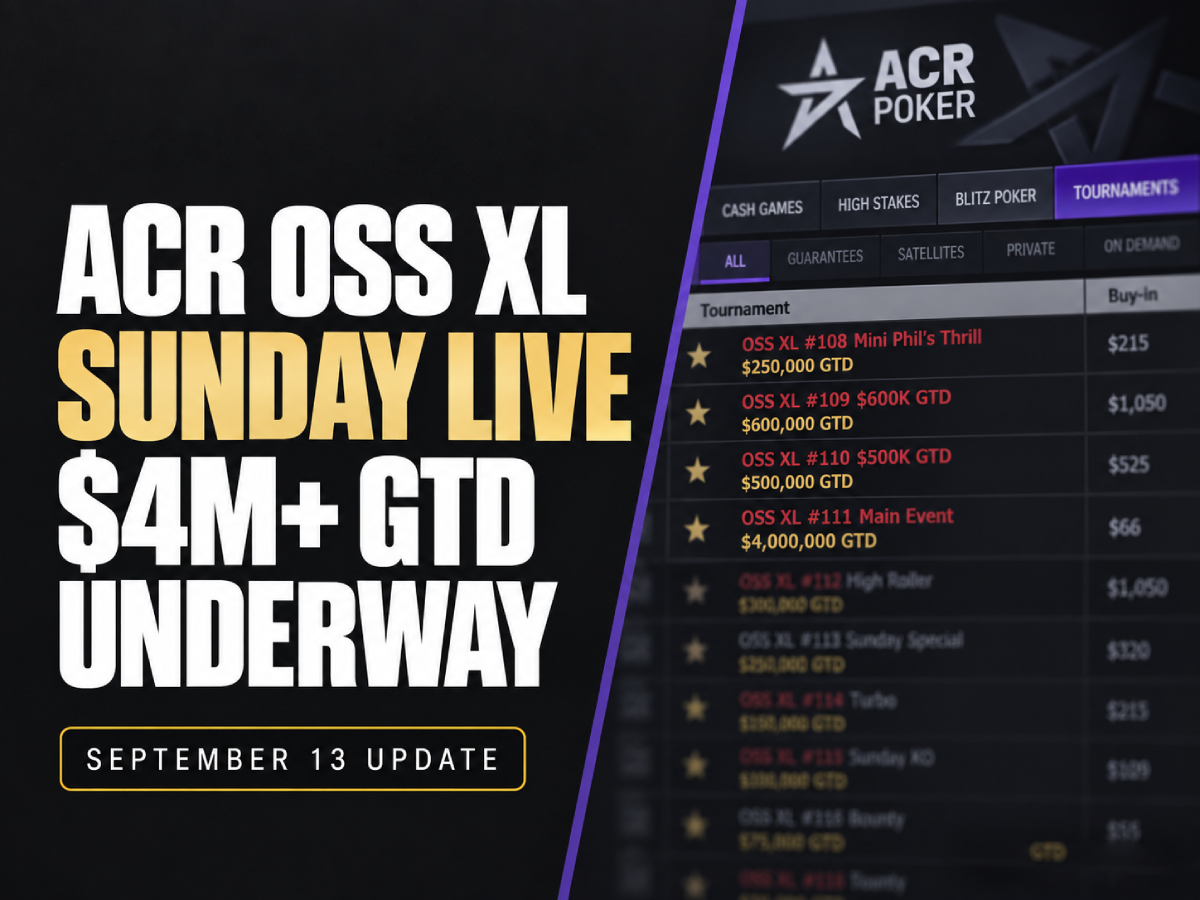
I also covered the September 13 schedule in my ACR OSS XL Sunday live update.
Why the Replayer Is More Useful Than a Highlight Reel
Poker highlights usually select the biggest pots.
That makes sense for entertainment. It is not necessarily the best way to improve.
A tournament can turn on a three-bet that never sees a flop. Another crucial decision could be folding a marginal hand before a large pay jump.
Neither situation looks spectacular. Both can matter enormously.
The Replayer lets you follow the entire final table instead of relying on somebody else to decide which hands deserve attention.
That is probably its biggest educational advantage.
You Do Not Need an ACR Account
The Replayer is not restricted to existing ACR players.
It is free, browser-based, and does not require an account or poker software download.
That means you can use it even if you simply want to study tournament poker.
For players considering the room itself, out ACR Poker review covers the software, tournaments, rewards, and other important features separately. I would keep those two questions distinct.
You do not need to play on ACR to get educational value from its final-table library.
Is the ACR Final Table Replayer Worth Using?
For tournament players, I think it is. Not because revealed cards suddenly give you perfect strategy answers. They do not.
The value comes from having access to large numbers of real tournament situations with information that is normally hidden.
That makes it easier to find unusual bluffs, tight folds, blind battles, and ICM pressure spots worth studying further.
OSS XL should provide plenty of new material during September.
Once the final tables are over, the interesting decisions do not have to disappear with them.
ACR Final Table Replayer FAQ