

Tournament poker rewards the players who think deeper, literally. When stacks are 80, 100, or even 200 big blinds deep, the edges you can carve out preflop are far larger than when you’re short. Yet many tournament players overlook these spots, defaulting to autopilot ranges built for mid-stacks.
That’s where Jonathan Little’s Tournament Masterclass 2.0 steps in.

The revamped course builds on years of cutting-edge study and live experience, teaching players how to make better decisions at every stack depth. In this exclusive preview, Jonathan breaks down the core concepts behind deep-stacked preflop play, which is an area where top pros consistently separate themselves from the field.
These lessons come straight from the Deep-Stacked Preflop section of Tournament Masterclass 2.0, and they reveal how elite players think about building ranges, responding to aggression, and creating postflop edges before the first community card even hits the table.
Lesson 1: Building the Right Deep-Stack Foundation
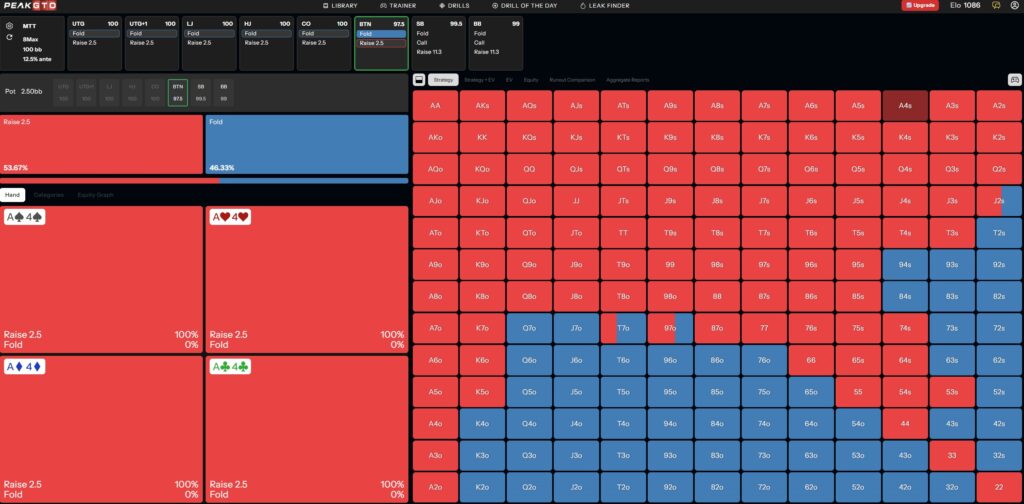
Playing deep isn’t about memorizing charts. It’s about understanding how stack depth transforms the value of your hands.
Jonathan begins by explaining that when you’re 100 big blinds deep, the potential reward of making strong hands skyrockets, and the cost of entering pots grows with it. You have more implied odds, but also more chances to get into trouble if you misjudge your range.
With this in mind, he recommends widening your playable hands in late position and adding suited connectors, suited one-gappers, and suited aces while tightening up early. From under the gun at 100bb+, hands like KJo or ATo lose value because they’re easily dominated postflop. But on the button, those same hands become money-makers thanks to position and control.
The goal, Jonathan explains, is to build ranges that can make strong hands when deep, not just hands that rely on top-pair value. Suitedness and connectivity become premium features, while weak offsuit broadways and small pairs lose their shine.
He also emphasizes the need to plan ahead. Deep stacks mean high stack-to-pot ratios (SPRs) postflop, so your preflop choices must anticipate future streets. Avoid hands that create reverse-implied-odds situations and the ones that make “second-best” hands too often.
“When you’re deep, the hands that can make the nuts go way up in value. Position and hand potential are everything.”
Lesson 2: Adjusting to Limpers, Raisers, and Callers at 100bb+
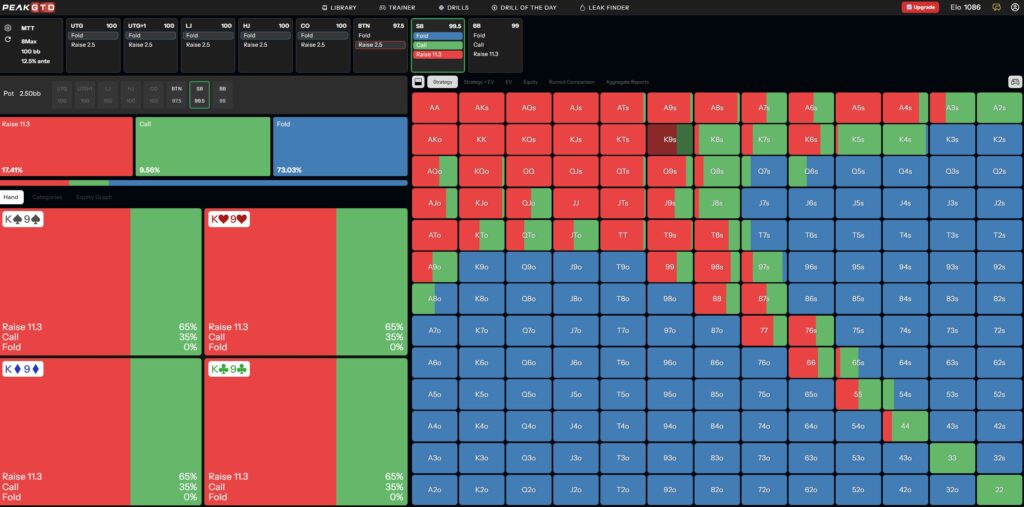
As stacks grow deeper, pots become multiway more often, and that changes everything. In the next series of lessons, Jonathan dives into how to handle limpers, open raises, and calls when stacks are deep.
Against limpers, the guiding principle is simple, and you should apply pressure. Jonathan teaches a balanced but assertive response by raising to a pot-sized amount, which is roughly 3x the limp plus one big blind per limper. This isolates the weakest ranges while leveraging position to build profitable heads-up pots.
For example, if two players limp at 1,000/2,000 blinds, your raise size should be about 6.5bb. This forces hands to fold or call at a disadvantage, which is exactly what you want.
When facing a standard open, deep stacks reward creative 3-betting.
- Jonathan encourages a polarized 3-bet strategy versus wide opens from the cutoff or button, mixing strong value hands with bluffs that have good blockers, such as A5s, K9S, or QTs.
- Against tighter opens, shift to a linear range by 3-betting hands like AQ, JJ, and KQs that perform well when called.
The same logic applies when someone opens and gets a call, where you should identify who’s capped. If the flat caller can’t have AA or KK, you gain leverage by 3-betting aggressively behind them. But be wary at deep stacks, bloating the pot with speculative hands out of position can turn small mistakes into big losses.
“Your goal isn’t just to play more hands — it’s to play them smarter. Every preflop decision should set up an easier postflop plan.”
Lesson 3: Advanced 3-Betting, Squeezing & Cold 4-Betting Strategy
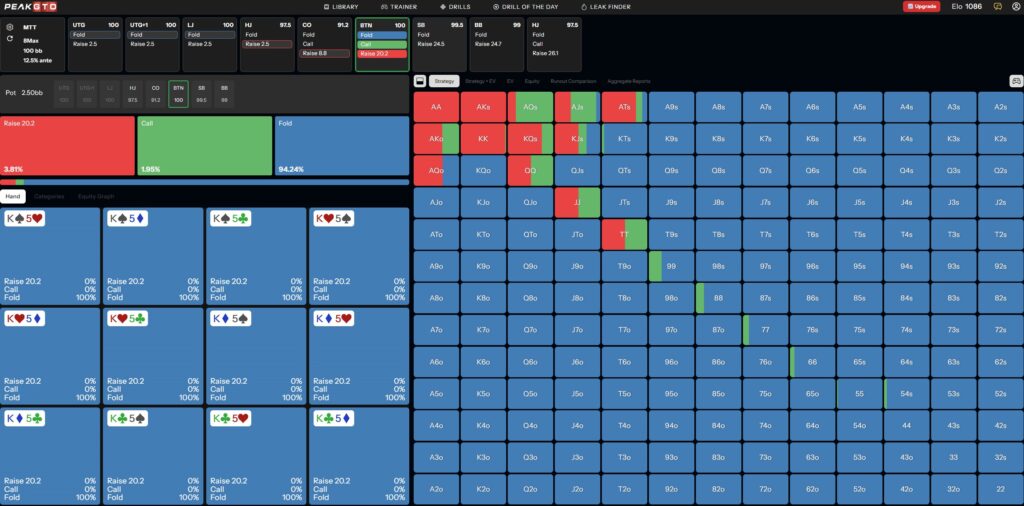
At 100bb+, preflop re-raising isn’t just about strength but also about leverage and composition, so we dissect how top players build 3-bet and 4-bet ranges to maximize fold equity while keeping their range balanced.
The first key concept is understanding who’s capped and who isn’t.
When you 3-bet an early-position raiser, your range is uncapped since it can include AA and KK, while theirs is usually strong but capped if they call. That dynamic allows you to control the pot and pressure them postflop, even when your actual hand is a bluff.
Jonathan emphasizes tailoring your 3-bet sizings by position:
- In position: 3.5x the open size is ideal.
- Out of position: 4–4.5x to deny equity and make continuation bets easier.
When someone squeezes behind you, deep stacks make calling more viable, especially with suited connectors or pocket pairs. You have enough behind to realize equity
Then comes one of the most misunderstood weapons in tournament poker: the cold 4-bet. Jonathan breaks down that you should primarily use it when you identify a polarized 3-bet range and sufficient fold equity.
At 100bb+, he suggests cold 4-betting polarized ranges of your own, such as premiums like QQ+ and AK for value, and bluffs like A5s or KTs that block the strongest holdings.
“Cold 4-betting deep is about balance. You’re not just re-raising for value but you’re also attacking opponents who 3-bet too liberally and can’t defend properly.”
Bringing It All Together
Deep-stacked preflop play is where skill truly shines. It’s where tournament professionals outmaneuver the field, build big stacks early, and set themselves up for final-table runs.
In Tournament Masterclass 2.0, Jonathan Little reveals not only what to do in these situations, but why building a structured system that turns complexity into clarity.
By the end of the deep-stack module, you’ll understand how to:
- Construct balanced and profitable opening ranges at 80–150bb
- Apply pressure with well-timed 3-bets and cold 4-bets
- Adjust to limpers, multiway pots, and squeezes effectively
- Avoid costly mistakes that bleed chips early in tournaments
This is where great tournament runs begin. After mastering preflop strategy, you can dive into postflop situations where Pokercoaching's Tournament Masterclass 2.0 will help you master different areas of your play.