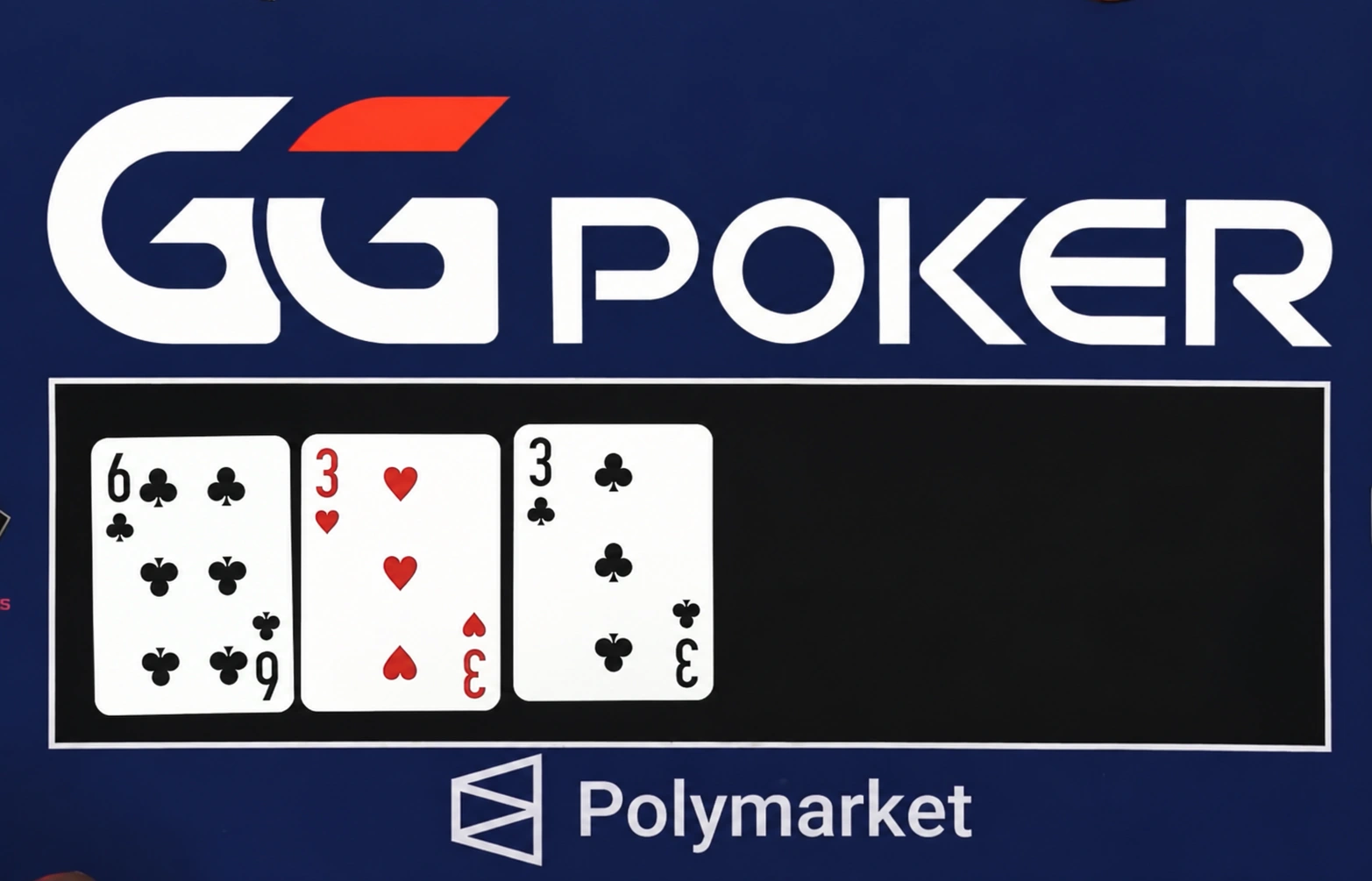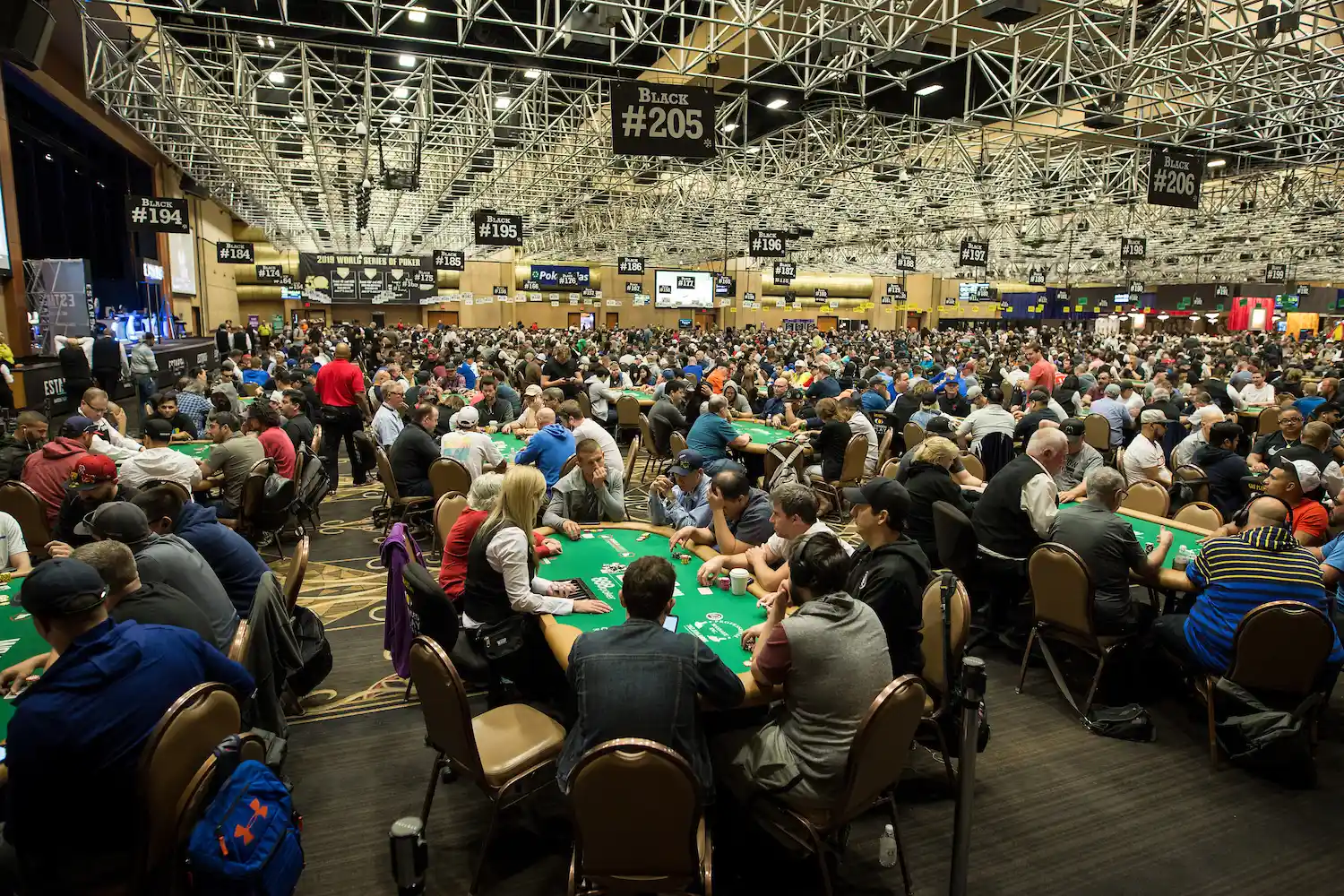

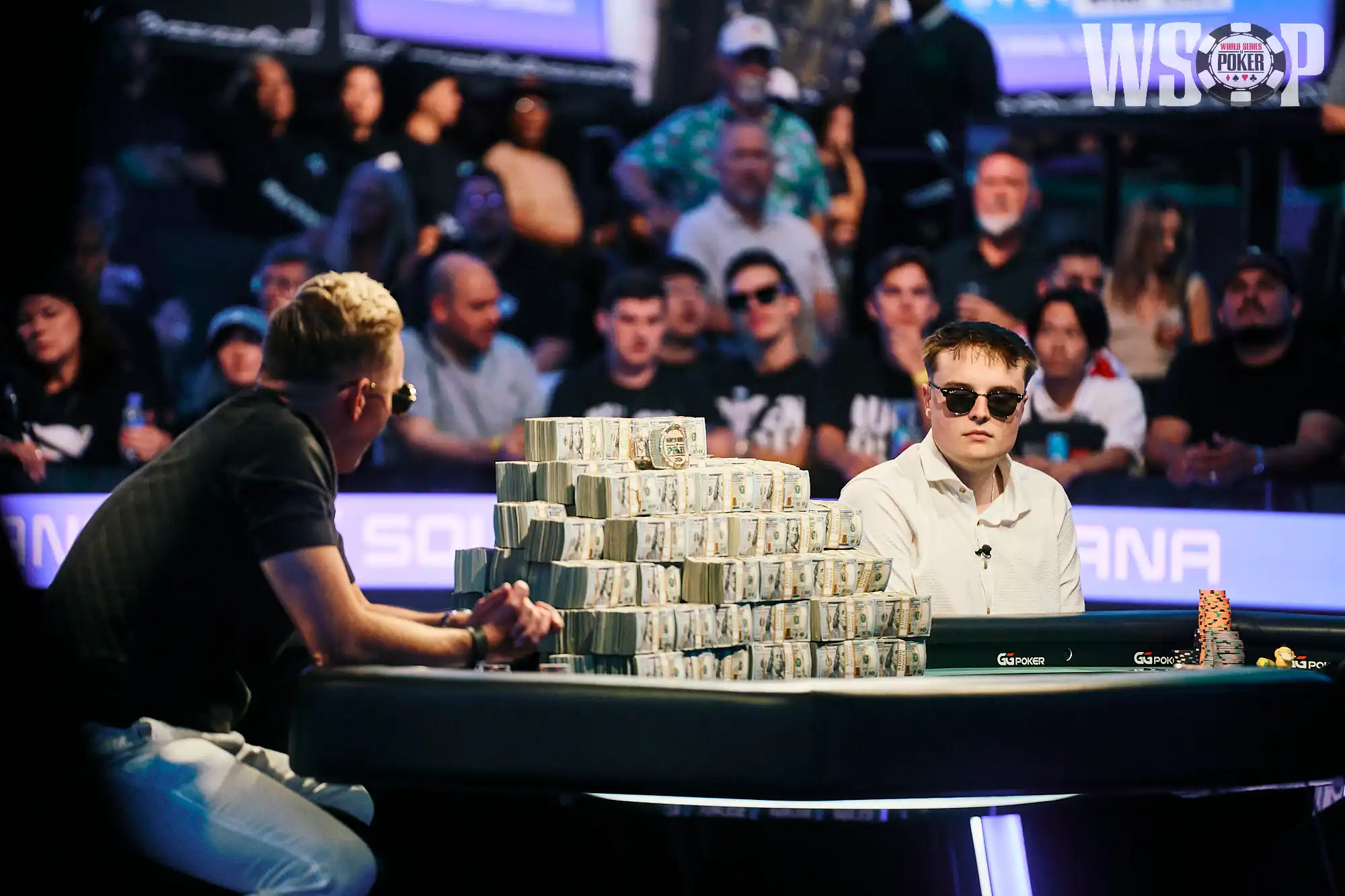
The 2026 WSOP Main Event winner is Lucas Jumalon. The 22-year-old American defeated Finland's Lauri Sääskilahti in a surprisingly short 16-hand heads-up battle to capture poker's most prestigious title, the coveted gold bracelet, and the $10 million first-place prize.
Although the final result made headlines around the poker world, the match itself was just as interesting. Jumalon entered the heads-up with a chip advantage after leading the final table from start to finish, while Sääskilahti was hoping to become Finland's first-ever WSOP Main Event champion.
Jumalon was extremely well-prepared for this monumental moment, having been coached ahead of the final table by online poker legend Patrick Leonard. The immense pressure of the occasion heavily influenced the dynamic of the match. With frequent television commercial breaks occurring every few hands, both players found it incredibly difficult to establish any real rhythm. Despite these chaotic conditions and millions of dollars on the line, the quality of play remained remarkably high, and ultimately, the championship bracelet found a very deserving home in Jumalon.
Rather than simply recapping the result, this article breaks down every key hand from the 2026 WSOP Main Event heads-up. We'll examine the preflop decisions, postflop strategy, and the biggest turning points that decided the World Championship of Poker.
Different Preflop Strategies Set the Tone
Before diving into the individual hands, one strategic difference stood out immediately. Throughout the match, Lucas Jumalon consistently opened to 2x from position, even while holding a healthy chip lead. Lauri Sääskilahti, on the other hand, preferred a much larger 2,5x and 3x opening size, only introducing limps later in the match as he searched for adjustments.
Neither approach is inherently right or wrong. Modern heads-up theory supports a variety of opening strategies depending on stack depth, opponent tendencies, and overall game plan. However, the contrasting sizings highlighted the different philosophies of the two finalists: Jumalon generally took a more balanced, lower-variance approach, while Sääskilahti looked to apply pressure through larger preflop pots.
(Blinds 1,5M/3M-3M – Stack sizes: Sääskilahti 225M, Jumalon 328M)
Hand #1: A Surprising First Fold
- Preflop: Sääskilahti opens to 8M (3x) with A♠ J♠. Jumalon folds T♠ 2♠ in the big blind.
Analysis: At first glance, folding T2 suited against a 3x open may seem perfectly reasonable. However, heads-up GTO strategy calls with every suited holding at this stack depth, making Jumalon's fold a notable exploitative deviation from theory. Rather than defending every marginal spot, Jumalon appeared comfortable giving up a small amount of theoretical EV in exchange for avoiding difficult postflop situations. This disciplined approach quickly became one of the defining characteristics of his play.
Hand #2: Standard Pressure from the Chip Leader
- Preflop: Jumalon opens to 6M (2x) with K♠ 7♦. Sääskilahti folds 4♣ 2♠.
Analysis: There was little to note strategically in this hand beyond reinforcing the different preflop approaches. Jumalon remained committed to a smaller opening strategy that kept pots manageable while applying consistent pressure.
Hand #3: Sääskilahti Wins the First Postflop Pot
- Preflop: Sääskilahti opens to 9M (3x) with J♠ T♣. Jumalon calls with K♦ 4♦.
- Flop: T♠ A♥ 7♠
- Jumalon checks. Sääskilahti bets 6M. Jumalon folds.
Analysis: This was a very standard continuation bet on an ace-high board. Sääskilahti held the middle pair together with some backdoor equity, making the small c-bet a straightforward value and protection bet. Jumalon's fold was equally routine, as K-high without meaningful equity has little incentive to continue.
Hand #4: Jumalon Applies Turn Pressure
- Preflop: Jumalon opens to 6M (2x) with T♣ 5♥. Sääskilahti calls with 7♣ 6♠.
- Flop: 7♦ 9♠ T♥ (Pot: ~12M)
- Sääskilahti checks. Jumalon bets 10M. Sääskilahti calls.
- Turn: K♠ (Pot: ~32M)
- Sääskilahti checks. Jumalon bets 22M. Sääskilahti folds.
Analysis: Checking back the turn would have been a perfectly reasonable option. Instead, Jumalon chose to continue representing strong value on a card that improved his perceived range, successfully forcing a fold from a marginal bluff-catcher.
Hand #5: A Shift in Preflop Dynamics
- Preflop: Sääskilahti limps with 7♦ 4♠. Jumalon checks with Q♠ J♠.
- Flop: A♣ Q♣ 5♥ (Pot: ~4M)
- Sääskilahti bets 3M. Jumalon calls.
- Turn: 6♣ (Pot: ~10M)
- Sääskilahti bets 5M. Jumalon calls.
- River: 4♥ (Pot: ~20M)
- Both players check. Jumalon wins with a pair of queens.
Analysis: This was the first hand where the heads-up dynamic noticeably shifted. Sääskilahti's unexpected limp represented a significant change from his earlier strategy. By checking preflop instead of isolating with QJs, Jumalon avoided inflating the pot while comfortably bluff-catching across multiple streets.
(Blinds increase to 2M/4M – Stack sizes: Sääskilahti 200M, Jumalon 353M)
Hand #6: A Well-Timed Trap with Pocket Eights
- Preflop: Jumalon limps with 8♠ 8♥. Sääskilahti checks with Q♠ 5♦.
- Flop: 2♥ 8♣ 2♠ (Pot: 8M)
- Sääskilahti checks. Jumalon bets 4M. Sääskilahti calls.
- Turn: 9♦ (Pot: 16M)
- Sääskilahti checks. Jumalon overbets 30M. Sääskilahti folds.
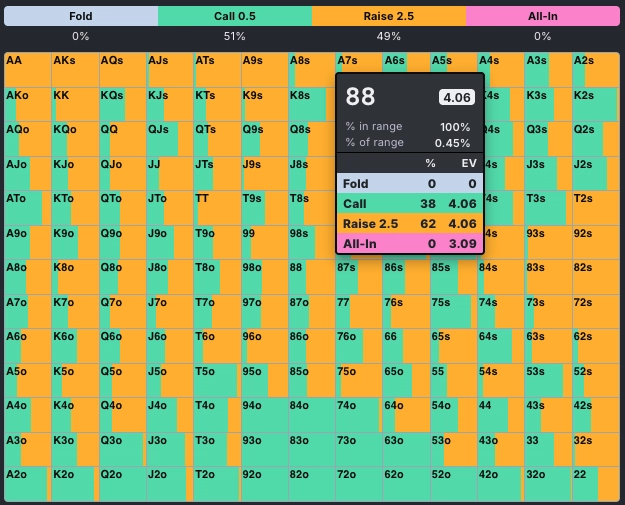
Analysis: This was one of the smartest adjustments of the entire heads-up. Rather than raising pocket eights preflop, Jumalon chose to limp, setting a clever trap. Although Sääskilahti hadn't shown a tendency to isolate aggressively limps up to this point, his overall game plan was highly aggressive. Against an opponent willing to apply pressure and fight for pots, a limp-trap with a strong pocket pair is a highly effective exploit.
Hand #7: Sticking to the Same Formula
- Preflop: Sääskilahti opens to 12M (3x) with A♥ J♥. Jumalon folds Q♥ 6♠.
Analysis: From a theoretical perspective, Q6 offsuit calls against opens. However, given Sääskilahti's larger sizing, Jumalon once again chose the lower-variance option, avoiding another marginal postflop situation out of position.
Hand #8: Sääskilahti Fights Back
- Preflop: Jumalon opens to 8M (2x) with T♠ 2♥. Sääskilahti 3-bets to 36M with T♣ 3♦. Jumalon folds.
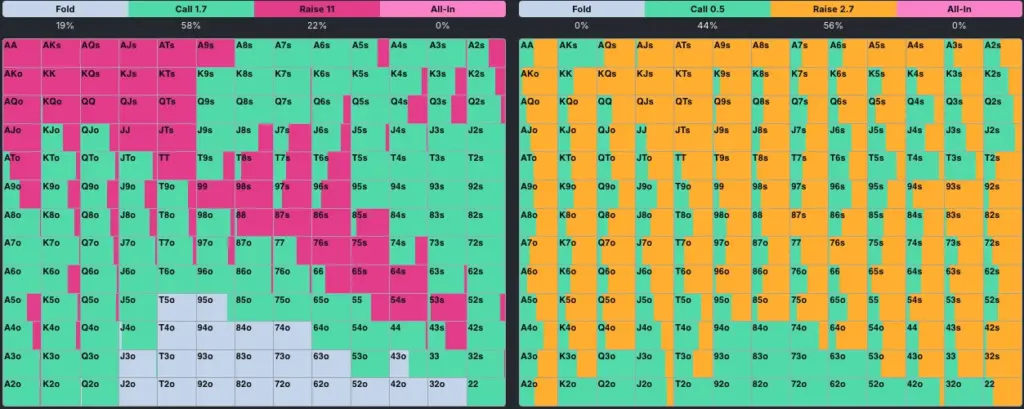
Analysis: This approach differed from the standard GTO strategy employed during the match. T3 offsuit is not typically used as a bluff 3-bet. Recognizing that Jumalon had been avoiding unnecessary confrontations, Sääskilahti successfully applied maximum preflop pressure. It was a brilliant exploitative adjustment by the Finn.
Hand #9: Jumalon's Best Bluff Catch
- Preflop: Sääskilahti limps Q♠ 9♦. Jumalon checks T♠ 5♦.
- Flop: A♠ T♣ 7♥ (Pot: 8M)
- Jumalon checks. Sääskilahti bets 6M. Jumalon calls.
- Turn: K♠ (Pot: 20M)
- Jumalon checks. Sääskilahti bets 22M. Jumalon calls.
- River: A♣ (Pot: 64M)
- Jumalon checks. Sääskilahti bets 37M. Jumalon snap-calls and wins with two pair (aces and tens).
Analysis: This was arguably one of the defining hands of the entire heads-up. Sääskilahti fired three barrels, representing a narrow range of strong ace-x and king-x combinations. Jumalon evaluated the line across all three streets and correctly concluded that too many bluffs remained in the Finn's range. His snap-call under immense pressure demonstrated elite hand reading.
Hand #10: Small Pot, Same Discipline
(Stack sizes: Jumalon 418M, Sääskilahti 135M)
- Preflop: Jumalon limps Q♠ 8♠. Sääskilahti checks T♥ 4♣.
- Flop: A♥ 7♠ 8♦ (Pot: 8M)
- Both players check.
- Turn: 2♥ (Pot: 8M)
- Sääskilahti checks. Jumalon bets 8M. Sääskilahti folds.
Analysis: Rather than automatically continuation betting every favorable flop, Jumalon sometimes delayed his aggression, allowing his opponent to continue with weaker holdings while keeping the pot under control.
Hand #11: The First All-In Confrontation
- Preflop: Sääskilahti opens to 12M (3x) with 4♦ 3♦. Jumalon shoves all-in with 8♠ 8♦. Sääskilahti folds.
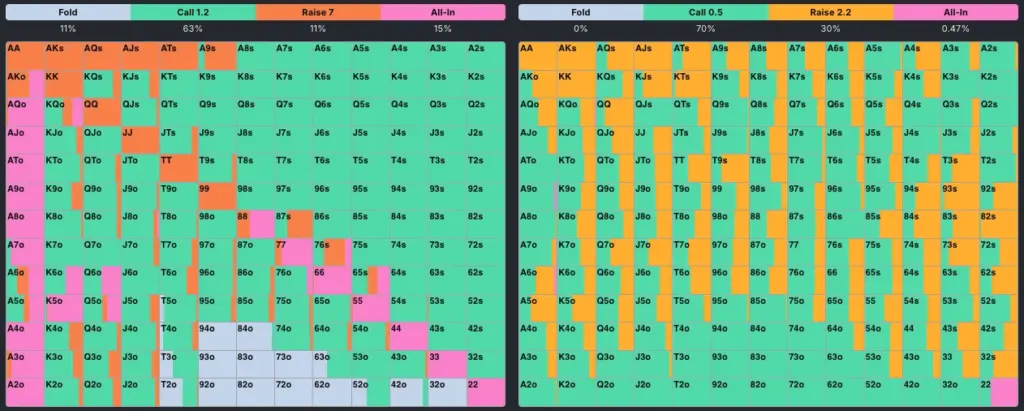
Analysis: With effective stacks around 30 big blinds, pocket eights are a clear value shove against a button open. This illustrated an important adjustment from Jumalon: as stacks became shallower, his strategy naturally shifted toward more direct preflop aggression.
Hand #12: Another Well-Timed Delayed C-Bet
- Preflop: Jumalon limps Q♠ 6♠. Sääskilahti checks J♠ 3♣.
- Flop: 8♦ 7♠ J♥ (Pot: 8M)
- Both players check.
- Turn: T♥ (Pot: 8M)
- Sääskilahti checks. Jumalon bets 12M. Sääskilahti calls.
- River: A♠ (Pot: 32M)
- Sääskilahti checks. Jumalon checks back.
Analysis: Another textbook delayed continuation bet applied pressure on the turn. Once the ace arrived on the river, however, Jumalon exercised pot control. Checking behind kept the line disciplined and avoided turning a medium-strength hand into a costly bluff.
Hand #13: The Biggest Preflop Decision
- Preflop: Sääskilahti opens to 10M with A♥ T♦. Jumalon shoves all-in with A♠ 9♣. Sääskilahti calls.
- Board: 4♠ Q♦ A♦ 9♦ 6♦
- Result: Jumalon hits his nine kicker on the turn to secure a massive double-up.
Analysis: Jumalon's shove was a standard pressure play. The more interesting decision belongs to Sääskilahti. Facing a 30-big-blind shove after choosing the larger opening size, calling with AT offsuit appears extremely ambitious and is one of the few decisions during the match that likely lost value from a theoretical perspective.
Hand #14: The Turning Point
- Preflop: Jumalon limps Q♠ 5♠. Sääskilahti checks J♦ 3♦.
- Flop: A♠ K♠ 4♣ (Pot: 8M)
- Sääskilahti checks. Jumalon bets 4M. Sääskilahti calls.
- Turn: J♠ (Pot: 16M)
- Sääskilahti checks. Jumalon overbets 40M. Sääskilahti calls.
- River: 6♠ (Pot: 96M)
- Sääskilahti checks. Jumalon bets 180M. Sääskilahti calls, and Jumalon wins with a queen-high flush.
THE DEFINING MOMENT.
The entire 2026 World Series of Poker Main Event comes down to this hand. pic.twitter.com/HQLnuTTpPM
— WSOP – World Series of Poker (@WSOP) August 6, 2026
Analysis: This proved to be the decisive pot of the match. From a theoretical standpoint, Sääskilahti’s decision to defend with third pair was a significant mistake; he should have simply folded on the flop. Continuing to call on the turn compounded this error, as folding remained the only mathematically sound option rather than stubbornly pursuing a marginal bluff-catching line. When the river brought the fourth spade to complete Jumalon’s flush, the board dynamic shifted entirely. Recognizing that Sääskilahti’s range was heavily capped and weighted toward weak bluff-catchers, Jumalon executed a highly polarized strategy. The massive 180-million river bet perfectly applied maximum value pressure, severely punishing Sääskilahti's overly wide calling range and putting him in an impossible spot.
Hand #15: No Action for Big Slick
- Preflop: Down to ~8 BBs, Sääskilahti limps A♠ K♠. Jumalon checks 6♦ 4♦.
- Flop: A♥ 9♦ 2♥ (Pot: 8M)
- Jumalon checks. Sääskilahti bets 4M. Jumalon folds.
Analysis: At extremely shallow stack depths, GTO strategies frequently mix premium suited aces between limps and all-ins. Unfortunately for the Finn, Jumalon completely missed the board, allowing Sääskilahti to win only a very small pot when he desperately needed a double-up.
Hand #16: The Championship Hand
- Preflop: Jumalon shoves all-in with K♠ 6♦. Sääskilahti calls with A♠ 7♦.
- Board: J♠ 6♠ 8♦ 6♣ 2♥
- Result: Jumalon flops a pair of sixes and turns trips to eliminate Sääskilahti.
【WSOP速報】Main Event 優勝の瞬間🏆️
プリフロップオールイン対決!!!🔥🔥
Lucas Jumalon K♠6♦
Lauri Saaskilahti A♠7♦Lucas Jumalon(@LukeJu22)
WSOP Main Event優勝!!!🏆️
9,208人の頂点に立ち、
優勝賞金約16億円とブレスレットを獲得!… pic.twitter.com/Iyxs1KuU1u— ポーカーマガジン ~ LightTHREE ~ ライトスリー (@PokerMedia_L3) August 6, 2026
Analysis: At less than ten big blinds, both the shove and the call are mathematically mandatory. The final hand simply brought an end to a fascinating tactical battle that had been decided long before the final cards were dealt.
Final Thoughts About the 2026 WSOP Main Event Heads Up
Although the 2026 WSOP Main Event heads-up lasted just 16 hands, it offered an excellent example of how two elite players can approach the same situation in very different ways.
Throughout the match, Lauri Sääskilahti consistently preferred larger 3x opens, aggressive barrels, and several ambitious bluff-catching decisions. Lucas Jumalon, meanwhile, adopted a more balanced and lower-variance strategy, relying on smaller raise sizes, delayed continuation bets, and disciplined folds.
What makes Jumalon's performance especially remarkable is the environment in which it took place. The live TV format meant gameplay was constantly halted for commercial breaks, forcing both players to endure immense psychological pressure without ever being able to settle into a comfortable rhythm. Despite this, Jumalon patiently waited for the highest-value opportunities, repeatedly making strong exploitative adjustments while remaining incredibly poised.
In the end, the final hand may have been a standard flip, but the match itself was won through a series of small edges accumulated over sixteen hands. Jumalon's disciplined approach, elite hand reading, and ability to navigate the extreme pressure of the WSOP stage proved that the 2026 World Championship bracelet went to exactly the right place.
Lucas Jumalon’s emotional bracelet ceremony after becoming the second youngest player ever to win the WSOP Main Event.
He shares his goal of becoming poker’s next Moneymaker and inspiring a new generation of players.
It’s been an honor to watch this journey unfold.
Main Event… pic.twitter.com/abxEslMOmf
— WSOP – World Series of Poker (@WSOP) August 6, 2026
Frequently Asked Questions (FAQ)