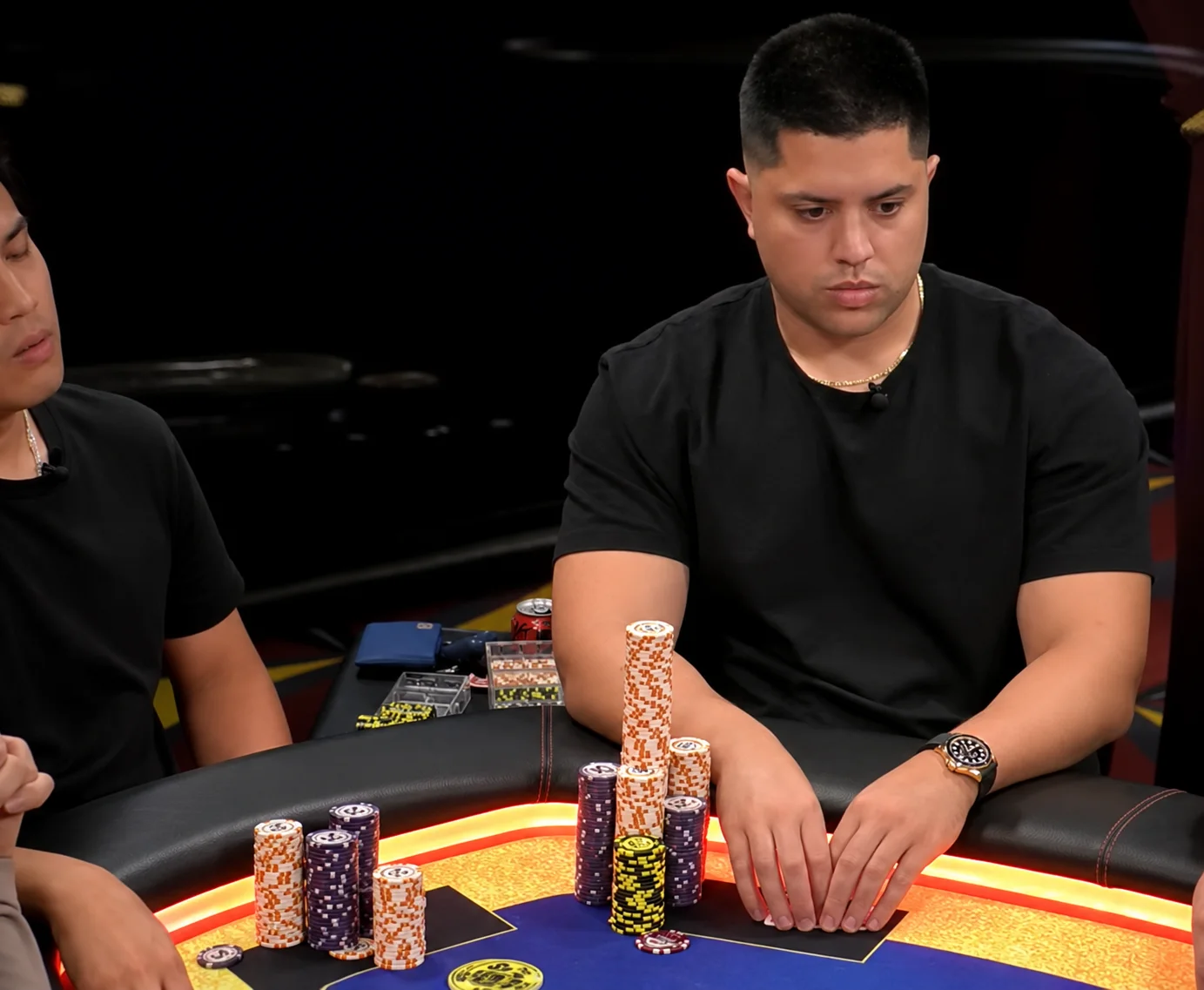

Every summer, Ryan Depaulo takes his audience behind the scenes of the WSOP Main Event, sharing the highs, lows, and biggest decisions from poker's most prestigious tournament. His 2026 vlog series was no exception, giving viewers an honest look at his thought process throughout two action-packed days at the tables.
Although Depaulo's WSOP run ended before the money, the journey featured several fascinating hands and plenty of strategic insight. As a high-profile content creator and official ambassador for the online poker platform CoinPoker, Depaulo is known for bridging the gap between entertaining vlogs and real-world tournament strategy. Rather than simply showing the action, he explained the reasoning behind each major decision, offering a rare glimpse into how a seasoned professional approaches live poker's toughest spots.
One hand, in particular, stood out from the rest. After flopping a monster in a multi-way pot, Depaulo faced a brutal decision that sparked plenty of debate. We recreated the hand in GTO Wizard to see how closely his line matched GTO strategy, and whether a different approach could have produced a better result.
Ryan Depaulo WSOP Main Event Run in 2026
Ryan Depaulo entered the 2026 WSOP Main Event on Day 1D, choosing to late-register with only two levels remaining in the day. Starting with the standard 60,000-chip stack, he quickly found his rhythm and navigated several tricky spots to finish the session with approximately 78,000 chips after just two and a half hours of play.
Day 2 proved to be far more challenging. A series of difficult decisions and missed opportunities saw his stack drop to around 30,000 chips, forcing him to shift gears and focus on survival. Despite the setback, Depaulo managed to rebuild, winning several important pots to climb back to roughly 50,000 chips and keep his tournament hopes alive.
His Main Event ultimately came to an end later that day, but not before producing several memorable hands featured in his vlog. While some decisions were fairly standard, one hand stood out as particularly thought-provoking: flopping a full house in a multi-way pot and taking a line that sparked an intense strategic discussion.
The Hand: Full House in a Multi-Way Pot
- Blinds: 400 / 800 / 800 ante
- Effective Stack: ~55,000 chips (69 Big Blinds)
- Hero (Ryan Depaulo): UTG with 7♦ 7♠
- Preflop Action: Depaulo opens to 1,600 (2x). The Cutoff calls, and the Big Blind calls. (3 players to the flop)
Preflop & Flop
The flop comes 8♥ 8♦ 7♥, giving Depaulo a flopped full house (Sevens full of Eights).
After the Big Blind checks, Depaulo makes a small continuation bet of 1,300. The Cutoff folds, but the Big Blind responds with a check-raise to 5,000. Rather than re-raising with such a strong hand, Depaulo opts to call in position.
Turn
The turn brings the 5♥, completing the front-door flush draw (8♥ 8♦ 7♥ 5♥). The Big Blind checks, and Depaulo checks back, choosing not to value bet despite still holding a full house.
River
The river brings the 8♣, putting a third eight on the board: 8♥ 8♦ 7♥ 5♥ 8♣.
After another check from the Big Blind, Depaulo bets 6,000 for value. His opponent suddenly responds with a massive check-raise to 26,000. After deep thought, Depaulo elects to fold, surrendering what started as a flopped monster.
What Was Ryan Depaulo Thinking?
Throughout his vlog, Depaulo openly shared his thought process, explaining that he was trying to maximize value without scaring away weaker holdings too early.
- Flop Call: After facing the check-raise, he decided against re-raising. He reasoned that the Big Blind could easily be raising with trips, flush draws, or semi-bluffs, allowing those hands to continue bluffing or value betting on later streets. Calling kept his opponent's range wide while disguising his own hand strength.
- Turn Check: When the 5♥ completed the front-door flush draw and the Big Blind checked, Depaulo hesitated. He was concerned that a bet might kill the action against trip eights, while checking back gave his opponent room to bluff the river.
- River Fold: After the board paired for a third time, Depaulo felt safe making a small value bet. Facing a second check-raise to 26,000, he concluded that his opponent's line represented absolute monster strength (quads or higher full houses) and laid it down.
Solver Analysis: What Does GTO Wizard Say?
To analyze the strategic accuracy of this hand, we recreated the heads-up scenario in GTO Wizard after the Cutoff folded on the flop.
Flop: A Textbook C-Bet and Call
The solver fully agrees with Depaulo's small continuation bet on the 8♥ 8♦ 7♥ flop. A small sizing puts pressure on wide ranges while keeping draws in the pot.
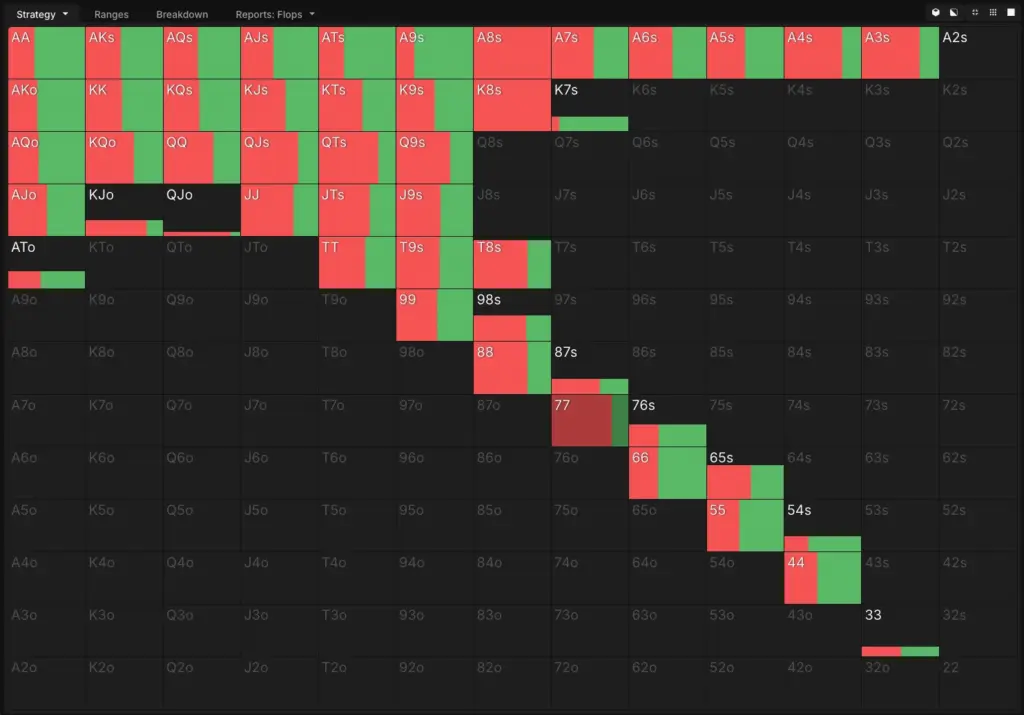
When facing the Big Blind's check-raise, GTO overwhelmingly prefers calling with pocket sevens rather than 3-betting. Calling keeps bluffs and weaker value hands in the opponent's range while protecting Hero's calling range with a top-tier hand. At this point, Depaulo’s play is pure GTO.
Turn: The Critical Strategic Divergence
The 5♥ completes the flush draw. After the Big Blind checks, Depaulo checks behind. However, this is where the solver strategy completely diverges from live execution.
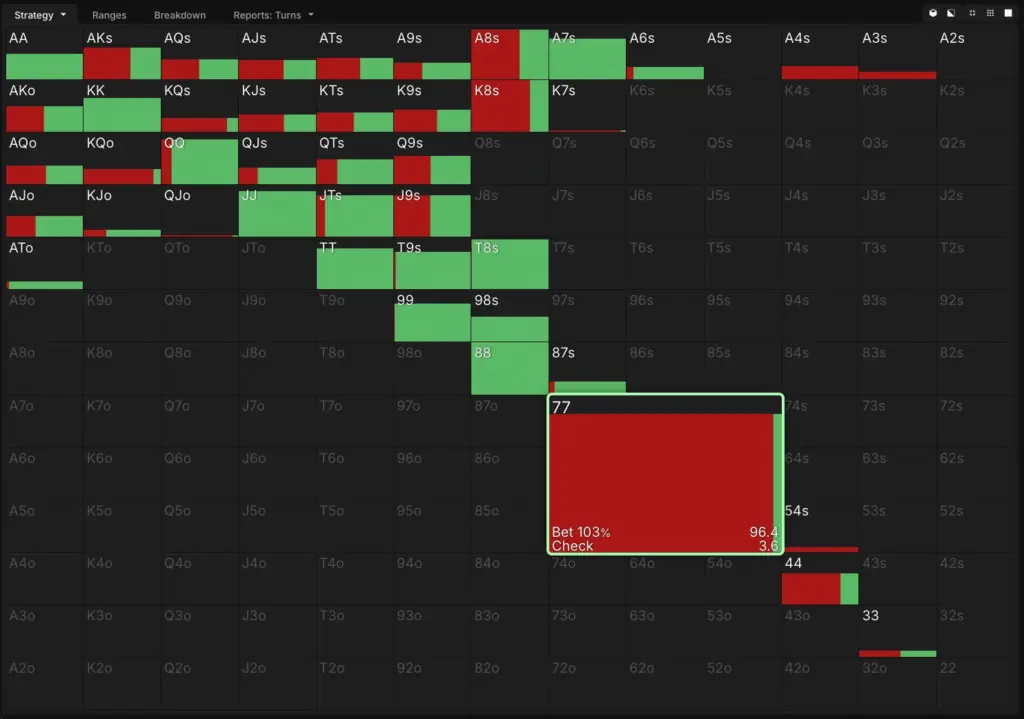
According to GTO Wizard, pocket sevens should continue betting at an overwhelming frequency. Despite the completed flush draw, a full house remains a massive value hand. The solver prioritizes extracting immediate value from trips, flushes, and overpairs before the river texture changes.
Key Strategic Takeaway: By checking back the turn, Depaulo allowed the hand to reach a river dynamic that became drastically harder to navigate.
Was the River Fold Correct?
Because GTO Wizard almost always bets the turn with pocket sevens, the solver never reaches this exact river node after a turn check-back. Strictly speaking, there is no direct theoretical solver solution for this specific river line.
From a live poker perspective, however, Depaulo’s fold makes a lot of sense:
- The Big Blind check-raised the flop (8♥ 8♦ 7♥).
- The Big Blind check-raised the river (8♥ 8♦ 7♥ 5♥ 8♣).
In live tournament poker, a double check-raise line, especially when a third eight hits the river, is almost exclusively weighted toward quads (an eight in hand) or a superior full house.
Conclusion: Theory vs. Live Reality
While GTO highlights the turn check as the primary theoretical error, Depaulo's river fold was a pragmatic response to extreme live aggression. Whether the fold was 100% GTO-compliant is secondary; the main lesson is that taking passive lines with strong hands on the turn often creates nightmare scenarios on the river.
FAQ about Ryan Depaulo WSOP Main Event