

Poker is more than a card game; it’s a battle of wits, discipline, and strategy where skillful play can turn the odds in your favor.
Whether you’re a beginner at a local game or an aspiring pro eyeing the felt of a high-stakes table, mastering poker requires a blend of patience, calculation, and tactical finesse.
For those looking to practice online, taking advantage of an online casino bonus can provide extra funds to hone your skills in real-money games.
This guide dives into five proven strategies playing fewer hands aggressively, leveraging table position, bluffing smartly, managing your bankroll, and using math to make informed decisions.
With these tools, you’ll sharpen your game and boost your chances of walking away a winner.
Play Fewer Hands, But Play Them Aggressively
One of the biggest mistakes new poker players make is playing too many hands. The temptation to stay in every pot is strong, especially when you’re dealt a hand that looks promising.
However, discipline is key in poker, and a tight-aggressive approach playing fewer hands but betting strongly when you do sets you up for success.
By focusing on premium poker hands like pocket aces, kings, or ace-king suited, you reduce costly mistakes and project confidence that keeps opponents guessing.
Why does this work? Playing fewer hands minimizes your exposure to risky situations where weaker cards, like 7-8 offsuit, can lead to losses against stronger holdings.
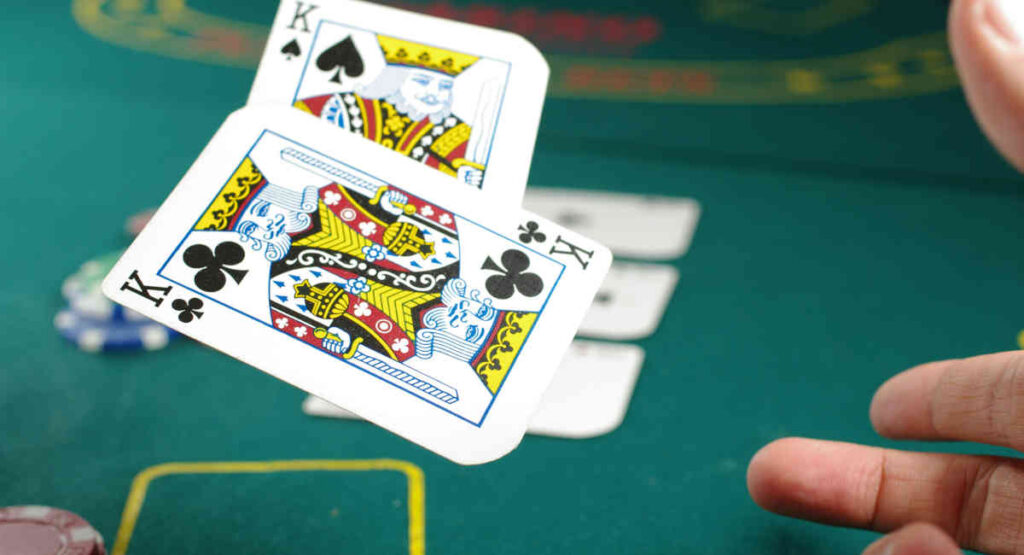
When you do play, raising rather than calling puts pressure on opponents, forcing them to make tough decisions. For example, raising with a strong hand like A-K in middle position can push out players with marginal hands, increasing your chances of winning the pot uncontested.
Here’s a quick guide to hands worth playing aggressively:
- Pocket pairs: A-A, K-K, Q-Q, J-J
- Strong aces: A-K, A-Q suited, A-J suited
- Connectors: 10-J suited, 9-10 suited (in late position)
Aggression also disguises your hand strength. A bold raise with a premium hand looks similar to a bluff, making it harder for opponents to read you. Over time, this approach builds a reputation as a formidable player, setting the stage for bigger wins.
Why Tight Play Works
Tight play is rooted in probability. Strong hands have a higher chance of winning, especially in Texas Hold’em, where starting hand selection drives long-term success.
By folding weaker hands, you avoid bleeding chips in situations where the odds are stacked against you.
For instance, playing a hand like 2-7 offsuit, even in a cheap pot, often leads to trouble when the flop doesn’t connect. Discipline in folding early saves your stack for moments when you can dominate.
Aggressive Betting
Aggressive betting isn’t about reckless all-ins; it’s about calculated raises that maximize value. When you hold a strong hand, raising increases the pot you’re likely to win and narrows the field, reducing the chance of an opponent catching a lucky card.
For example, if you’re dealt A-A and face a small bet, raising significantly can scare off speculative hands like 6-7 suited. The key is balance. Aggression should be purposeful, not habitual, to avoid becoming predictable.
Leverage Your Position at the Table
In poker, position is power. Where you sit relative to the dealer button determines how much information you have before acting, shaping your strategy.
Late position (e.g., the button or cutoff) is ideal because you act last, seeing how opponents play before making your move. Early position, like under-the-gun, demands caution since you act first with less insight.
In late position, you can play a wider range of hands, including suited connectors or weaker aces, because you can gauge opponents’ strength.

For example, if everyone folds to you on the button, a modest raise with 8-9 suited can steal blinds or set up a profitable flop. In contrast, early position calls for tight play, sticking to premium hands to avoid being outmaneuvered.
Position-based tips to elevate your game:
- Late position: Play more hands, bluff selectively, and control pot size.
- Middle position: Balance aggression with caution, focusing on strong hands.
- Early position: Stick to premium hands and avoid speculative plays.
Benefits of Late Position
Acting last gives you a strategic edge. You can observe betting patterns, spot weaknesses, and make informed decisions.
For instance, if an opponent checks on a scary board (e.g., three hearts), you can bluff with confidence, knowing they’re likely weak. Late position also allows you to steal blinds or small pots when others show hesitation, adding chips to your stack without a showdown.
Managing Early Position Challenges
Early position is a minefield for inexperienced players. Acting first means you lack information, so speculative hands like 5-6 suited can lead to trouble if a later player raises.
To navigate this, play only your strongest hands and fold marginal ones. For example, folding K-J off-suit under-the-gun is smarter than calling and facing a raise from a player with A-K. Discipline here preserves your stack for better spots.
Bluff Smart, Don’t Overdo It
Bluffing is an art that separates good poker players from great ones. A well-timed bluff can win pots you’d otherwise lose, but over-bluffing makes you predictable and costly. The key is to bluff strategically, targeting situations where opponents are likely to fold.
For example, betting big on a board with an ace after a tight player checks signals strength, increasing your chances of a successful bluff.

Semi-bluffing betting with a hand that could improve, like a flush draw, is especially powerful. If you hold 10-J of spades on a flop with two spades, a strong bet can win the pot outright or set you up for a big payoff if you hit your draw.
Effective bluffing requires reading opponents’ tendencies and board texture.
Bluffing scenarios to consider:
- Against tight players who fold easily
- On scary boards (e.g., paired or flush-heavy)
- When you’ve shown strength earlier, building credibility
When to Bluff Effectively
Bluffs work best when the situation aligns with your perceived range. If you’ve played tightly, a big bet on a coordinated board looks like a monster hand.
Target cautious opponents who avoid confrontation and avoid bluffing calling stations who rarely fold. For instance, if an opponent checks twice on a board with an ace and king, a well-sized bet can convince them you’re holding top pair.
The Power of Semi-Bluffs
Semi-bluffs balance risk and reward. By betting with a drawing hand, you have two ways to win: your opponent folds, or you hit your draw.
For example, with a flush draw on the turn, a semi-bluff can push out weaker hands while giving you outs to a strong hand. This approach keeps your play unpredictable and maximizes your chances of winning bigger pots.
Master Bankroll Management
No poker strategy is complete without bankroll management. Your bankroll is your lifeline, and mismanaging it can end your game before you improve.
Set a dedicated poker budget separate from personal expenses, ensuring you only play with money you can afford to lose. A general rule is to have 20-30 buy-ins for cash games or 100 buy-ins for tournaments at your chosen stakes.
Key bankroll tips:
- Set limits: Never risk more than 5% of your bankroll in one session.
- Choose stakes wisely: Play at levels where losses won’t devastate you.
- Track results: Monitor wins and losses to identify patterns.
Setting a Poker Budget
A poker budget starts with honesty about your finances. Allocate a portion of disposable income say, 1-2% monthly to your poker bankroll.
For example, if you have $1,000 for poker, stick to $1-$2 cash games or $10 tournaments. This ensures you can weather downswings without going broke, giving you time to refine your skills.
Avoiding Tilt and Emotional Play
Tilt playing emotionally after a loss can destroy your bankroll. After a bad beat, like losing a big pot to a river card, take a break to reset.
Practice mindfulness or step away from the table to avoid reckless bets. Staying disciplined keeps you focused and protects your funds for future games.
Use Math to Your Advantage
Poker is a game of probabilities, and understanding poker math gives you an edge. Concepts like pot odds and expected value guide your decisions, helping you avoid unprofitable calls.
For instance, if the pot is $50 and your opponent bets $10, you’re getting 5:1 pot odds. If your hand has a 20% chance of winning, calling is profitable because the odds justify the risk.
Math principles to master:
- Pot odds: Compare the bet size to the pot to decide if calling is worthwhile.
- Outs: Count the cards that improve your hand (e.g., 9 outs for a flush draw).
- Hand ranges: Estimate what hands your opponent might hold based on their actions.
Calculating Pot Odds
Pot odds are simple to calculate: divide the pot size by the bet you face. If you’re on a flush draw with 9 outs (about 18% chance to hit by the river), calling a $10 bet into a $50 pot is profitable because your odds (5:1) exceed your hand’s odds (4:1). This math ensures you make decisions based on logic, not hope.
Thinking in Ranges, Not Hands
Great players don’t guess an opponent’s exact hand—they assign a range based on betting patterns.
If an opponent raises pre-flop and bets big on a dry flop, their range likely includes strong hands like A-K or pocket pairs. Narrowing their range helps you decide whether to call, raise, or fold, making your play more precise.
Final Thoughts
Mastering poker demands a blend of discipline, strategy, and adaptability. By playing fewer hands aggressively, leveraging your table position, bluffing with purpose, managing your bankroll wisely, and using math to guide decisions, you’ll transform from a casual player to a formidable one.
Start small, practice consistently, and apply these strategies at low-stakes tables or online freerolls to build confidence and skill. With dedication, the poker table can become your domain, where every decision brings you closer to victory.