
If you are new to poker or trying to elevate your game to a professional level, understanding variance is non-negotiable. While it can be a frustrating force that significantly works against a player in the short term, it is also the primary reason you can make money from the game in the long run.
Without variance, weaker players would never win, and the entire poker economy would collapse. In this article, we strip away the emotions and look strictly at the math, standard deviation, and exactly how bad your downswings can mathematically get.
What Is Poker Variance?
In the simplest terms, poker variance is the difference between your expected winnings (Expected Value or EV) and your actual short-term results.
To understand variance, you need to be familiar with two core mathematical concepts:
- Win Rate: This is your long-term edge, usually measured in Big Blinds per 100 hands (BB/100) for cash games, or Return on Investment (ROI) for tournaments.
- Standard Deviation (SD): This measures how widely your actual results fluctuate around your expected win rate. The higher the standard deviation, the wilder your swings will be.
Even the absolute best poker players in the world experience massive swings. Having a deep understanding of these numbers will help you set realistic expectations.
The Math: How Bad Can It Get?
Most players severely underestimate the mathematical brutality of variance. Running bad is not a curse; it is a statistical certainty. How bad it gets depends entirely on your win rate and your standard deviation.
Let’s look at a realistic cash game example. Assume you are a solid, winning 6-max No-Limit Hold’em player with a win rate of 5 BB/100 and a standard deviation of 90 BB/100.
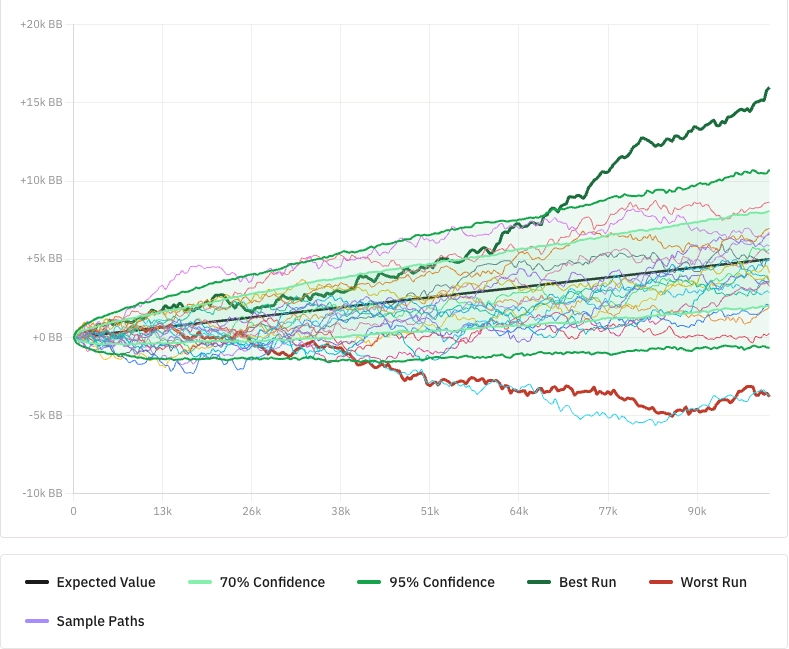
If we run this through a variance calculator, the numbers might shock you:
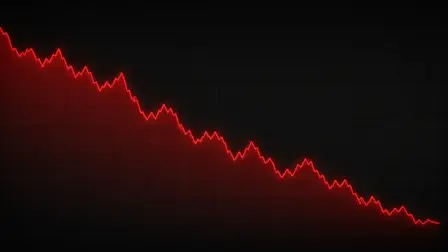
- It is mathematically normal to experience downswings of 20 to 30 buy-ins.
- You have a significant chance of going on a “break-even” stretch that lasts for 50,000 to 100,000 hands.
- For Multi-Table Tournament (MTT) players, the variance is exponentially higher due to large field sizes. MTT grinders can easily face downswings of 100+ average buy-ins despite making perfect decisions.
Online Poker vs. Live Poker: How Variance Differs
When discussing standard deviation and win rates, it is crucial to understand that variance behaves very differently depending on whether you play online poker or live cash games. While the core math remains the same, the sheer volume of hands and the average skill level of your opponents drastically change how you experience downswings.
| Feature | Online Poker | Live Poker |
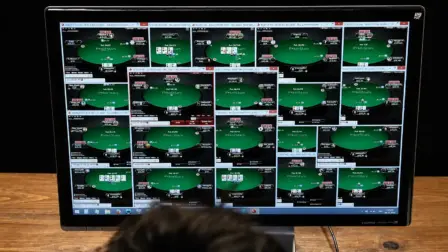
| Hand Volume | Massive (400+ hands/hour via multi-tabling) | Very low (25–30 hands/hour) |
| Average Win Rate | Generally lower (tougher, reg-heavy fields) | Generally higher (softer, recreational fields) |
| Standard Deviation | Higher (aggressive, math-based dynamics) | Lower (more passive, multi-way pots) |
| Downswing Duration | Deep in buy-ins, but resolves faster in real-time | Shallower in buy-ins, but can last for months |
Because the online ecosystem is heavily populated by regular players and tracking software, your win rate is naturally lower, which mathematically leads to deeper downswings in terms of buy-ins. However, because you can grind thousands of hands a day, you can push through the variance and reach the “long run” much faster.
Conversely, live poker fields are significantly softer. This allows for a much higher win rate, which acts as a mathematical cushion against extreme variance. The hidden danger of live poker, however, is the pace of play. Dealing only 30 hands an hour means a completely standard 10,000-hand break-even stretch could take you several months of agonizing real-time grinding to escape.
A Double-Edged Sword
Almost everything worthwhile is like a double-edged sword, and despite how terrifying those downswing numbers look, variance is a blessing in disguise.
Variance creates the “illusion of luck”. It is precisely because of variance that a completely inexperienced player can sit at a table, hit a few lucky rivers, and walk away with a massive profit for the night. If the better player won 100% of the time, recreational players would quit immediately. You must learn to embrace variance, as it is the very mechanism that keeps the games profitable.
Summing Up
We all feel good when we are winning, but true poker professionals are forged in the fires of variance. By understanding the math behind standard deviation, using variance calculators, and maintaining a strict bankroll, you can take the sting out of downswings. Accept the math, embrace the swings, and let your proven edge play out over the long run.
Frequently Asked Questions