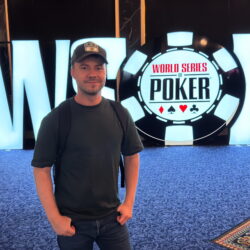

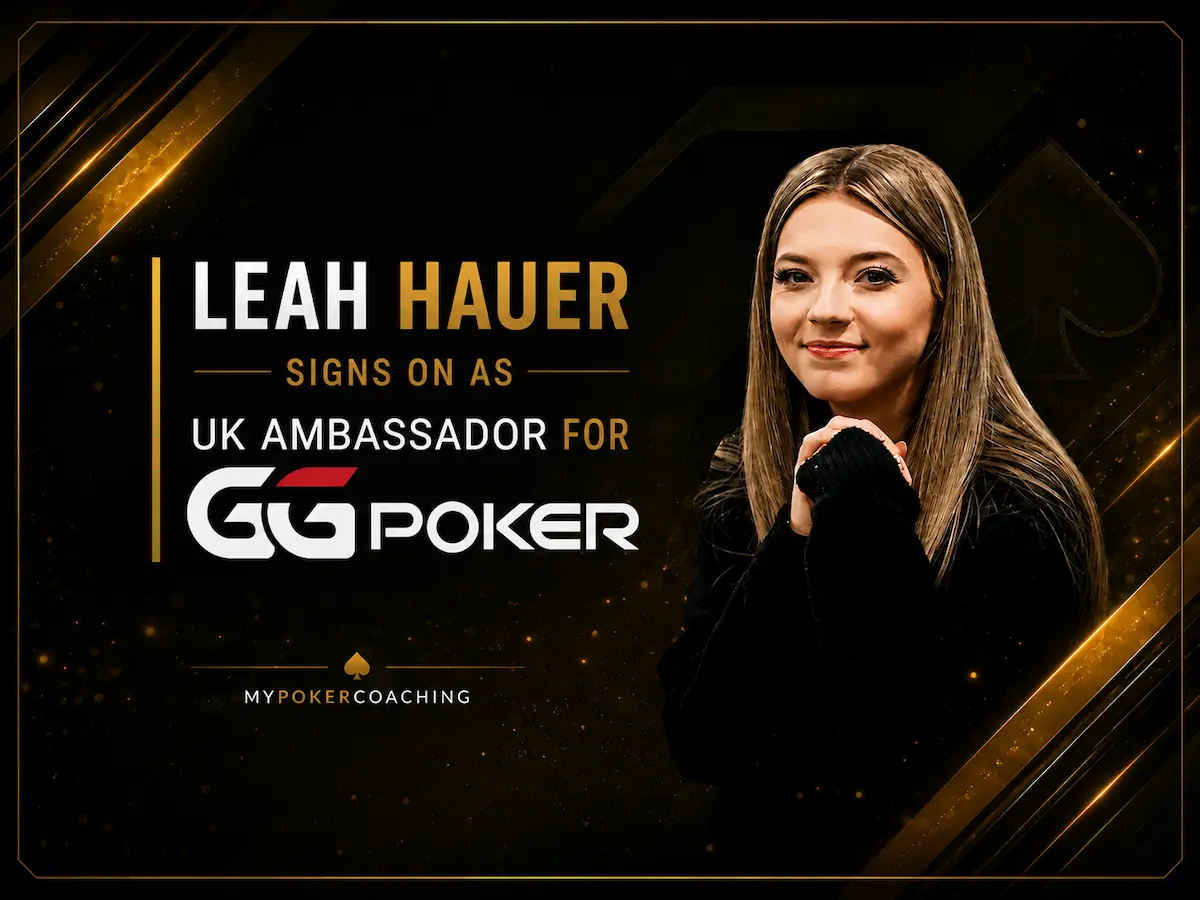
Leah Hauer, better known to many poker fans as leahhatespoker has officially joined GGPoker as its new UK & Ireland Brand Ambassador.
At first glance, this might look like another standard ambassador announcement. A popular creator signs with a major poker brand, posts the news on social media, and starts representing the room at live events. But Leah Hauer’s story is more interesting than that.
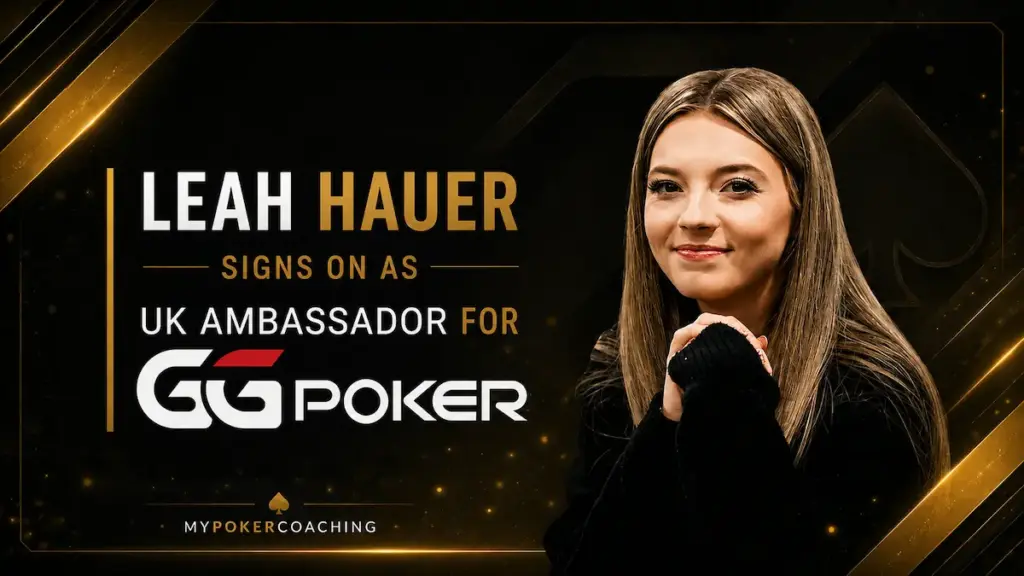
She is not a high-stakes crusher with millions in live tournament winnings. She is not a long-established poker celebrity with a decade of final-table highlights behind her. Instead, Leah Hauer represents a very modern type of poker figure: a relatable content creator, a developing player, and someone whose learning process is visible to the public almost in real time.
That is exactly why her signing is worth looking at more closely. In this article, we will cover who Leah Hauer is, why GGPoker decided to sign her, what her poker results say so far, and most importantly, what we can learn from one of her real tournament hands featured in her WSOP Europe Prague vlog.
Who Is Leah Hauer?
Leah Hauer is a poker content creator and live poker player from England, best known online as leahhatespoker. The name is intentionally ironic. Like many passionate players, Leah has described poker as a love-hate relationship: a game that can be exciting, brutal, tilting, rewarding, and frustrating all at the same time.
Before poker became the main focus of her life, Leah came from a competitive gaming background. She was involved in the League of Legends streaming scene, which gave her early experience with online audiences, pressure, performance, and strategic decision-making.
That gaming background matters. Poker and competitive gaming are very different environments, but they share some important skills: pattern recognition, emotional control, fast adaptation, and the ability to review mistakes without letting ego get in the way.
Leah later worked in a corporate consulting role at Visa, where she built a stable career before deciding to leave the traditional 9-to-5 path behind and pursue poker more seriously. That transition became a central part of her content. Her YouTube channel does not only show poker hands and tournament footage; it also documents the personal side of trying to build a life around the game.
This is one of the reasons her content resonates with recreational players. Leah Hauer shares the uncertainty, the nerves, the mistakes, the study process, and the lifestyle decisions that come with trying to improve at poker.
Why Did GGPoker Sign Leah Hauer?
GGPoker’s decision to sign Leah Hauer makes sense when you look at how poker sponsorships have changed. Leah Hauer will proudly represent the UK and Ireland poker communities.
In the past, poker ambassador deals were usually built around tournament success. The typical sponsored player had major titles, huge Hendon Mob numbers, or a long-established reputation in the poker world. Those things still matter, of course, but modern poker brands also need something else: creators, like leahhatespoker who can speak to the next generation of players.
Leah offers exactly that. She has a camera-friendly personality, an authentic connection with the UK poker community, and a content style that feels accessible to beginners and ambitious recreational players. She is not intimidating in the way some elite pros can be. Her appeal comes from the fact that viewers can see themselves in her journey.
For GGPoker, this is valuable. A player like Leah can represent the brand not only at major live events, but also through vlogs, social clips, behind-the-scenes content, and community-driven poker storytelling.
GGPoker is currently one of the largest online poker networks worldwide. The platform offers incredible tournaments, massive guarantees, and amazing software. If you want the full details, you should definitely read our comprehensive GGPoker review.
It is the absolute best place to test your poker skills. Who knows, you might even sit at the same virtual table as Leah!
Is Leah Hauer a Poker Pro or a Poker Creator?
The honest answer is that Leah Hauer is currently more of a poker creator than a proven professional poker player. That is not meant as criticism. It is simply the most accurate way to understand where she fits in the industry right now.
Her public live tournament results are still modest compared to established sponsored pros. She has recorded live cashes, including a deep run in the €1,000 Ladies Championship at WSOP Europe Prague, but she is not yet someone whose poker reputation is built on major titles or huge earnings.
GGPoker’s own announcement also highlighted other results, including a podium finish in a British Poker Series Ladies Event in London and podium finishes at the Merit Poker Carmen Series in Cyprus.
Leah’s appeal is not based on pretending to be one of the best players in the world. Her appeal is based on documenting the process of trying to get better. She studies, she plays, she makes mistakes, she reviews them, and she lets her audience follow along.
Editorial artwork by MyPokerCoaching. Original image source: @leahhatespoker / Leah Hauer content.
For a poker coaching audience, that is much more useful than another generic ambassador announcement. A developing player’s real hands can often teach recreational players more than a perfectly polished highlight from an elite pro.
Leah Hauer Net Worth and Bankroll
Just a month ago, Leah openly shared that her dedicated poker bankroll was at £7,570. Her next major milestone is reaching £10,000, though her total personal net worth outside poker remains unknown.
Why Leah’s Journey Is Useful for Poker Students
For MyPokerCoaching readers, Leah Hauer is interesting for a different reason than she might be interesting to GGPoker.
From a brand perspective, she is a creator with reach and personality. From a coaching perspective, she is valuable because her journey shows the exact stage many serious recreational players go through: moving from enthusiasm to structure, from instinct to strategy, and from casual live poker to more disciplined decision-making.
She openly admits she is still figuring out live poker exploits. To bridge this gap, she actively studies GTO strategy. Learning modern poker theory can definitely feel overwhelming at first.
If you are also on this learning journey, exploring tools like GTO Wizard can really fast-track your progress. It essentially takes the guesswork out of complex post-flop spots.
Her transparency about these strategic struggles is incredibly refreshing. This honest vulnerability is exactly why her audience keeps growing. That is why we wanted to go deeper than a basic profile.
Instead of only talking about Leah’s new GGPoker ambassador role, we are going to break down one of her real tournament hands from a WSOP Europe side event in Prague. This gives us a chance to look at a common live tournament mistake: playing a marginal suited hand from early position and then letting that preflop decision snowball into more difficult postflop spots.
The key question is simple: was K9 suited from UTG a creative tournament play, or a classic case of “fancy play syndrome”?
Coaching Breakdown: Leah Hauer’s K9s Hand From a WSOP Europe Side Event
The following hand comes from Leah Hauer’s WSOP Europe Prague vlog, where she documented her experience playing one of the festival’s side events. Because the hand is shown in vlog format, we do not have every single technical detail with perfect precision, but there is enough information to analyze the key decisions.
The hand takes place in a €400 Hyper Turbo Bounty tournament. This format is important. Hyper turbos create immediate pressure because stacks become shallow quickly, and bounty tournaments give players extra incentive to get involved and chase eliminations. In other words, marginal decisions can become expensive very fast.
This hand is a great example of how one loose preflop open can create a chain reaction: a weak c-bet, an awkward river decision, and a costly call. In a full-ring or near full-ring tournament setup, K9 suited is usually too loose from UTG and would often be a fold in solid GTO-based opening ranges.
The Hand Setup
- Tournament: €400 Hyper Turbo Bounty
- Hero: Leah Hauer
- Stack: Around 10,000 chips, roughly a starting stack
- Hand: K9 suited
- Position: Under the Gun
- Preflop action: Hero opens to 500, Small Blind calls, Big Blind calls
- Main theme: positional discipline, multi-way pots, and avoiding emotional river calls
This is exactly the type of spot many recreational players struggle with. K9 suited looks attractive because it can make flushes, straights, and top pair. But the problem is not the hand in isolation. The problem is the position, the format, and the players left to act behind.
Preflop: The Positional Error
Leah looks down at K9 suited Under the Gun and decides to open to 500. The Small Blind and Big Blind both call.
This is the first major issue in the hand.
Opening K9 suited from UTG is usually too loose, especially in a tournament format where stack preservation matters. Early position requires a much tighter and more robust opening range because the entire table still has a chance to wake up with better hands behind you.
K9♠ suited is also easily dominated. When you make top pair with a king, you can be in trouble against hands like AK, KQ, KJ, and KT. When you make a nine, your pair is often too weak to value bet confidently or call down comfortably. The suitedness helps, but it does not solve the core problem.
In a bounty tournament, this becomes even more dangerous. Players may be more willing to call, gamble, and apply pressure if they think there is a chance to win a bounty later in the hand. That means marginal early-position opens can get punished more often than in a standard freezeout.
Coaching takeaway: K9♠ suited can become playable from later positions, but in a full-ring or near full-ring tournament setup, it is usually too loose from UTG and will often be a fold in solid GTO-based opening ranges.
Flop: A♣-8♥-6♠ and a C-Bet With Almost Nothing
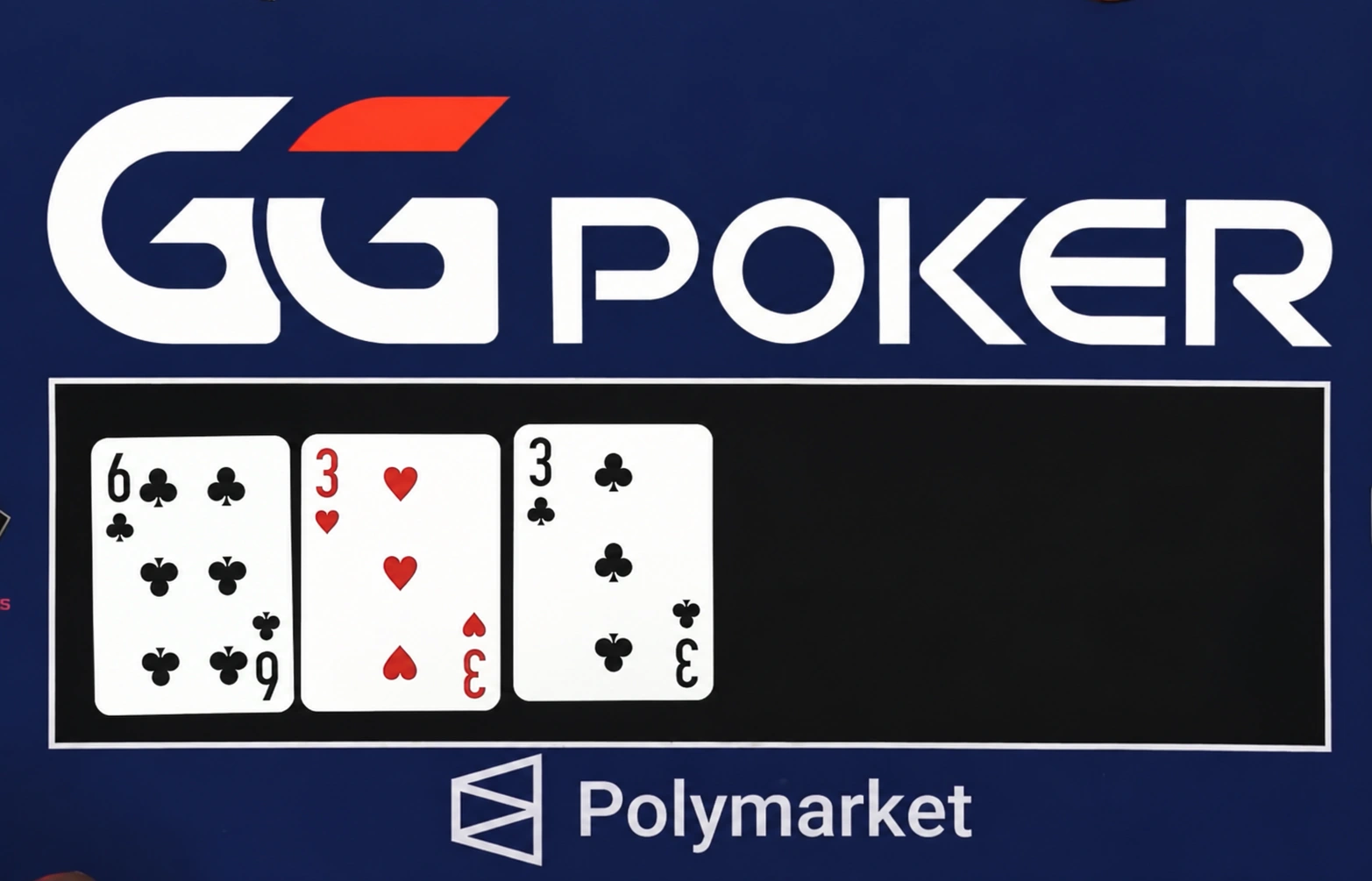
The flop comes: A♣-8♥-6♠
The pot is around 1,500. Both blinds check to Leah, and she continuation bets 600. The Small Blind calls, and the Big Blind folds.
This is where the preflop mistake starts to snowball.
At first, betting might look natural. Leah was the preflop raiser, and the ace-high flop should theoretically connect with an UTG opening range. In a heads-up pot, a small c-bet on an ace-high board can sometimes make sense.
But this is not a clean heads-up solver spot. This is a multi-way pot in a live bounty tournament, and Leah has almost no real equity. She has king high, no made hand, and no strong draw.
In multi-way pots, you have to play much more honestly. When two players call preflop from the blinds, there is a much higher chance that at least one of them connected with the ace, the eight, the six, or some type of straight draw.
Betting into two players with very little equity is usually not necessary. A check-back would keep the pot under control and avoid burning extra chips in a spot where the hand has poor future playability.
Coaching takeaway: range advantage does not give you permission to c-bet every missed hand, especially multi-way. With king high and no strong draw, checking back is usually the more disciplined option.
Turn: The Correct Give-Up
The turn is: J♦
The pot is now around 2,700. Both players check.
This is the best part of the hand from Leah’s side. After getting called on the flop, she does not continue firing with king high. She checks behind and gives up.
That is important.
Many developing players make the mistake of compounding aggression just because they started betting. They open too wide, c-bet too wide, get called, and then feel forced to keep telling the story. But once the flop bet gets called, Leah’s hand has very little reason to keep building the pot.
The jack does not improve her in a meaningful way. It may give some additional broadway interaction, but she still has no pair and no strong draw. Checking is the correct decision.
Coaching takeaway: giving up is not weakness. Sometimes the best decision in poker is to stop investing chips after your first plan fails.
River: A Pair of Nines and a Painful Call
The river brings: 9♣
The final board is: A♣-8♥-6♠-J♦-9♣
The Small Blind now leads out for a large bet of 2,000 into a pot of around 2,700. Leah has rivered a pair of nines and decides to call.
This is the second major mistake in the hand.
Yes, Leah improved from king high to a pair. But the question is not whether her hand improved. The real question is:
What worse hands are betting for value here? The answer is: almost none.
On this board, a pair of nines is a very weak bluff-catcher. The Small Blind can have many stronger hands: an ace, two pair, a straight, a slow-played strong flop hand, or a rivered value hand. The exact hand he shows up with, 7-5, makes a straight by the river.
Could the Small Blind be bluffing sometimes? Yes. But after calling the flop and then leading large on the river, this line is usually weighted toward value, especially in live low-to-mid-stakes tournament environments.
This looks like a classic “calling just to see it” spot. Leah has picked up a little showdown value, but not enough to justify calling a large river bet. Folding is the disciplined play.
Coaching takeaway: do not call just because you finally made a pair. Ask what worse hands are betting and whether your hand actually beats enough of your opponent’s range.
Was K9♠ Suited UTG a Creative Play or a Mistake?
The fairest answer is that this hand was a preflop mistake that created multiple difficult postflop decisions.
K9 suited is not a terrible poker hand in every situation. From the button, cutoff, or sometimes the hijack, it can be a perfectly playable open depending on stack depth and table dynamics. But from UTG, especially in a hyper turbo bounty format, it is simply too loose.
The problem with marginal early-position opens is that they rarely fail immediately. Instead, they create awkward spots later.
That is exactly what happened here.
Preflop, Leah opens a hand that is too weak for the position. On the flop, she feels pressure to continue representing a strong UTG range. On the river, she improves just enough to become curious, but not enough to make a profitable call.
This is how small leaks turn into bigger losses.
A beginner might say: “It was suited, so opening is fine.”
A more disciplined tournament player would say: “K9 suited is not strong enough from UTG, especially when the format rewards opponents for getting involved.”
A good coach would say: “The river call is bad, but the real mistake happened before the flop.”
That is the key lesson.
What Developing Players Can Learn From This Hand
This hand is valuable because it shows several lessons that apply directly to ambitious recreational players.
1. Position Matters More Than Suitedness
Many recreational players overvalue suited hands. They see two cards of the same suit and immediately think about flush potential.
But suitedness only adds a small amount of value. It does not magically turn a dominated hand into a profitable UTG open.
K9 suited can make strong hands, but it also creates many second-best situations. Top pair often has kicker problems, second pair is rarely strong enough to value bet, and missed flops leave very little equity to continue profitably.
From early position, that is not a recipe for long-term success.
2. Early-Position Ranges Should Be Tight and Robust
When you open from UTG, you are making a statement. You are saying your hand is strong enough to play against the entire table.
That means your range should include hands that can handle resistance. Strong pairs, strong broadways, good suited aces, and stronger suited connectors perform much better than weak suited kings.
K9♠ suited is simply too fragile. It looks playable, but it does not perform well enough against calls, 3-bets, or multi-way pots.
3. Multi-Way Pots Require More Honesty
The flop c-bet is understandable, but still questionable.
In heads-up pots, the preflop raiser can often use small bets on ace-high boards because they have a range advantage. But multi-way pots are different. When two players call, your fold equity drops. Players connect with the board more often, and someone can continue with an ace, pair, straight draw, or backdoor equity.
With king high and no strong draw, checking back is usually better than making a low-equity continuation bet.
4. Do Not Let One Mistake Force Another
A common poker leak is emotional commitment.
You open too wide, then feel like you need to c-bet. You c-bet and get called, then feel like you need to “represent” something, finally make a weak pair on the river, then feel like you have to call because you have already invested chips.
This is dangerous thinking.
Every street is a new decision. Opening too wide does not mean the hand has to be forced all the way to showdown. A missed c-bet can be abandoned, and even a river improvement can still be folded when the opponent’s line looks too strong.
Good players do not protect their ego. They protect their stack.
5. River Calls Need a Clear Reason
The river call is the easiest mistake for many players to understand because it is emotionally familiar.
You missed the flop, checked the turn, finally hit a pair on the river. Then your opponent bets, and folding feels painful because your hand is no longer complete trash.
But a weak pair is still a weak pair.
Before calling river bets, ask:
- What worse hands bet for value?
- How many natural bluffs does my opponent have?
- Does this player actually bluff enough in this spot?
- What story does their line tell?
- Am I calling because the price is good, or because I am curious?
If the honest answer is “I just want to see it” folding is usually better.
What This Hand Says About Leah Hauer’s Poker Journey
This hand is a perfect example of why Leah Hauer’s poker journey is useful to follow from a coaching perspective.
It is not a perfect hand. In fact, that is exactly why it works as educational content.
The preflop open is too loose. The flop c-bet is optimistic. The turn check is disciplined. The river call is likely too curious. Together, these decisions show a very common learning pattern among ambitious recreational players: understanding some parts of the game well, while still leaking chips in marginal positional spots.
That does not make Leah a bad player. It makes the hand relatable.
Leah’s openness as a creator gives viewers a chance to see the actual learning curve. Not just the wins, the nice edits, and the big moments, but also the hands where a decision can be questioned and improved.
Final Thoughts: Leah Hauer Is a Poker Creator Worth Watching
Ultimately, Leah Hauer’s story is not interesting because she plays every hand perfectly. It is interesting because she is still learning in public, and that makes her journey both entertaining and genuinely useful to analyze. For poker fans, she is a creator worth watching. For developing players, her hands are a reminder that improvement starts with honest review, disciplined fundamentals, and the willingness to learn from imperfect decisions.
FAQ
Affiliate disclosure: This article may contain affiliate links. If you sign up through one of our links, MyPokerCoaching may receive a commission at no extra cost to you. Poker involves financial risk. Please play responsibly and only gamble with money you can afford to lose.
Disclaimer
The information provided in this article is for educational and entertainment purposes only. We strive to keep all details accurate and up-to-date. However, the poker industry changes rapidly. Player statistics, sponsorships, and personal details may evolve over time. We make no warranties regarding the absolute accuracy of this content. MyPokerCoaching cannot be held liable for any errors, omissions, or outdated information. Always verify facts independently and do your own research.