
How to study poker is one of the most common questions players ask once they realize that simply playing more hands isn’t enough to become profitable. Many players grind hundreds of hours at the tables but see little improvement because they don’t have a structured way of learning the game. The truth is that improving at poker requires a combination of smart study habits, modern analysis tools, disciplined bankroll management, and a strong mental game.
Over the last decade, poker has evolved dramatically. What used to work ten years ago is often no longer enough in modern games. Today’s winning players treat poker like a highly competitive skill that must be studied systematically. They review hands, analyze data, train with solvers, and follow structured study routines that help them identify weaknesses.
In this guide, we will explain the best way to study poker using a simple and practical framework. Whether you play online or live, cash games or tournaments, these principles will help you build a study system that improves your results and drastically increases your long-term win rate.
How to Study Poker: A Simple System That Actually Works
Before diving into specific technical tips, it’s extremely important to understand the overall framework. The most effective approach is not to randomly watch YouTube videos or read outdated strategy articles. Instead, winning players usually follow a system built around five key pillars:
- Using poker study tools to analyze your game
- Reviewing hands to identify strategic leaks
- Building a structured poker study routine (Active vs. Passive learning)
- Developing a strong mental game and emotional control
- Managing your bankroll responsibly
When these five elements work together, your learning process becomes significantly more effective. You begin to notice patterns in your mistakes, improve your decision-making, and build a much deeper mathematical understanding of strategy.
Many successful players spend around 20–30% of their poker time studying and the remaining 70-80% of their time playing. This balance allows them to continuously improve while still gaining practical, profitable experience at the tables.
1. Use Poker Study Tools to Analyze Your Game
One of the biggest advantages modern players have is access to powerful software. These poker study tools allow you to analyze your gameplay, review thousands of hands in seconds, and simulate strategies that would otherwise be impossible to calculate manually.
Two of the most widely used platforms today are Holdem Manager 3 (alongside its sister software, PokerTracker 4) and GTO Wizard. They serve completely different but highly complementary purposes.
Holdem Manager 3: Analyzing Your Real Gameplay
Holdem Manager 3 (HM3) is one of the absolute best tracking tools in the online poker world. Just like PokerTracker 4 (PT4), it records every single hand you play and builds a massive database that you can analyze after your sessions.
With Holdem Manager 3, you can:
- Track your exact win rate across different stakes and formats.
- Use HUD (Heads-Up Display) statistics during live gameplay to profile opponents.
- Filter specific situations (for example, 3-bet pots, out-of-position play, or river calls).
- Identify specific patterns in your losing hands.
From My Experience: When I was grinding online poker full-time, religiously reviewing my HM3 database after sessions was the single biggest factor in improving my win rate. By filtering out difficult spots and studying the raw data, I found it incredibly easy to identify and fix my recurring leaks.

Read our full Holdem Manager 3 review to see how this software can instantly spot your biggest leaks.
GTO Wizard: Studying Strategy Away From the Table
While Holdem Manager 3 analyzes your actual historical play, GTO Wizard is designed strictly for off-table study. It uses Game Theory Optimal (GTO) solutions to help players understand how mathematically perfect strategies work.
With GTO Wizard, you can:
- Compare your actual decisions with optimal solver solutions.
- Study completely solved preflop ranges for every position.
- Practice postflop situations and develop a solid poker solver strategy.
- Analyze complex multi-way or deep-stacked situations.
Using a tracker like HM3 alongside GTO Wizard creates the ultimate loop for improvement: You identify a difficult hand in your tracker, analyze the exact situation with GTO Wizard, understand the strategic mistake, and apply the improved strategy in future games.
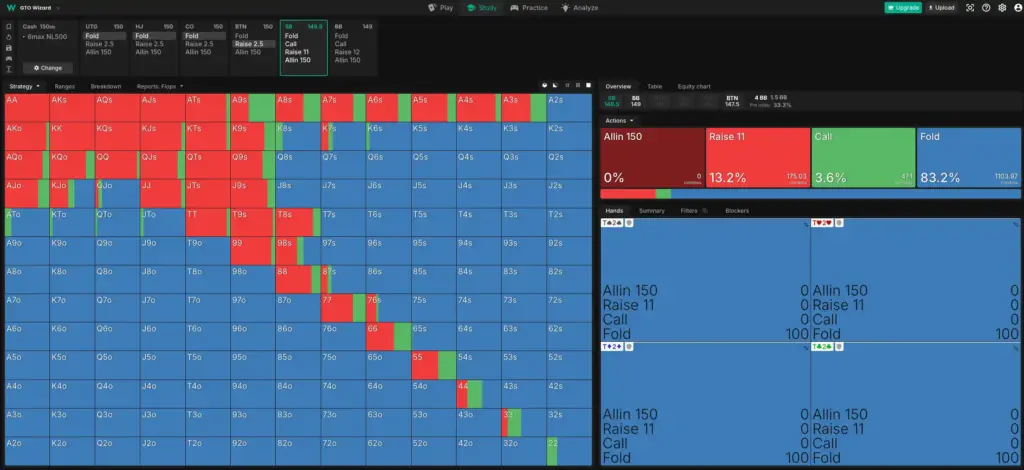
Check out our detailed GTO Wizard Review to learn how to master modern poker theory.
2. Review Your Hands and Identify Leaks
Many players believe that improvement comes primarily from playing more volume. In reality, understanding how to analyze hands away from the table is often far more valuable. Hand review helps you understand exactly why a particular hand went wrong, whether your decision was mathematically correct, and how different strategies might have performed.
A simple, professional review process should look like this:
1. Mark difficult hands during your session. Whenever you encounter a tricky situation – even if you won the pot – mark the hand in your tracking software so you can revisit it later when your mind is clear.
2. Review hands after your session. Open your database and carefully analyze the marked hands. Ask yourself questions such as:
- Was my preflop range correct for this position?
- Did I consider my opponent’s range properly based on their HUD stats?
- Was my bet sizing optimal for this specific board texture?
3. Discuss Hands with a Study Group or Coach. Studying entirely alone can lead to an echo chamber. Joining a study group on Discord or hiring a coach can give you fresh perspectives. This is often cited as the absolute best approach to fixing blind spots in your logic.
3. Build a Poker Study Routine That Improves Your Results
Many players wonder how to keep learning consistently without getting bored. The most effective approach is to build a highly structured poker study routine that separates your time into Active and Passive learning.
Active vs. Passive Learning
- Passive Learning: Watching poker vlogs, listening to podcasts, or watching Twitch. This is entertaining, but it does not fix your specific leaks.
- Active Learning: Running solver simulations, calculating pot odds, doing specific range drills in GTO Wizard, or reviewing your own database. This is where real improvement happens.
A good poker study routine should prioritize Active Learning and include three main components:
- Regular hand reviews: Schedule dedicated time each week to review your database. Even 30–60 minutes of focused review can reveal valuable insights.
- Strategic macro-learning: Spend time studying broad concepts such as preflop ranges, bet sizing, and range advantage. (Pro Tip: Aside from using solvers, reading credible, modern poker strategy books written by elite professionals is still a fantastic way to grasp advanced GTO concepts.
- Solver or training work: Use training software to practice your poker solver strategy in specific micro-situations, such as blind vs blind encounters or 3-bet pots.
Many successful players follow a weekly routine similar to this:
- Playing: 70%
- Hand review (Active): 15%
- Strategy study (Active): 10%
- Watching content (Passive): 5%
4. Develop a Strong Poker Mental Game
Even if you have mastered the technical side of the game, your mental stability will ultimately dictate your success. Emotional control is a crucial part of long-term profitability. Variance is unavoidable, and without proper mental discipline, tilt can quickly destroy your bankroll.

To improve your mental game, consider adopting these professional habits:
Implement Warm-up and Cool-down Routines: Treat a session like an athletic event. Spend 10 minutes before you play looking over your preflop charts. After the session, spend 5 minutes doing a “cool-down” where you log your results and mark your hands.
Read “The Mental Game of Poker”: If you are serious about fixing your emotional leaks, reading Jared Tendler’s highly acclaimed book, The Mental Game of Poker, is widely considered the absolute best starting point for understanding tilt and improving emotional control.
Separate Results from Decisions: A brilliant decision can still lead to a losing result due to bad luck. Focus entirely on the quality of your decisions rather than short-term financial outcomes.
5. Manage Your Bankroll Like a Professional
Even if you have the perfect strategic approach and crush the tables, poor bankroll management can still make you go broke.
Professional players usually follow very conservative bankroll guidelines to absorb the natural swings of the game:
- Cash games: 50–100 buy-ins for the stake you currently play.
- Tournaments (MTTs): 200–500 buy-ins due to the massive variance involved.
Leveraging Online Poker Bonuses: Another massive factor that can help players grow their bankroll safely is taking advantage of online poker bonuses. Many poker sites offer generous welcome bonuses and rakeback deals that effectively add risk-free funds to your bankroll.
When used correctly, these bonuses can provide additional playing opportunities, soften the blow of variance, and help you build experience much faster.
Studying is only half the battle; putting your knowledge into practice is where you truly improve. If you are looking for a great place to test your new strategies, check out our highly recommended Best Online Poker Sites to find games that fit your skill level and claim a welcome bonus along the way.
Common Mistakes When Studying Poker
Even highly motivated players sometimes struggle to learn efficiently. Here are the most common mistakes to avoid:
- Studying randomly: Jumping between unrelated topics leads to confusion.
- Watching too many videos without practice: Passive learning is dangerous. Without actively applying the concepts at the tables, the information rarely sticks.
- Ignoring hand review: Many players spend hours grinding but never analyze their sessions afterward.
- Overusing solvers without understanding fundamentals: Blindly copying a computer's poker solver strategy without understanding why it chose that action can destroy your game against human opponents.
Mastering how to study poker is a beautiful journey of skill, patience, and continuous learning. Players who take improvement seriously, use the right tools, and maintain strong discipline will always have a significant edge.
FAQ About How to Study Poker