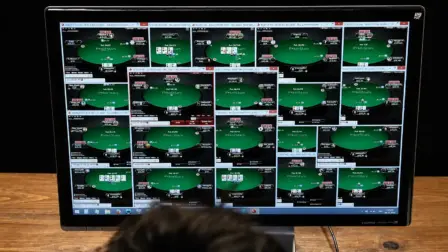


Grinding online poker in 2026 is tougher than ever, but if you want to instantly boost your win rate without spending months on complex solvers, you need to start playing on the softest poker sites. While perfecting your GTO strategy and post-flop play is essential, constantly battling skilled regulars on the toughest networks means you are simply leaving money on the table.
Poker table selection strategy is a fundamental skill you can implement today to drastically improve your profit potential. However, the reality of modern online poker is that traditional table selection (using third-party software to scan lobbies and pick your exact seat) is strictly prohibited on many major networks due to “Seat Me” features designed to protect casuals. Today, finding the best games starts before you even open a lobby.
Step 1: Finding the Softest Poker Sites
If you want to maximize your profit, you don't just sit at the first available table on the toughest network. You need to spread your bankroll around.
Sometimes, the easy money isn't swimming in the massive GGPoker water. Instead of battling tough regulars there, you might need to download and play on alternative poker rooms (like smaller networks or mobile-focused apps) to find recreational poker players and less shark-infested games. Playing on the softest poker sites – often platforms with heavy casino or sportsbook traffic crossover – is the absolute best table selection move you can make.
If you are looking for a secure online environment, exploring our recommended online poker rooms can provide you with excellent welcome bonuses and potentially much weaker competition.
Step 2: Spotting the Fish
Once you are seated (or if you are playing live poker/on sites with open lobbies), your goal is to identify the weaker targets. Fish are generally loose passive players, and they can easily be recognized:
- They’re the ones who often limp, call pre-flop raises too frequently, and love to see flops.
- They save any post-flop aggression for extremely strong hands, so you can believe their bets and raises (for the most part).
- They mindlessly call with any draw, allowing you to overcharge them post-flop with larger value bets on wet boards when you know they won’t fold.
While finding three or four of these players at a single 6-max table was common in the early days of online poker, the modern reality is much different. Today, if you spot just one clear recreational player or a weak regular at your table, you have found a highly profitable game worth sitting at.
Pro Tip: Make sure to tag any fish you encounter so you can spot them easily in the future. Use green color coding on their player box, type specific notes, and use player labels.
Step 3: Tag and Track Your Opponents

Make sure to tag any fish you encounter so you can spot them easily in the future.
- If tracking software is allowed: Using programs like Hold'em Manager 3 (HM3) or PokerTracker 4 (PT4) takes this to the next level. You can color-code players, take detailed notes directly on your HUD, and analyze their tendencies post-session based on massive sample sizes.
- If tracking software is banned: On networks like GGPoker where third-party software is strictly prohibited, you must rely entirely on the poker room's built-in tagging system. Use green color coding on their player box and type specific notes so you immediately recognize them during your next session.
Step 4: Look for Small Stacks
Good regulars automatically top-off their stack, so they’re always sitting with 100 big blinds (or more) in cash games. But weaker players often let their stacks dwindle because they want to try and build it back up without risking another deposit.
When you see multiple 30bb, 40bb, and 50bb stacks at a table, you’ve likely found a highly profitable game. Make sure to keep your own stack topped up so you have the greatest profit-earning potential against everyone at the table.
Step 5: Avoid the Sharks (Or Keep Them on Your Right)

Sharks are strong regulars who try to gobble up the fish just like you do. Because of the rise of bumhunting in poker (the practice of highly skilled players hunting down specific weak players), many sites have cracked down on table selection. But if you do spot sharks, positional awareness is key.
If your table has any strong winning players, they must be on your right. Sharks can make your life hell when they have position on you (sitting on your left). You’ll face a lot of 3-bets after open-raising, and when you iso-raise a limper, they will see through your play and light 3-bet you. Find tables where the sharks are on your right so you’re the one putting in-position pressure on them.
Step 6: Use Yourself as Bait
Sometimes the waitlist is 10 names deep on the most profitable tables because the sharks have already swooped in. Instead of waiting, use yourself as bait: sit at an empty table and wait for the action to start. Recreational players hate waiting; they came to gamble and play right now, so any open table is a good table in their eyes. They will often join you, allowing you to play them heads-up or short-handed before the rest of the regulars catch on.
Start applying these strategies today to put yourself in more profitable situations. Look for the easiest games, track your opponents, avoid playing out of position against sharks, and your bankroll will thank you for it.
FAQ About The Softest Poker Sites