
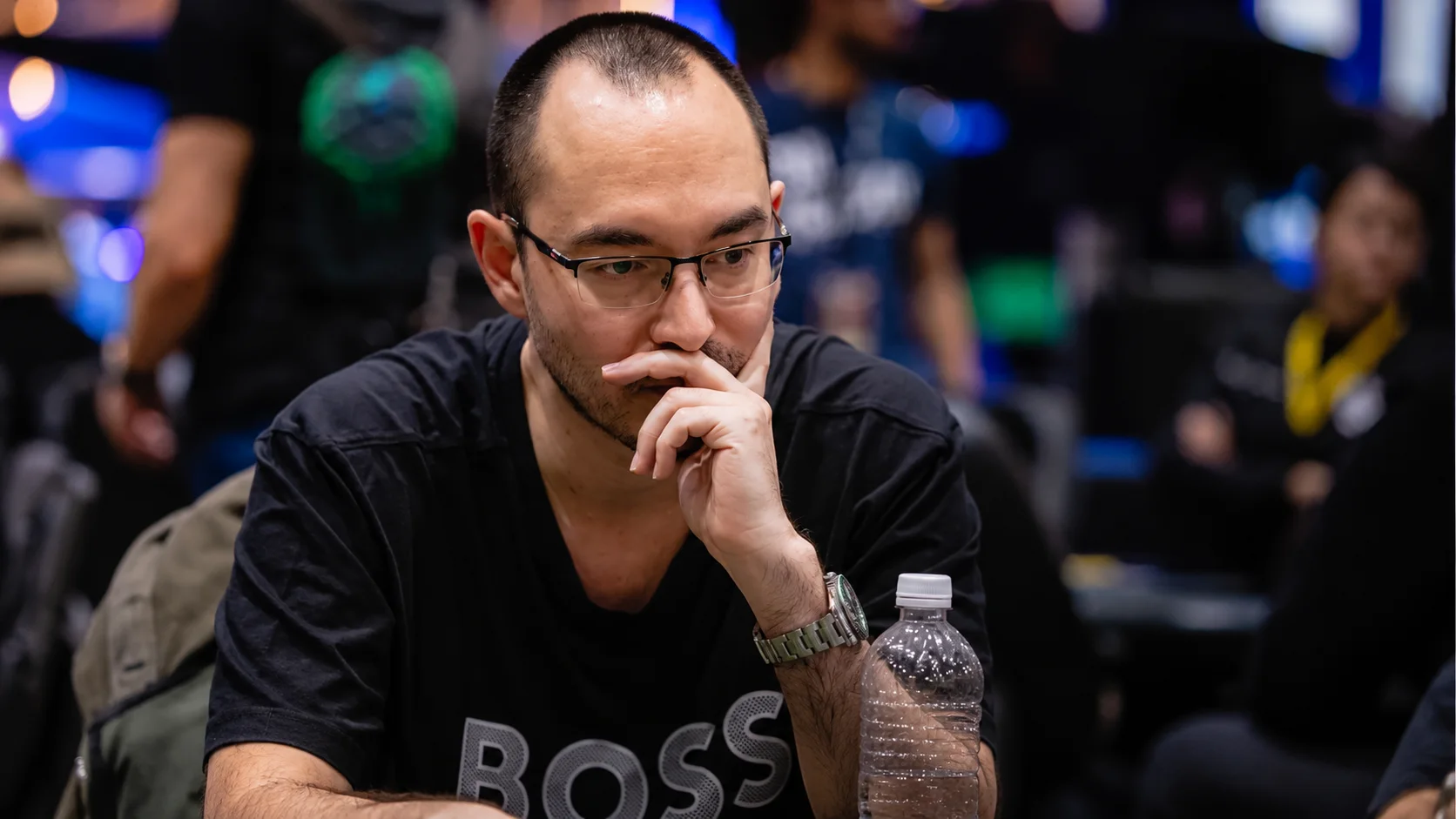
The Will Kassouf WSOP Return has quickly become one of the most talked-about stories ahead of the 2026 World Series of Poker. After a dramatic and highly controversial run in last year's Main Event, many players believed Kassouf's relationship with the WSOP was permanently damaged. Instead, the British poker pro has confirmed that his suspension has been lifted and that he plans to return to Las Vegas this summer.
Love him or hate him, few players generate as much discussion as Will Kassouf. His constant table talk, relentless pressure, and willingness to push the boundaries of acceptable behavior have made him one of the most polarizing figures in modern poker. While some view him as an entertainer who brings personality back to the game, others see him as a player who deliberately slows down tournaments and creates unnecessary tension at the table.
However, the upcoming Will Kassouf WSOP Return presents an interesting opportunity to examine a much bigger topic than one player's reputation. It raises important questions about speech play, poker psychology, and the fine line between gaining an edge and disrupting the game.
Who Is Will Kassouf?
For newer poker fans, Will Kassouf first became a household name during the 2016 WSOP Main Event. His deep run, combined with his constant verbal pressure and infamous “speech play” tactics, created some of the most memorable moments of the entire tournament.
Kassouf's style revolves around talking through hands, asking opponents questions, making observations, and generally creating an uncomfortable environment for the players around him. While table talk has always been part of poker, Kassouf pushed the concept further than almost anyone before him.
His most famous moment came during a heated confrontation with Griffin Benger, who famously called him “the ultimate disgrace to the game”. The exchange became one of the defining moments of the 2016 WSOP Main Event, helping to cement Kassouf's reputation as one of poker's most controversial personalities. Nearly a decade later, the hand is still regularly referenced on YouTube and poker forums whenever discussions turn to speech play and table etiquette.
Over the years, Kassouf has continued competing in major live tournaments around the world while maintaining his unique table presence. Although discussions about Will Kassouf Net Worth frequently appear online, the exact figure remains unknown. What is certain is that his poker career has generated millions of dollars in tournament cashes and made him one of the most recognizable faces in the game.
Why Was Will Kassouf Banned From the WSOP?
To understand the Will Kassouf WSOP Return, we first need to revisit the controversy that unfolded during the 2025 WSOP Main Event.
As expected, Kassouf's speech play generated attention almost immediately. However, this time the controversy extended beyond verbal interactions. Throughout the tournament, opponents repeatedly complained about his pace of play, arguing that he was taking excessive amounts of time to make routine decisions.
One of the most talked-about incidents occurred on Day 2 when Kassouf held the second-nut flush against Sacha Cohen. Despite holding an extremely strong hand, he spent more than ten minutes considering his action before Cohen eventually called the clock.
According to reports from the tournament floor, opponents called the clock on Kassouf 23 separate times during a single session. Tournament officials eventually intervened by reducing his available decision time to just ten seconds per action.
By Day 7, tensions boiled over completely. Following multiple disputes involving players, floor staff, and tournament officials, Kassouf became involved in a public disagreement with WSOP Tournament Director Jack Effel. Shortly afterward, he was eliminated in 33rd place for approximately $300,000 when Kenny Hallaert's King-Five improved against his pocket Sevens.
From Suspension to the Will Kassouf WSOP Return
The drama did not end with his elimination. Following his exit from the Main Event, Kassouf was escorted from the tournament area and removed from the remainder of the 2025 WSOP.
The incident led many players to believe that a permanent ban could follow. Instead, tournament officials later confirmed that the suspension applied only to the remainder of the series.
That decision ultimately paved the way for the upcoming Will Kassouf WSOP Return in 2026. Whether fans view him as an entertainer, a strategist, or simply one of poker's most controversial figures, his return ensures that plenty of attention will once again follow him to the WSOP tables.
What Is Speech Play in Poker?
The term Speech Play Poker refers to the use of conversation, questions, comments, and verbal pressure during a hand in an attempt to influence an opponent's decision or gather information. While many players associate speech play with Will Kassouf, the concept itself has existed for decades and has been used by some of poker's greatest personalities.
Unlike online poker, live poker offers players access to an additional layer of information. Every action at the table, from body language and betting patterns to verbal responses, can potentially reveal something about a player's hand or emotional state. Skilled players understand that poker is not simply a card game; it's also a game of human interaction.
Speech play can take many forms. Some players use friendly conversation to make opponents feel comfortable and encourage them to reveal information. Others ask direct questions after making a large bet, hoping to provoke a reaction. In certain situations, players may even attempt to create uncertainty by confidently representing a hand they do not actually hold.
The Psychology Behind Speech Play
This is where Poker Psychology becomes particularly important. The best live players understand that decision-making is rarely based on mathematics alone. Human emotions such as fear, confidence, frustration, and uncertainty can all influence how a player responds under pressure. Speech play often seeks to amplify those emotions at critical moments.
However, there is a significant difference between strategic table talk and simply talking for the sake of talking. Effective speech play has a purpose. It aims to gather information, manipulate perception, or create pressure. Random conversation that doesn't influence a decision generally offers little strategic value.
Why Will Kassouf's Approach Divides Opinion
While Will Kassouf is often the first name associated with speech play, he is not the only modern player to build a reputation around table talk. Martin Kabrhel has generated similar reactions in recent years, with some fans praising his ability to create pressure and others criticizing his constant interaction at the table.
One reason Will Kassouf became such a controversial figure is that he pushed speech play to an extreme level. While most players use occasional table talk in key situations, Kassouf often maintains a near-constant stream of conversation throughout an entire session. Supporters argue that this creates a legitimate psychological edge. Critics believe it crosses the line into distraction and disruption.
The reality is that speech play can be effective when used correctly. A well-timed question or observation may reveal valuable information that isn't available through betting patterns alone. At the same time, players should be careful not to overestimate its power. Against experienced opponents, speech play rarely replaces solid fundamentals, sound strategy, and disciplined decision-making.
Ultimately, the most successful players treat speech play as an additional tool rather than a primary strategy. It can complement strong poker fundamentals, but it cannot replace them.
FAQ About Will Kassouf WSOP Return and Speech Play