
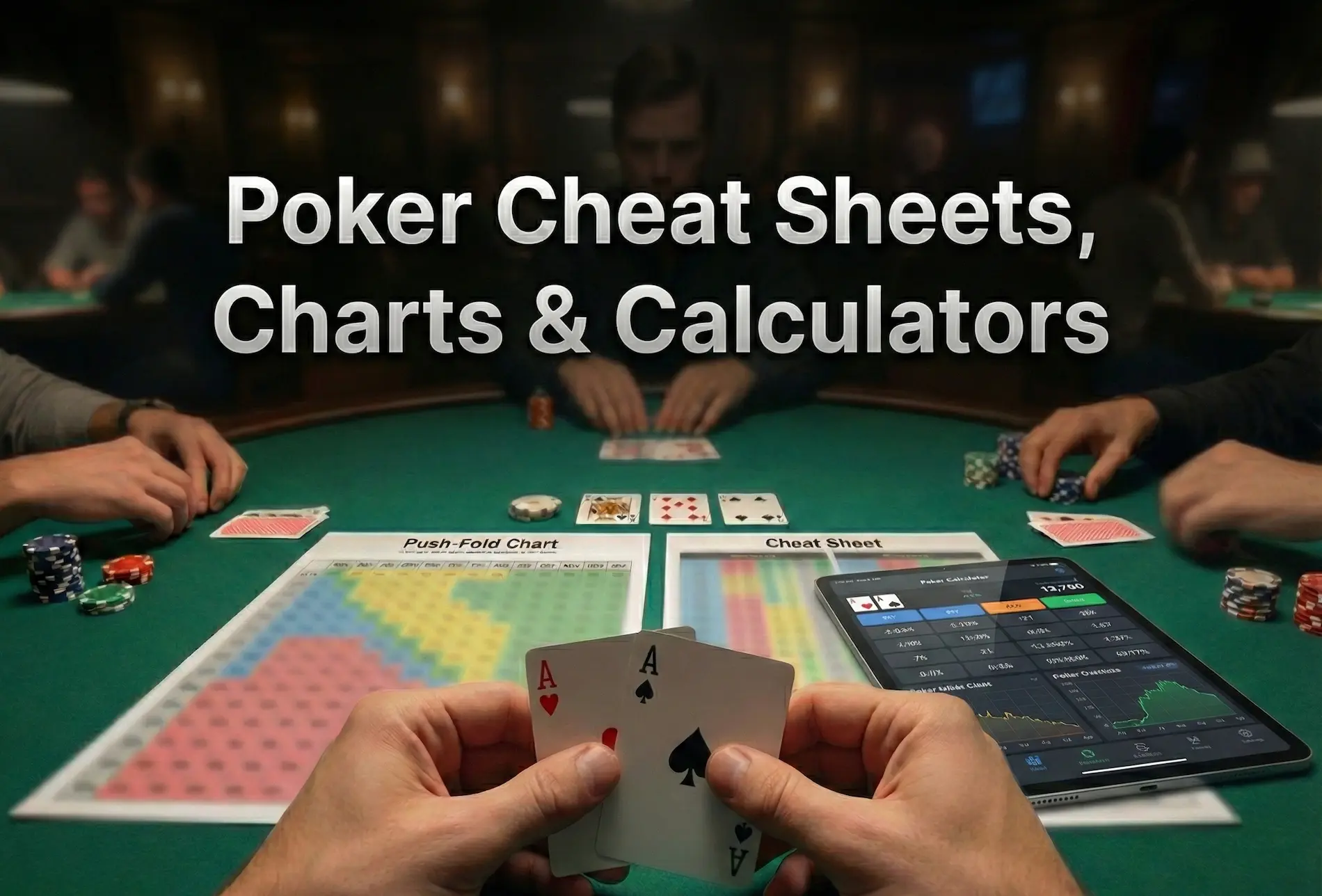
Poker is a game of decisions. Some are simple; others happen under pressure, with limited time and incomplete information. That's where a cheat sheet poker setup can make a real difference. Instead of guessing or relying on memory alone, players use simple reference tools to stay consistent and avoid common mistakes.
A good cheat sheet system doesn't replace thinking. It supports it. Whether you are learning the game or playing regularly, having the right tools nearby helps you make faster, more confident choices at the table.
This page brings together three free tools that cover the most common poker situations:
- a poker cheat sheet for general fundamentals
- a push-fold chart for short-stack decisions
- a poker calculator for odds-based choices
Used together, these tools form a practical reference that many players return to again and again.
What is a Poker Cheat Sheet (And When to Use One)
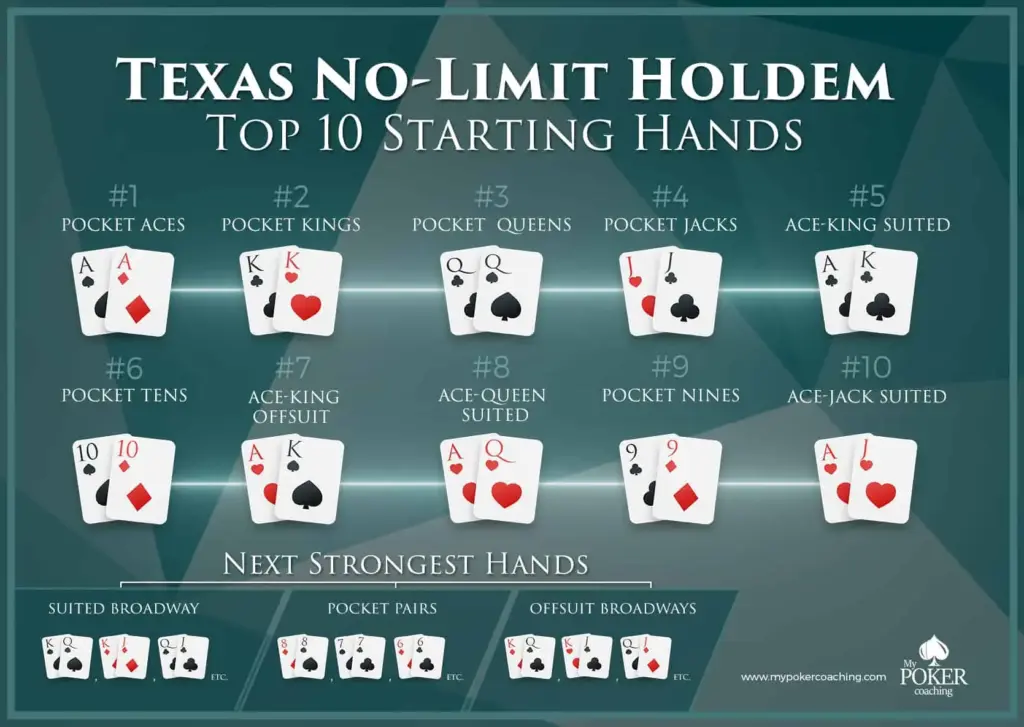
A poker cheat sheet is a compact reference that summarizes key information you don't want to recalculate or rethink every time you play. This often includes starting hands, positional awareness, and even reminders about poker hand ranking and standard poker card rankings. It's not about shortcuts. It's about reducing unnecessary mental load so you can focus on the actual hand in front of you.
Why Cheat Sheets Work for Both Beginners and Regulars
For newer players, a cheat sheet helps build solid habits early. It reinforces starting hand selection, positional awareness, and basic probabilities. It also helps players quickly memorize poker hand ranking and understand how poker card rankings determine which hands win at showdown.
More experienced players use charts differently. Instead of memorizing individual hands, they rely on structured range charts to internalize strategy patterns over time. While beginners may need a simple hand ranking reference, regular players use advanced charts to refine decision-making across positions and stack sizes.
Most mistakes don't come from a lack of knowledge. They happen because players:
- forget simple rules under pressure
- overthink routine spots
- relies too much on intuition in marginal situations
A well-structured cheat sheet helps prevent those leaks.
What a Good Poker Cheat Sheet Includes
Not all cheat sheets are useful. The best ones focus on information that is:
- frequently used
- easy to misremember
- costly to get wrong
Common elements include:
- starting hands by position
- basic pot odds and equity ideas
- stack size awareness
- tournament versus cash game adjustments
- clear reminders of poker hand ranking for quick review
The goal is clarity, not overload.
Texas Hold'em Cheat Sheet Charts
Many players prefer a visual reference they can quickly review before a session or during study time. That's where a Texas Hold'em cheat sheet pdf becomes especially useful.
A single-page visual layout helps connect concepts faster than text alone. Instead of memorizing everything, you recognize patterns and reinforce them through repetition.
For a more detailed breakdown of fundamentals and starting hand structure, visit the full cheat sheet poker page here.
How to Use a Cheat Sheet While Studying
A cheat sheet works best when used actively, not passively. Some effective ways to use it include:
- reviewing it before you start a session
- keeping it open during hand history analysis
- comparing your actual decisions with the reference
Over time, the information becomes internalized, and you rely on it less during play.
Push Fold Chart: Simple Decisions for Short Stacks
As stack sizes shrink, poker becomes less about creativity and more about precision. This is where a push-fold chart becomes one of the most practical tools a player can use.
When Push/Fold Becomes the Best Strategy
Push/fold decisions typically appear when:
- effective stacks are low
- blind pressure increases
- postflop play becomes limited
In these spots, the choice is often binary: move all-in or fold. Small errors here can cost a large portion of your tournament equity.
Why Guessing Costs More Than Folding
Short-Stack situations feel stressful because every decision seems final. Without a clear reference, players often:
- shove too wide
- fold hands that should be played
- adjust emotionally instead of logically
A push-fold chart removes much of that uncertainty. It provides a baseline that helps you stay consistent across similar spots.
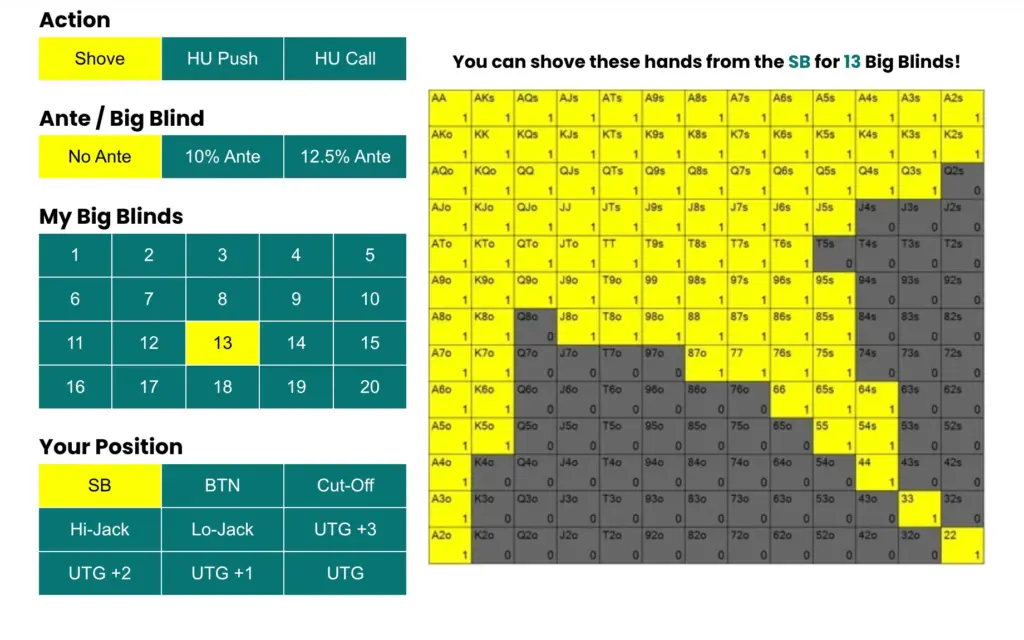
Use the full push fold chart here to see exact ranges by position and stack depth.
Poker Calculator: Make Odds-Based Decisions Faster
Not every decision can be simplified to a chart. Some situations require a quick evaluation of equity and pot odds. That's where a poker calculator becomes valuable.
What a Poker Calculator Helps You With
A calculator doesn't play the hand for you. It helps you understand:
- How often is your hand likely to win
- Whether calling or betting makes sense long term
- How draws and made hands compare against ranges
This is especially useful when reviewing hands after sessions.
Common Spots Where Players Misjudge Odds
Players frequently struggle with:
- draw-heavy boards
- all-in situations
- multiway pots
A pot odds calculator provides fast feedback and helps correct intuitive errors. Over time, this improves your natural estimation skills.
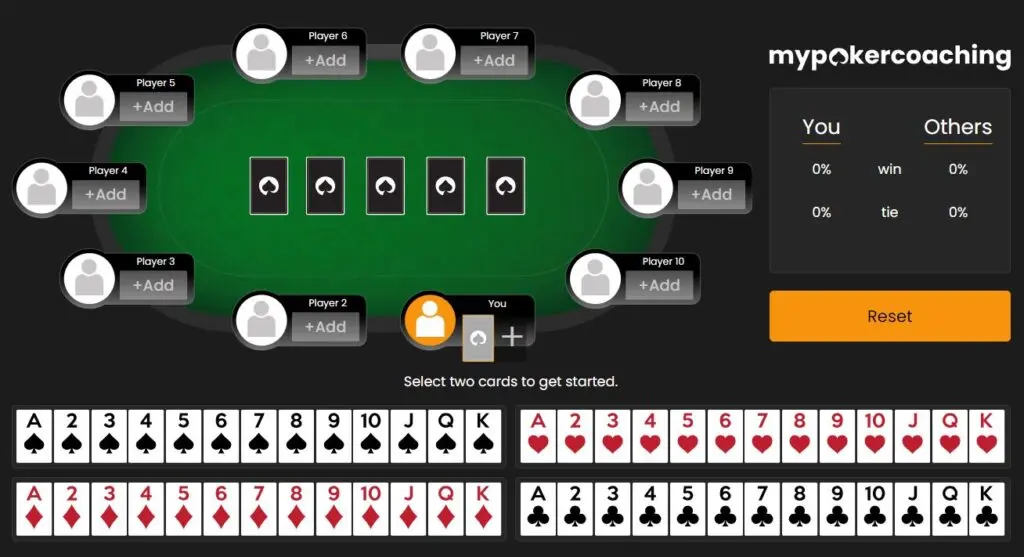
Try the free poker calculator to check equity and odds in common scenarios.
How These 3 Tools Work Best Together
Each tool solves a different type of problem. Used together, they cover most everyday decisions.
- Poker cheat sheet → core fundamentals
- Push fold chart → short-stack and endgame spots
- Poker calculator → odds-based analysis
A simple study routine might look like this:
- Review the cheat sheet before playing
- Use the push fold chart during the tournament study
- Analyze difficult hands with the calculator afterward
This layered approach keeps learning structured and efficient.
Apply What You’ve Learned in Real Games
Studying with charts and calculators is only one part of improvement. The next step is applying these decisions in real situations against real opponents.
Many players choose platforms that offer a wide range of stake levels, large tournament fields, and strong software tools. One example is GGPoker, the official partner of the WSOP, where players can test their skills from micro-stakes up to high-level games.
If you decide to create an account, the SMPBONUS code currently unlocks up to $600 in matched deposit bonuses, giving you more flexibility as you build your bankroll.

Common Mistakes When Using Cheat Sheets
Cheat sheets are helpful, but only when used correctly.
Treating Cheat Sheets as Fixed Rules
Charts and references are guidelines, not laws. Context still matters, especially against different player types.
Ignoring Table Dynamics
A cheat sheet doesn't account for table image, tendencies, or recent history. Use it as a baseline, not an excuse to stop thinking.
Not Reviewing Hands After Sessions
The biggest improvement comes after the game. Reviewing hands with charts and calculators reinforces sound decisions and highlights mistakes.
Final Thoughts
Poker rewards preparation. The players who improve the fastest are usually those who simplify their study process and stay consistent in their decisions.
Using a chat sheet poker system built around solid fundamentals, clear push/fold ranges, and basic odds evaluation can save time and reduce costly mistakes. These tools are not shortcuts. They are learning aids that support better decision-making over the long run.
Bookmark this page and use it as a practical reference whenever you need a quick reminder os a study starting point.
Frequently Asked Questions