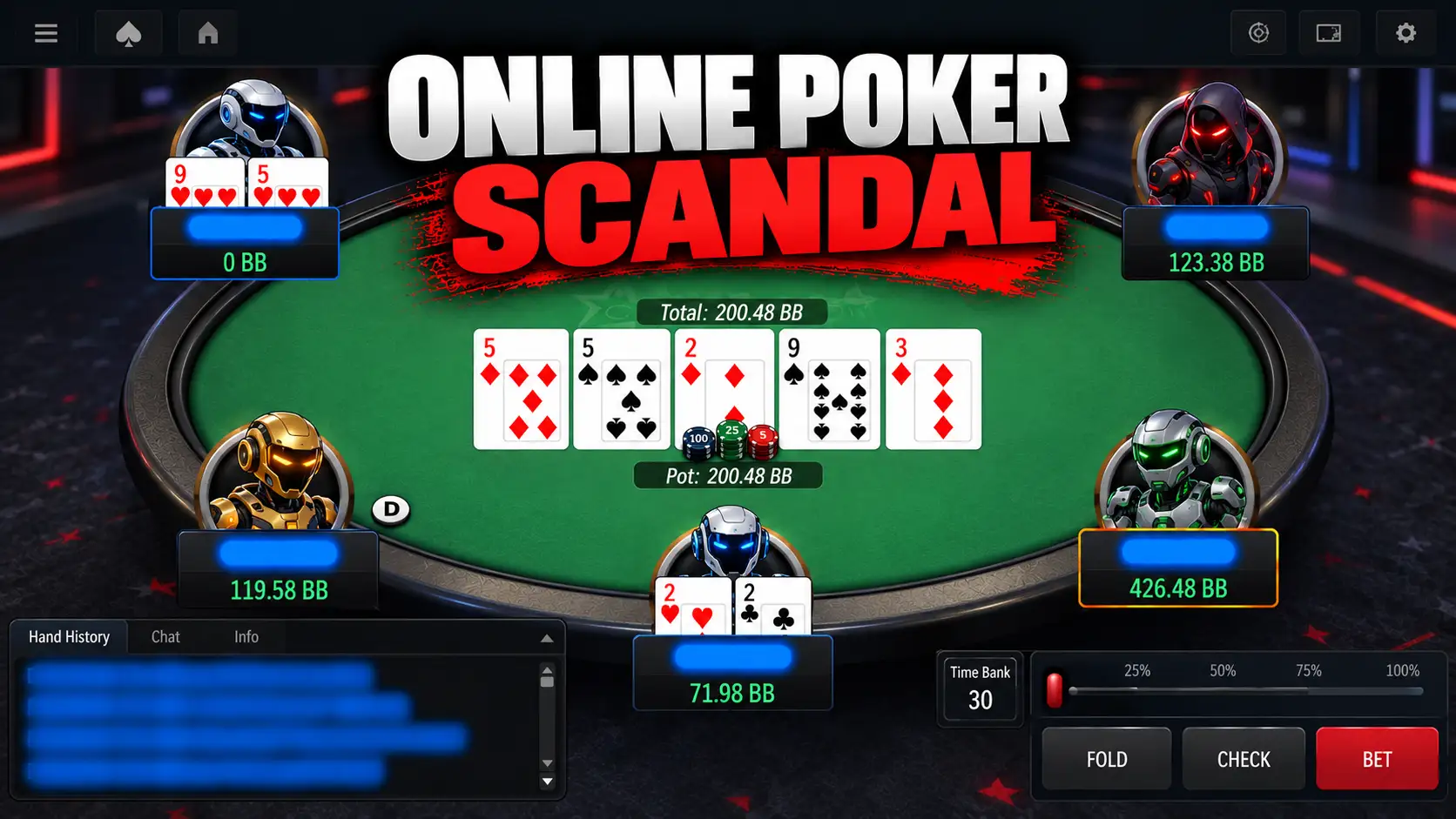

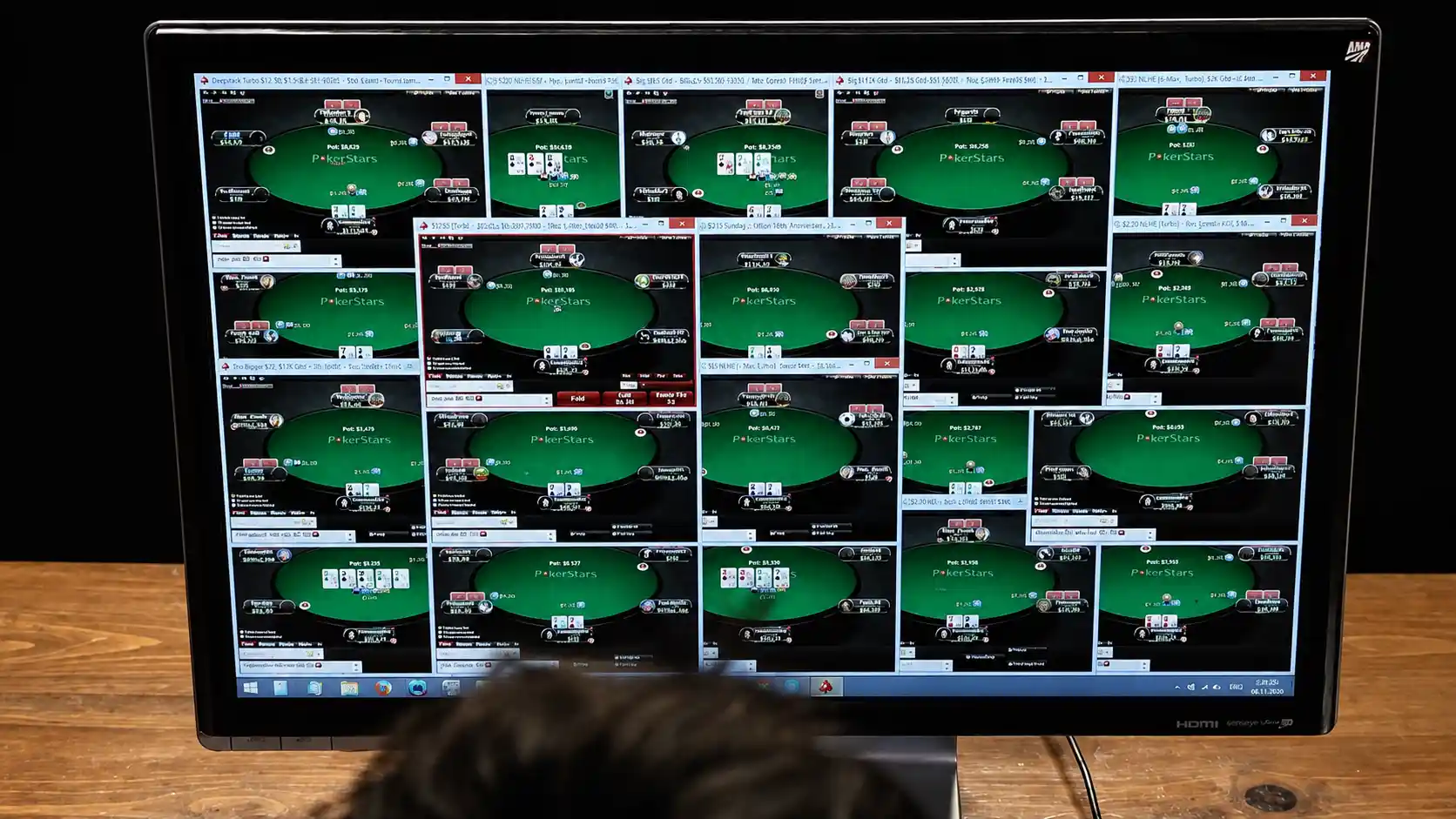
Playing several tables at once has become a common practice for many online poker players. The obvious upside is that you get in more hands in a shorter period.
It is easy to assume that more volume automatically equals more money. However, multi-tabling can cost you a massive chunk of your win rate if you aren’t careful. Let’s look at the hidden dangers of playing too many tables, the history of mass-tabling, and how to find your optimal setup.
The Ghost of Supernova Elite: Why Mass-Tabling Became a Thing
To understand why players still try to play 12, 16, or even 24 tables at once, we have to look back at the “Golden Age” of online poker.
Years ago, platforms like PokerStars offered the legendary Supernova Elite VIP status. The rewards were so insanely lucrative that players completely changed their strategy. The goal wasn't to win money at the tables; the goal was to play maximum volume. A player could break even (or even lose slightly) across 24 tables of cash games or Sit & Gos, but still make $100,000+ a year purely from rakeback and bonuses.
Today, that model is dead. Modern poker sites like GGPoker have restructured their rewards and heavily capped the number of cash game tables you can play (usually a maximum of 4) to protect recreational players and the ecosystem. In today's game, win rate is king, which makes playing too many tables a very dangerous approach.
The Most Expensive Multi Tabling Mistakes
If you push beyond your comfort zone just to generate volume, you will trigger several severe disadvantages:
- Skipping the Warm-Up: A critical mistake, especially among Sit & Go and MTT players, is mass-registering for their maximum number of tables right from minute one. Throwing yourself into the deep end without a mental warm-up leads to immediate EV (Expected Value) loss. You are forced to make rapid decisions before you've found your rhythm, which can easily trigger early tilt if variance doesn't go your way.
- Missing crucial player tendencies: When bouncing rapidly between tables, you only see your own cards. You miss showdowns, timing tells, and opponent betting patterns, making it impossible to exploit weaker players.
- The “Auto-Pilot” trap: Instead of making optimal, thought-out decisions, you revert to playing a basic ABC robotic strategy just to keep up with the constant action.
- The tilt snowball effect: If you suffer a bad beat on one table, you have zero time to mentally recover. That frustration often spills over, negatively influencing your decisions on your other active tables before you even realize it.
In just a few short hours of overwhelmed play, you can lose significantly more money than you would in weeks of focused, single-table grinding.
Optimizing Your Multi Tabling Setup: Monitors, Layouts, and Hotkeys
If you decide to push past the 4-table mark, your physical and software setup becomes just as important as your strategy.
The Hardware: Why You Need Multiple Monitors
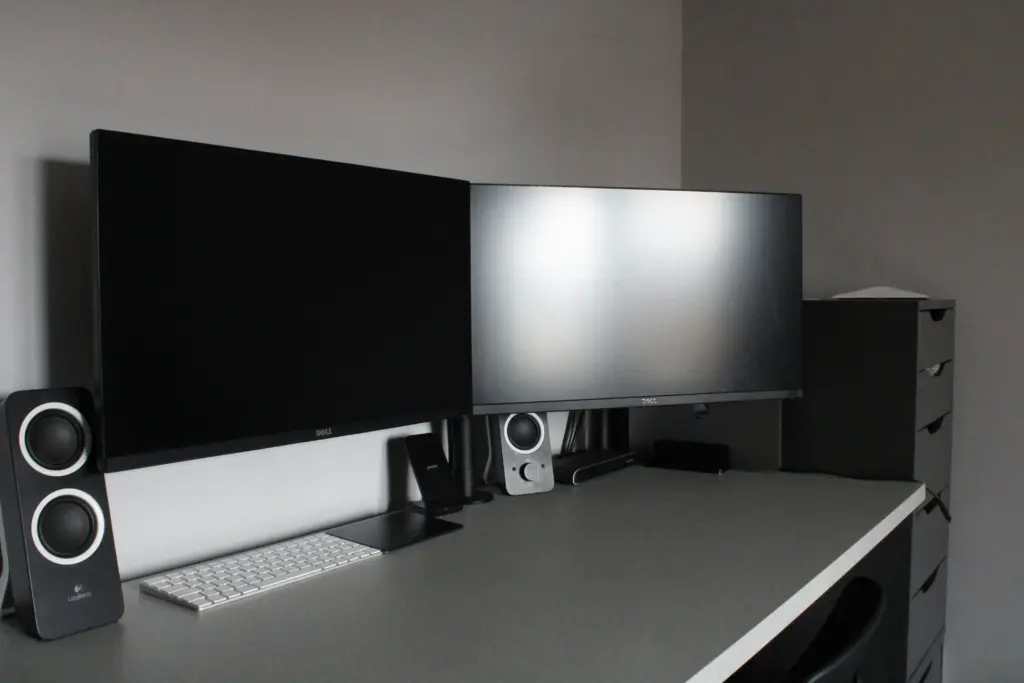
The first step to a good setup often starts with your hardware: investing in a second (or even third) monitor is highly recommended. More screen real estate allows you to comfortably spread out your tables without shrinking them to an unreadable size, which significantly reduces eye strain and mental fatigue during long sessions.
The Software: Tiled vs. Stacked Layouts
Once your screens are ready, you must decide how to arrange your tables in the poker software:
- Tiled Layout: This displays all your tables side by side without overlap. It is the best choice for playing 2 to 6 tables because it lets you follow the action, watch showdowns, and pick up on timing tells, even when you are not involved in a hand.
- Stacked Layout: This places all tables directly on top of each other in a single pile. When it is your turn to act, that specific table automatically pops to the front. This is the only way to physically manage 8+ tables on a single monitor, but it completely blinds you to any action happening outside of your own decisions.
The Execution: Using Hotkeys Safely
Once you start stacking tables, relying on manually moving your mouse to click “Fold” or “Raise” becomes physically exhausting and slow. To navigate efficiently, you must use hotkeys. Mapping your actions to your keyboard or mouse can save you crucial seconds. A highly effective setup includes:
- Right-click: Mapped to “Check” or “Fold”.
- Keyboard shortcuts: Dedicated keys for “Quick Fold”, “Call”, and “All-In”.
While stacked layouts and hotkeys are unavoidable for serious multi-tablers, they come with a massive warning label: the misclick risk. When you are firing through decisions using quick buttons on overlapping tables, it is incredibly easy to accidentally fold pocket Aces or shove all-in with 7-2 offsuit just because the wrong table popped up at the worst possible millisecond. Speed is great, but accuracy is profitable.
How Many Tables Should You Actually Play?
While cash games are mostly capped at 4 tables, tournaments and other formats still allow you to open more. Here is a quick guide to finding your sweet spot:
1 to 4 Tables (The Optimal Range): Most players should never move out of this range. Playing up to four tables allows you to maintain a high win rate, table select carefully, and take notes on opponents. The only downside is that downswings can feel longer because you are playing fewer hands per hour.
5 to 8 Tables (The Grinder's Range): If you are playing MTTs or Sit & Gos, this is a great middle ground. It provides enough action to keep you from getting bored while allowing you to clear bonuses faster. However, you must be confident in your preflop ranges, as your decision-making time is drastically reduced.
9+ Tables (Mass Multi-Tabling): While some tournament regulars still play 10-15 tables simultaneously, their Return on Investment (ROI) per table drops significantly. You substitute quality for sheer quantity. Poker requires immense focus; playing this many tables is more about stamina and muscle memory than actual strategy.
A Quick Takeaway
The ideal number of tables depends entirely on your experience level and format.
When trying to figure out your personal limit, always add just one table at a time. Start your session with just 1 or 2 tables to warm up, and slowly open more as you find your rhythm. If you find yourself timing out or making rushed decisions, you have passed your threshold. Drop a table, regain your focus, and protect your win rate.
FAQ About Multi Tabling Poker