


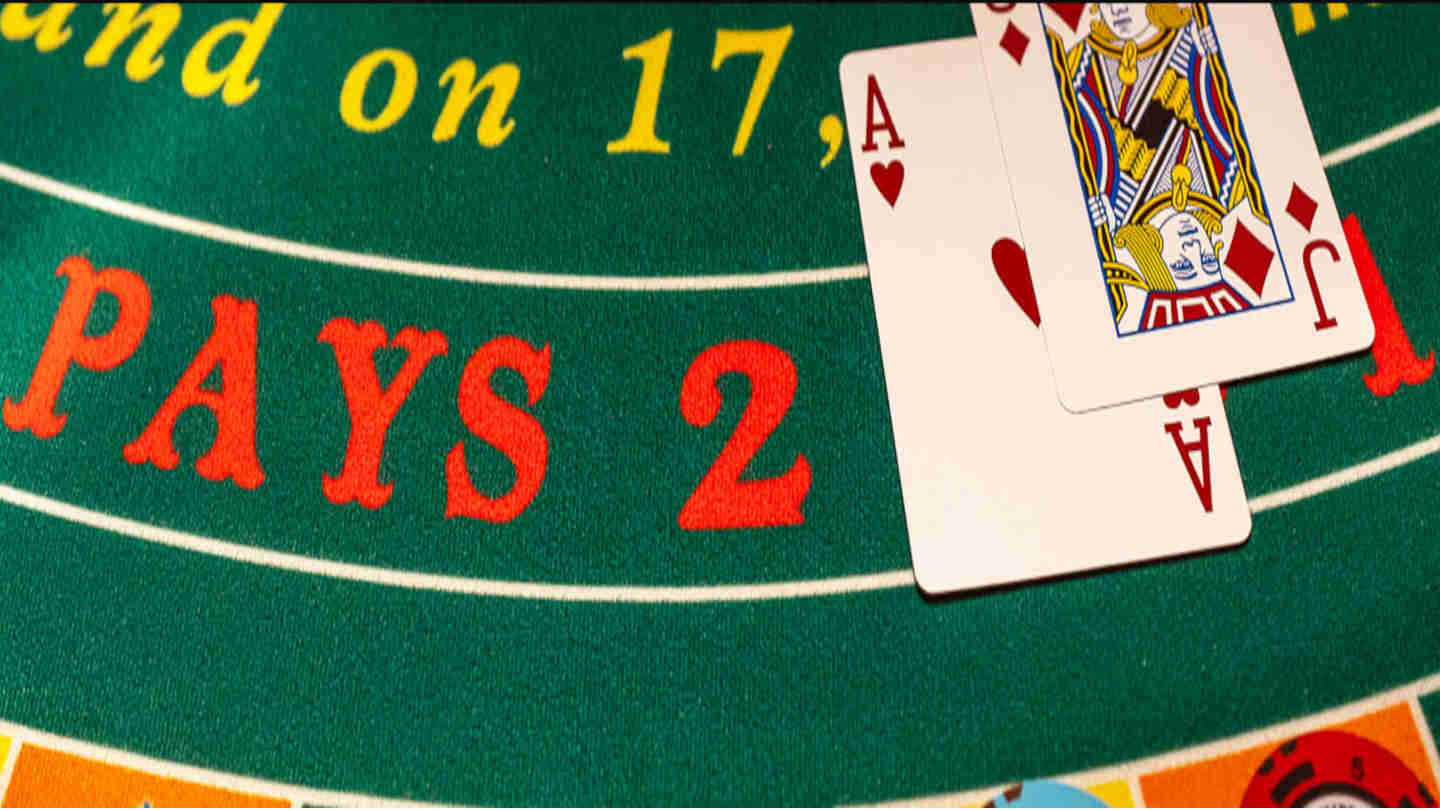
A 3:2 blackjack payout means $15 profit on a $10 winning bet. A 2:1 payout means $20 profit on the same stake. You also get the winning bet back, making the total return $25 or $30. The important detail is which bet the payout applies to.
At a typical 3:2 table, the blackjack payout rewards a natural: an ace and a 10-value card in your first two cards. The 2:1 notice usually refers to insurance, a separate bet on the dealer having blackjack. Both payouts can appear on the same table.
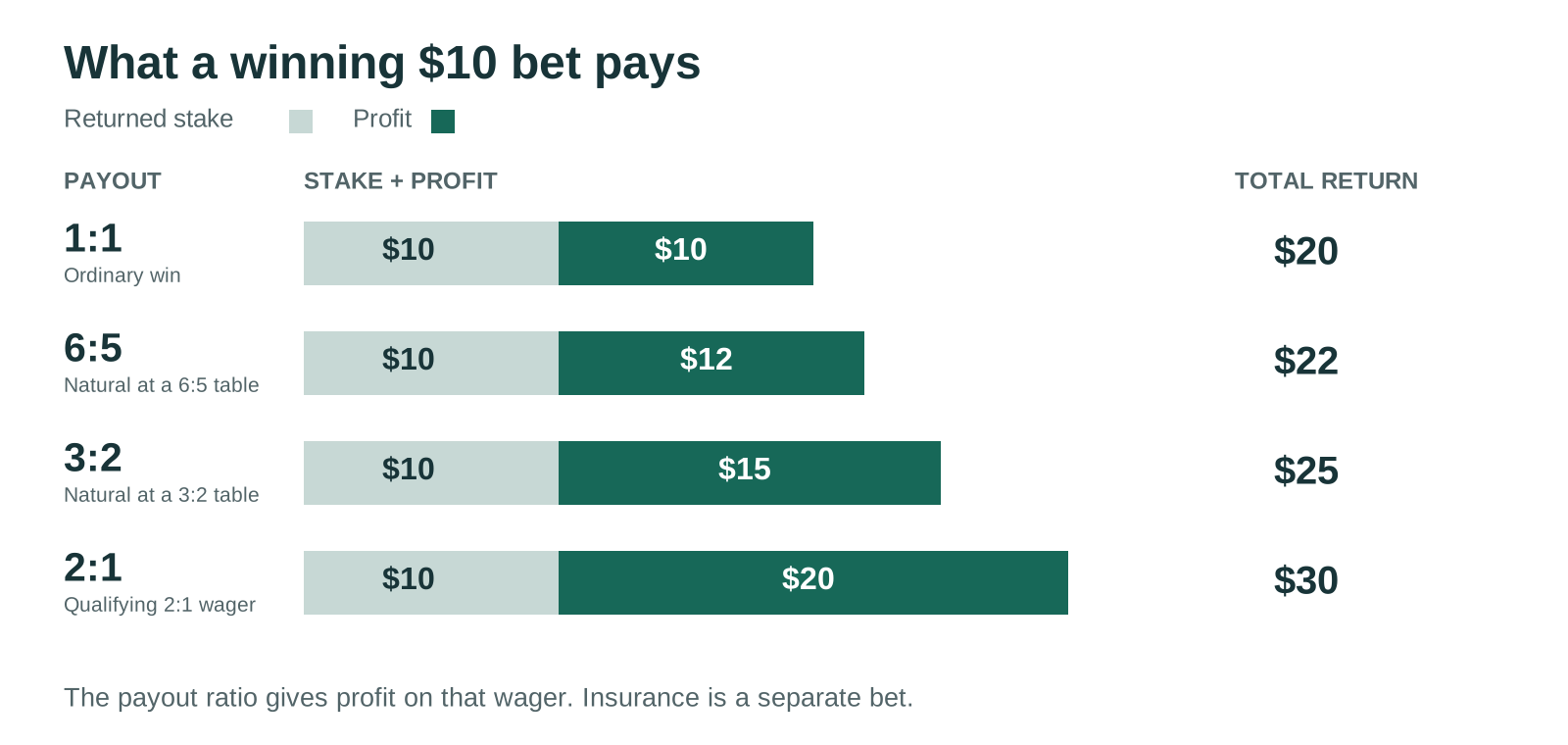
Profit and returned stake are separate. The 2:1 row describes a winning bet that actually qualifies for that payout.
What does 3 to 2 mean in blackjack
The ratio describes your profit. Divide your stake by two, then multiply by three. A $20 natural wins $30, and the dealer returns your $20 stake as well. You collect $50 altogether.
The hand must qualify as blackjack under the table rules. A 10, a 5 and a 6 add up to 21, but they do not earn the natural-blackjack bonus. An ordinary winning hand usually pays 1:1. If both you and the dealer have a natural, the main bet normally pushes and your stake comes back.
An ace with a 10 after splitting also normally counts as an ordinary 21. MGM’s blackjack rules distinguish split hands from natural-blackjack payouts. For the wider game, our blackjack rules guide covers card values and how a hand is settled.
What does a 2 to 1 payout mean
A bet that pays 2 to 1 earns twice the stake in profit when it wins. Put $10 on a qualifying wager and the profit is $20; the $10 stake brings the amount returned to $30. A $20 winning wager at 2:1 would return $60, including $40 profit.
Insurance is the familiar blackjack example. When the dealer shows an ace, you may be offered a side bet on the hidden card being a 10, jack, queen or king. The usual maximum insurance stake is half your main bet. If the dealer has blackjack, insurance pays 2:1. Otherwise, the insurance stake is lost.
How insurance pays on a 20 dollar hand
Suppose your main bet is $20 and your cards are a 10 and a 7. The dealer shows an ace, and you add $10 insurance. You now have $30 on the table. If the dealer reveals a king, your main hand loses $20. Insurance wins $20 profit and returns its $10 stake, so you collect $30. Across both bets, you break even.
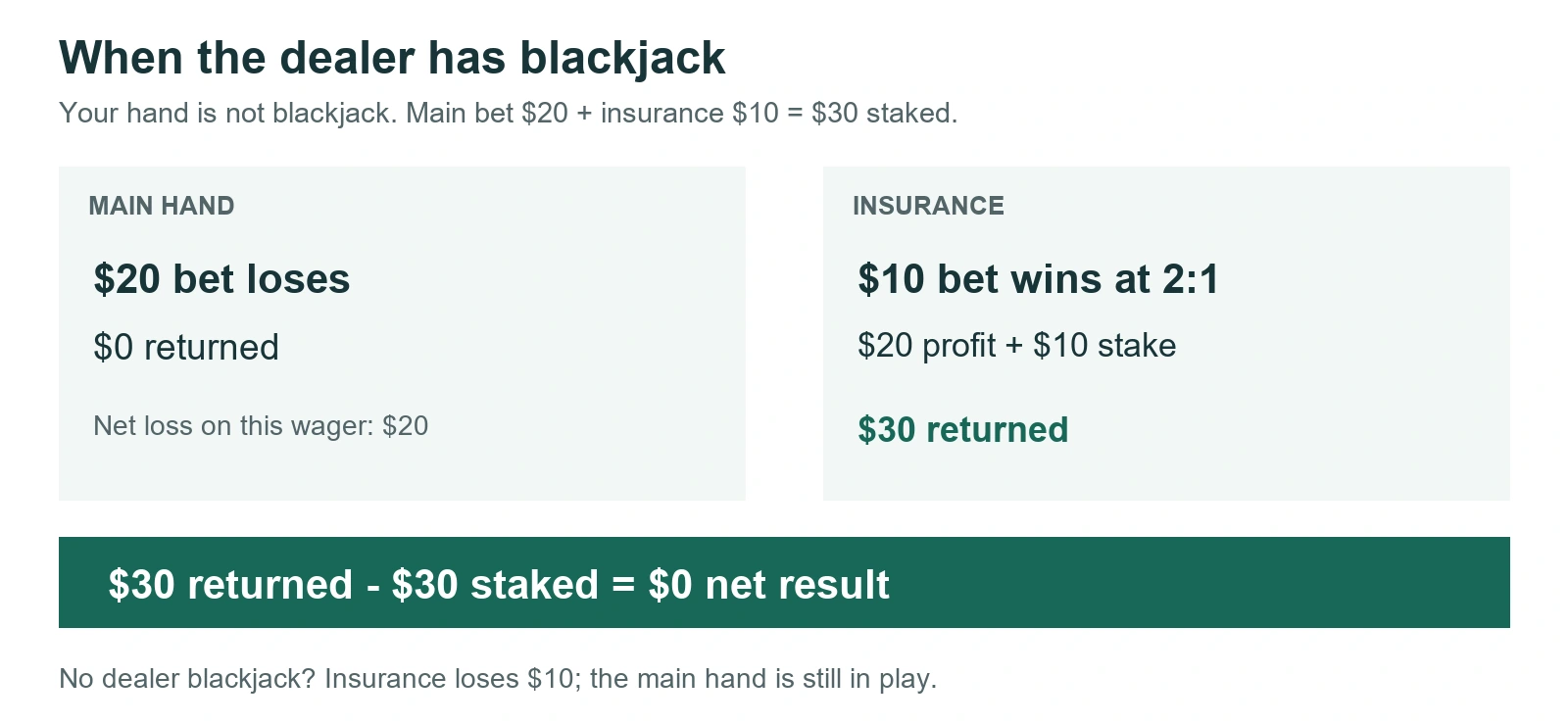
Assumes your hand is not blackjack. If the dealer has no blackjack, the $10 insurance loses and the $20 main hand continues.
If the dealer does not have blackjack, your $10 insurance loses even if you later win the main hand. For example, an ordinary $20 main-hand win returns $40; after the $30 originally staked across both bets, your overall profit is $10.
Bicycle’s insurance rules explain that the two wagers settle separately. Our blackjack insurance guide goes further into the decision. A 2:1 return needs a win rate of one in three just to break even: one $2 win cancels two $1 losses. The payout alone cannot tell you whether the bet is good value.
Is 2 to 1 blackjack better than 3 to 2
For the same qualifying hand and otherwise identical rules, yes. A 2:1 natural pays more than a 3:2 natural. On a $20 bet, that is $40 profit instead of $30. You have gained $10 on that winning natural.
That comparison does not carry over to insurance. A higher payout on a different event comes with a different chance of winning. Standard basic strategy generally declines insurance; seeing “pays 2 to 1” is not a reason to add it to every eligible hand.
There are also special rules that pay 2:1 on particular naturals. For example, Excalibur’s Double Down Madness listing specifies 2:1 for suited blackjacks. That is a condition on the hand, not a promise that every blackjack receives the same bonus. Check the current paytable and the rest of the rules.
Where 6 to 5 fits into the comparison
When two tables offer different payouts on natural blackjack, 3:2 versus 6:5 is another comparison you may encounter. On a $10 winning natural, 3:2 gives you $15 profit and 6:5 gives you $12. With everything else unchanged, you give up $3 each time that hand wins at 6:5.
That change affects the game’s expected return; Wizard of Odds’ rule comparison calculates the effect under a stated ruleset. Our 3:2 versus 6:5 blackjack comparison explains that separate payout choice. Keep insurance out of this calculation because it is a different wager.
Before you try online Blackjack, please read our poker site and online casino reviews. If you're interested in welcome bonuses, check our bonus code collections: Casino Welcome Bonuses.
Common questions about blackjack payouts – FAQ