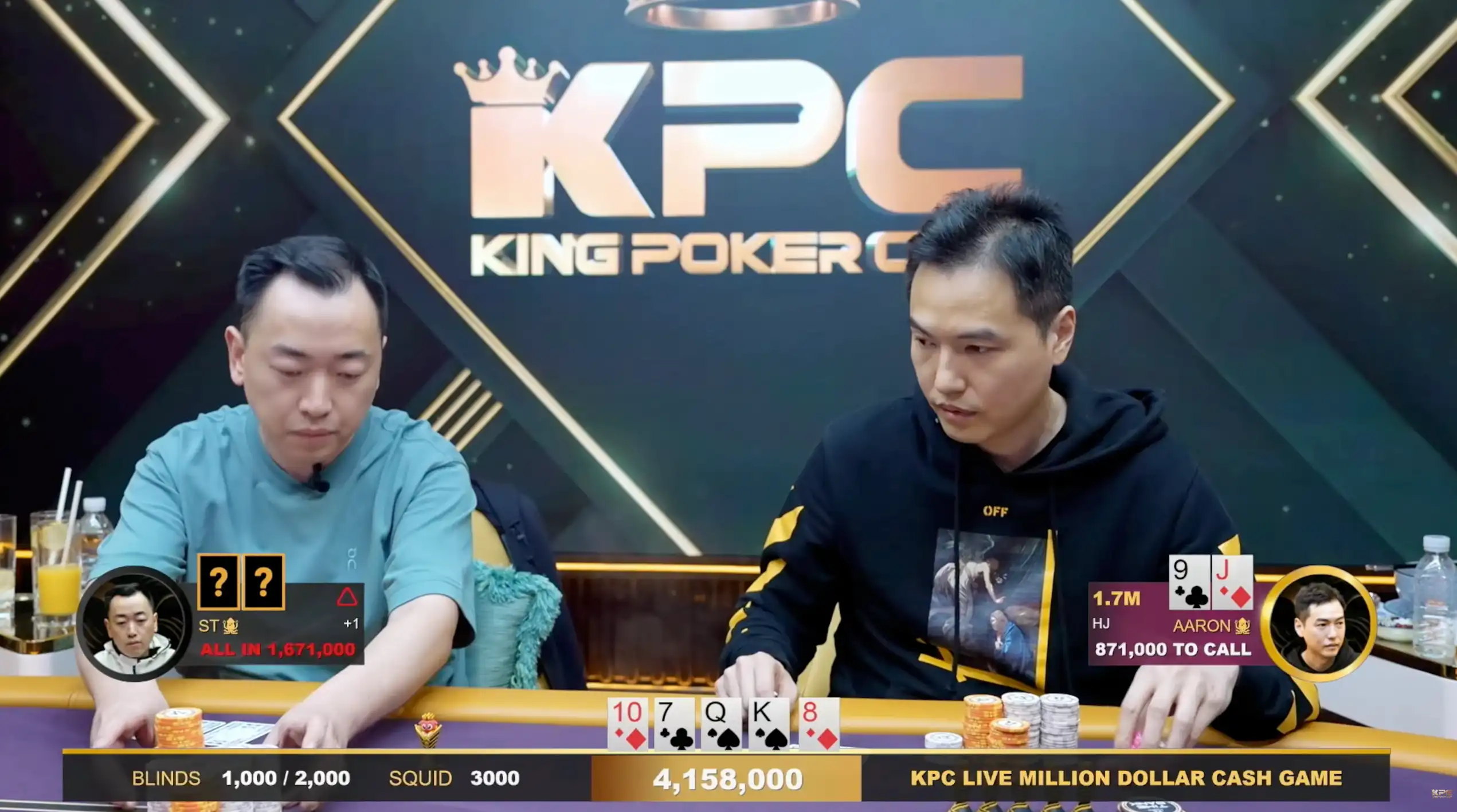

A hero call in poker refers to a situation in which a player makes a difficult call with a relatively weak hand because they believe their opponent is bluffing.
Hero call in poker is a high-risk move that requires experience, great judgment, instincts, and a thorough understanding of your opponent's playing style and tendencies.
While making such a tough call can boost your confidence and completely shift game dynamics in your favor, it can also lead to significant losses in situations where you are wrong. For this reason, it is important to learn to be cautious.
When Should You Consider a Hero Call in Poker?
You should generally only attempt a hero call when:
- Past Reads: You are reasonably certain your opponent is bluffing based on your past observations and betting patterns.
- Board Texture: The hand dynamics and the cards on the table make it mathematically difficult for your opponent to represent a credible value hand.
- Blockers: You hold specific cards (“blockers”) that significantly decrease the likelihood of your opponent having the “nuts” (the best possible hand), increasing your chances of successfully bluff catching.
Poker Strategy Example:
Let’s say that you are playing in a Texas Hold’em tournament and holding 8s 8d on a bubble, your opponent makes an open raise, and you call.
- The flop: comes Ts, 7d, 2c, your opponent makes a ½ c-bet on the flop, and you make a call.
- The turn: is an Ac, your opponent makes another ½ bet on the turn, and you float again based on MDF (Minimum Defense Frequency) theory.
- The river: is a 5s, and your opponent goes all in.
You decide to call. Your opponent shows Kc Qc for a missed straight and flush draw, and you win the pot with your pair of eights. This call is a classic hero call because you called with a relatively weak hand (3rd pair) in a situation where your opponent was representing a very strong poker hand.
Common Hero Calling Mistakes to Avoid
Many players, especially beginners, fall into the trap of making too many hero calls, which can quickly drain a bankroll. Here are the most common pitfalls:
- Calling Against “Nits”: Attempting this move against a very tight, conservative player (a “nit”) is usually a disaster. When these players go all-in on the river, they almost always have the goods.
- Ignoring the Stakes: In low-stakes games, players generally don't bluff enough to make frequent bluff catching profitable. “Leveling” yourself into thinking a micro-stakes player is running a complex bluff is a common error.
- Tilt Calling: Often, what looks like a brave play is actually just a “tilt call.” If you are calling out of frustration rather than a solid mathematical read, you are gambling, not using strategy.
- Ignoring Pot Odds: Even if you think your opponent is bluffing, you need the right price. If you have to call $100 to win a $110 pot, your read needs to be much more accurate than if you're calling $100 to win a $500 pot.
Famous Hero Calls: Viktor “Isildur1” Blom’s Legendary K6 Call
One of the most fearless players in the history of the game is the Swedish legend Viktor Blom, known online as Isildur1. Blom is famous for his “soul reads” and his ability to pull the trigger when others would fold.
One of his most iconic moments occurred during the heads-up finale of the 2018 partypoker MILLIONS Germany against Pavel Plesuv. On a highly coordinated board of Kd-9h-Qh-Ad-5h, Plesuv moved all-in on the river as a massive bluff with a missed diamond draw. After a grueling tank, Blom made an incredible hero call holding Kh 6d. Despite only having second pair with a weak kicker on a scary Ace-high board, he correctly deduced that his opponent's story didn't make sense and found the call to win the massive pot and the tournament.
ONLINE POKER:
RESOURCES: