



Ultimate Texas Hold’em is one of the more popular casino table games, and it has many similarities to regular poker in regards to poker rules. This is probably why many players are drawn to it.
Ultimate Texas Hold’em is played against the house (not other players), so the house has an inherent edge that can’t be overcome.
However, like its big brother, Ultimate Texas Hold’em does contain certain elements of strategy. While you can’t beat the house, your decisions do matter as they will define just how big of an edge the casino has over you.
Playing the optimal strategy will help you close the gap and make your bankroll last much longer.
If you’ve seen the game in your local casino or online and have been wondering what’s it all about, this article is exactly what you’re looking for.
It will explain all you need to know about Ultimate Texas Hold’em, from basic rules to numbers and strategies you need to know to put yourself in a position to have a fair number of winning sessions along the way.
-
1
 Bonus Free $25 SC
What Is Ultimate Texas Holdem Strategy?
Ultimate Texas Hold’em is one of the most popular casino table games, especially among poker players who enjoy structured decision-making without the pressure of playing against other people. Instead of facing multiple opponents, you are playing directly against the dealer, which completely dictates your Ultimate Texas Holdem strategy.
Because of this dynamic, your optimal approach is very different from traditional poker strategy. There are no bluffs, no table dynamics, and no psychological battles. Every decision is mathematical. Your goal is not to outplay another human – it is to minimize the built-in house edge through disciplined betting decisions.
While you cannot eliminate the casino’s advantage, you can significantly control how large that edge becomes. Players who follow structured guidelines keep losses close to the theoretical minimum. Players who guess or play emotionally increase the house edge dramatically.
In this complete guide, we’ll break down:
- How Ultimate Texas Hold’em works
- The betting structure and payout system
- Preflop strategy fundamentals
- Flop and turn decision logic
- The 21-out river rule
- How house edge really works
- Whether the Trips bet is worth it
- Variance and bankroll control
By the end, you’ll understand how to approach the game with a clear strategic framework rather than instinct.
“Ultimate Texas Hold’em isn’t about bluffing or reading opponents – it’s about structured decisions and mathematical discipline”
How Ultimate Texas Hold’em Works (Rules Overview)
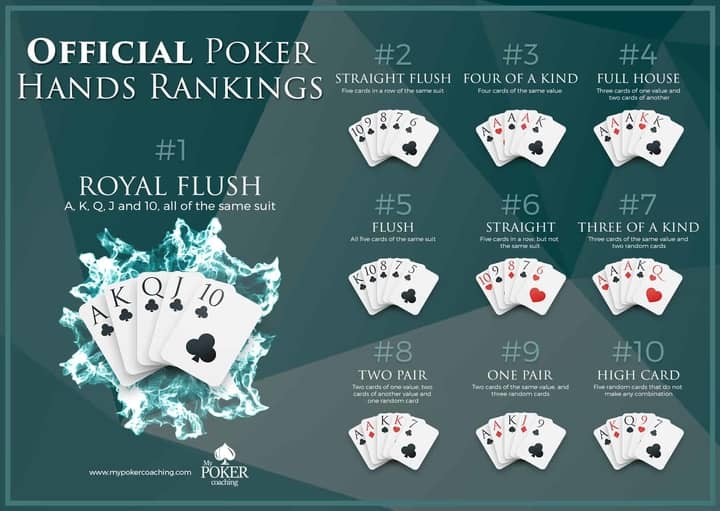
Ultimate Texas Hold’em follows the same poker hand rankings as regular Texas Hold’em. However, the structure is simplified and fixed.
Each round begins with two mandatory bets:
Each round begins with two mandatory bets:
- Ante
- Blind
Both bets must be equal.
There is also an optional Trips bet, which pays independently if you make three-of-a-kind or better.
After placing bets:
- You receive two hole cards.
- The dealer receives two hole cards (face down).
- Five community cards will be dealt.
At this point, you have your first major strategic decision.
You can:
- Check
- Bet 3x the ante
- Bet 4x the ante
If you raise, the rest of the hand plays out automatically.
If you check, the flop is dealt, and you can:
- Check
- Bet 2x the Ante
and If you check again, the turn and river are dealt, and you must either:
- Bet 1x the Ante
- Fold
There is no checking on the river.
The final hands are compared using standard five-card poker hand rankings.
Understanding the Betting Structure and Why It Matters
The betting structure is what creates the strategic depth of Ultimate Texas Hold’em.
Unlike blackjack or roulette, you are making scaled betting decisions throughout the hand.
The key is that earlier raises (4x) have a larger long-term impact than later bets (1x).
That means:
- Good preflop decisions are extremely valuable.
- Bad river calls are extremely costly.
This is why Ultimate Texas Holdem strategy focuses heavily on structured ranges and thresholds.
Dealer Qualification and Payout Structure
The dealer must make at least one pair to qualify.
If the dealer does not qualify:
- Your Ante pushes.
- Play bets pay 1:1 if you win.
- Blind resolves based on your hand strength.
If the dealer qualifies and you win:
- Play pays 1:1.
- Ante pays 1:1.
- Blind pays bonus if straight or better.
Blind Payout Table
- Straight – 1:1
- Flush – 3:2
- Full House – 3:1
- Four of a Kind – 10:1
- Straight Flush – 50:1
- Royal Flush – 500:1
This structure increases variance, especially when large hands connect.
Ultimate Texas Holdem Strategy: Why Preflop Is Critical
The most important part of Ultimate Texas Holdem strategy is preflop aggression.
Why?
Because when you raise 4x the Ante, you commit four times as much money when you statistically have the strongest advantage.
Mathematically, strong starting hands perform significantly better against random dealer holdings.
Raise 4x with:
- Any Ace
- K5o+ and K2s–K4s
- Q8o+, Q6s, Q7s
- JTo, J8s, J9s
- Pocket pairs 33+
These ranges are not arbitrary. They are derived from combinational probability modeling.
For example:
A-x hands dominate many dealer holdings. Raising 4x extracts value when you are ahead a high percentage of the time.
There is rarely a reason to use the 3x raise in optimal strategy.
If your hand does not qualify, checking keeps variance under control.
Example: Why the 4x Raise Matters
Let’s say you hold A♠ 7♦.
Against a random dealer hand, you are ahead preflop more often than not.
By raising 4x:
- You maximize value when you win.
- You capitalize on dealer qualification rules.
- You increase long-term EV.
If you only check, you reduce your long-term profitability in strong situations.
This is why structured preflop play defines your overall expectation.
Flop and Turn Strategy Explained
After the flop, strategy becomes conditional.
Bet 2x if you have:
- Two pair or better
- A hidden pair better than deuces
- Four to a flush (especially with high cards)
Why four to a flush?
Because flush draws have strong equity against random holdings.
If none of these apply, checking avoids investing money when your equity edge is thin.
Unlike traditional poker, you are not protecting against bluffs – you are simply evaluating dealer improvement probability.
“Most of your long-term edge in Ultimate Texas Hold’em comes from correct preflop aggression. The 4x raise is where disciplined players separate themselves from guesswork”
River Strategy and the 21-Out Rule
River decisions define disciplined play.
At this stage, you must either:
- Bet 1x
- Fold
The 21-out rule simplifies this decision.
If the dealer has:
- 21 or more clean outs → fold
- 20 or fewer outs → call
An out is any unseen card that allows the dealer to make a stronger five-card hand.
At river, 45 unseen cards remain.
If more than roughly half create a losing outcome, calling becomes negative expectation.
For example:
You hold Ten-high.
Board is A-Q-8-6-4.
Any paired board card, plus Kings and Jacks, may beat you.
Once you exceed 21 outs, folding is correct.
For a detailed breakdown of how to calculate outs step-by-step, see our full guide on counting outs in Ultimate Texas Hold’em.
“River mistakes are the most expensive mistakes in Ultimate Texas Hold’em. Discipline at this stage protects your bankroll more than any other decision”

Understanding the House Edge in Context
When played optimally, the house edge in Ultimate Texas Hold’em is approximately 2.18% relative to the Ante bet. However, when measured against your total initial wager (Ante + Blind), the house edge drops to an incredibly low 0.53%. This makes it highly competitive compared to many other casino table games.
That makes it relatively competitive compared to many casino games.
However, poor decisions increase this edge dramatically.
Examples:
- Calling river bets when dealer outs exceed 25
- Raising weak hands preflop
- Overplaying Trips
- Ignoring the qualification math
The difference between disciplined and undisciplined play can double the effective house edge.
The house edge calculations are based on combinational probability models similar to those used in traditional casino math analysis.
“You can’t eliminate the house edge – but you can decide how much of it you give back”
The Trips Bet: Entertainment or Strategy?
The Trips bet pays independently if you make three-of-a-kind or better.
Typical payouts:
- Trips – 3:1
- Straight – 4:1
- Flush – 7:1
- Full House – 9:1
- Quads – 30:1
- Straight Flush – 40:1
- Royal Flush – 50:1
Mathematically, the Trips bet carries a higher house edge than the base game.
It increases volatility and variance.
Strategic players treat it as entertainment, not core strategy.
For detailed numbers and probability breakdowns, see our dedicated Trips bet guide.
Variance vs House Edge: Understanding the Difference
Many players confuse variance with house edge.
House edge = long-term mathematical disadvantage.
Variance = short-term swings.
Ultimate Texas Hold’em has moderate variance because:
- Multiple bets stack.
- Blind payouts can spike returns.
- Trips increases volatility further.
Proper bankroll planning prevents variance from forcing poor decisions.

Bankroll Management for Structured Play
Even a perfect Ultimate Texas Holdem strategy cannot eliminate variance.
Best practices:
- Set session bankroll limits.
- Avoid chasing losses.
- Keep consistent bet sizing.
- Avoid progressive jackpots unless specifically budgeting for volatility.
Discipline preserves longevity.
Playing ultimate Texas Holdem Online
Many reputable online poker platforms also offer casino table games, including Ultimate Texas Hold’em.
If you already use a trusted poker site, this can be a convenient way to practice structured play in a familiar environment.
Always verify licensing and payout transparency before playing.

Ultimate Texas Hold’em vs 3 Card Poker: Which Is Better?
Many players who enjoy casino poker variants often compare Ultimate Texas Hold’em to 3 Card Poker. While both games use traditional poker hand rankings and are played against the dealer, the strategic depth is quite different.
Ultimate Texas Hold’em offers more decision points, including preflop raises, flop betting, and river decisions. Because of this, a structured Ultimate Texas Hold'em strategy can meaningfully reduce the house edge when played correctly.
3 Card Poker, on the other hand, is much faster and simpler. There are fewer decision layers, and outcomes rely more heavily on initial hand strength rather than staged betting structure.
If you prefer a game with more strategic control and mathematical decision-making, Ultimate Texas Hold’em is generally the better option. If you prefer quick hands with less complexity, 3 Card Poker may be more appealing.
For a full side-by-side breakdown, see our comparison of 3-Card Poker vs Ultimate Texas Hold’em.
Frequently Asked Questions About Ultimate Texas Hold’em Strategy
Final Thoughts
Ultimate Texas Hold’em rewards structure, discipline, and mathematical clarity.
It may look like poker, but it plays like a probability-driven casino game.
By understanding preflop ranges, river thresholds, payout mechanics, and bankroll management, you ensure that every decision aligns with optimal strategy.
And in a mathematically structured game, discipline is everything.