

Long before poker livestreams attracted hundreds of thousands of viewers, poker TV shows were already creating some of the most memorable moments in the game's history.
While tournament results are easy to track on HendonMob, cash game results have always been far more difficult to measure. Unlike the highly tracked world of online poker, the biggest private live games remain almost completely hidden from the public, making it impossible to know who the biggest cash game winners of all time really are. Televised poker and modern poker livestreams offer one of the few reliable ways to compare long-term cash game results.
From the groundbreaking episodes of High Stakes Poker and Poker After Dark to modern livestreams like Hustler Casino Live and Triton Poker, televised poker has transformed how fans experience the game. These shows have showcased legendary bluffs, million-dollar pots, and some of the biggest personalities in poker, helping bring No-Limit Hold'em to a global audience.
But which poker TV shows have had the biggest impact on the game? And perhaps even more interestingly, which players have won the most money across these televised cash games?
In this guide, we'll explore the evolution of poker TV shows, look back at the series that shaped modern poker entertainment, and analyze all-time winner leaderboards to see which players have enjoyed the greatest success under the cameras.
The Evolution of Poker TV Shows
Today's poker fans have more ways than ever to watch high-stakes action, from professionally produced livestreams to on-demand broadcasts on YouTube. However, the journey began long before platforms like Hustler Casino Live or Triton Poker became household names among poker enthusiasts.
The poker boom of the early 2000s sparked a new era of televised poker. As interest in Texas Hold'em exploded following Chris Moneymaker‘s historic 2003 WSOP Main Event victory, broadcasters quickly realized that poker could become compelling television. Innovative production techniques such as hole-card cameras, expert commentary, and cinematic editing transformed what had once been a niche card game into mainstream entertainment.
Over the following two decades, poker TV shows continued to evolve. Early productions focused on carefully edited episodes featuring a small group of elite professionals, while modern livestreams deliver hours of unedited cash game action several times a week. Although the format has changed dramatically, the goal has remained the same: bringing viewers closer to the biggest personalities, the highest stakes, and the most memorable poker hands.
Some shows have become genuine icons of the game, while others helped shape today's livestream era behind the scenes. Before looking at the biggest winners in televised poker history, it's worth revisiting the series that defined each generation of poker fans.
The Most Influential Poker TV Shows
Televised poker has undergone significant evolution over the past two decades, with each era introducing new formats, personalities, and ways to experience the game. While dozens of poker shows have aired since the early 2000s, only a handful have left a lasting mark on the game and its fans.
High Stakes Poker
Premiering in 2006, High Stakes Poker is widely regarded as one of the greatest poker TV shows ever produced. Unlike tournament broadcasts, it focused exclusively on deep-stacked cash games featuring many of the world's best players, including Daniel Negreanu, Doyle Brunson, Phil Ivey, Tom Dwan, Antonio Esfandiari, and Patrik Antonius.
The show's combination of massive pots, entertaining table talk, and groundbreaking hole-card technology helped redefine how poker was presented on television. Even today, many fans consider High Stakes Poker the gold standard for televised cash games.
Poker After Dark
Originally launched as a single-table sit-and-go format, Poker After Dark offered a more intimate look at poker's biggest personalities. The show's relaxed atmosphere allowed viewers to see a different side of professional players, with conversations and rivalries becoming just as memorable as the hands themselves.
In later years, Poker After Dark shifted toward high-stakes cash games, creating some of the most entertaining sessions of the late poker boom era and cementing its place among the most iconic poker TV shows.
Full Tilt Poker TV
During the online poker boom, Full Tilt Poker TV featured many of the site's sponsored professionals on television. Featuring stars such as Phil Ivey, Tom Dwan, Gus Hansen, and Patrik Antonius, the show helped bridge the gap between online poker and live high-stakes cash games.
Although its run was relatively short, Full Tilt Poker TV remains closely associated with one of poker's most memorable eras.
Live at the Bike
While many classic poker shows relied on edited broadcasts, Live at the Bike helped pioneer the livestream format. Regular live cash game coverage gave viewers an unfiltered look at real sessions, laying the foundation for many of the poker livestreams that followed.
Hustler Casino Live
Few shows have transformed poker entertainment as dramatically as Hustler Casino Live. Since its launch, the series has attracted millions of viewers with celebrity appearances, enormous pots, and an aggressive lineup selection that consistently produces entertaining action.
Its frequent broadcasts have also generated one of the largest televised cash game databases available today.
Triton Poker Cash Games
Although Triton is best known for its high roller tournaments, its cash game broadcasts have become must-watch events for poker fans. Featuring nosebleed stakes and a mix of elite professionals and wealthy recreational players, Triton regularly produces some of the biggest pots ever seen on camera.
Who Are the Biggest Winners in Poker TV Shows?
For many years, comparing players across different poker TV shows was nearly impossible. While fans could remember iconic hands and legendary sessions, there was no comprehensive database tracking who actually won the most money on televised cash games.
That changed with the launch of HighRoll Poker, a database that records results from dozens of televised cash games and poker livestreams. Instead of relying on memorable moments alone, fans can now explore long-term results, compare players across different shows, and analyze the biggest winners throughout televised poker history.
One important distinction, however, is that HighRoll Poker separates traditional televised cash games from modern poker livestreams. While both formats feature high-stakes action, they represent very different eras of poker. Classic television shows typically aired a limited number of carefully edited episodes, whereas today's livestreams produce hundreds of hours of uncut cash game footage every year.
Because of these differences, it's more meaningful to examine each leaderboard separately before comparing how televised poker has evolved.
All-Time Televised Cash Game Leaderboard
The all-time televised cash game leaderboard offers a fascinating snapshot of poker's biggest winners during the television era. Unlike modern livestreams, these results come from a relatively small number of carefully produced broadcasts, making every appearance far more significant.
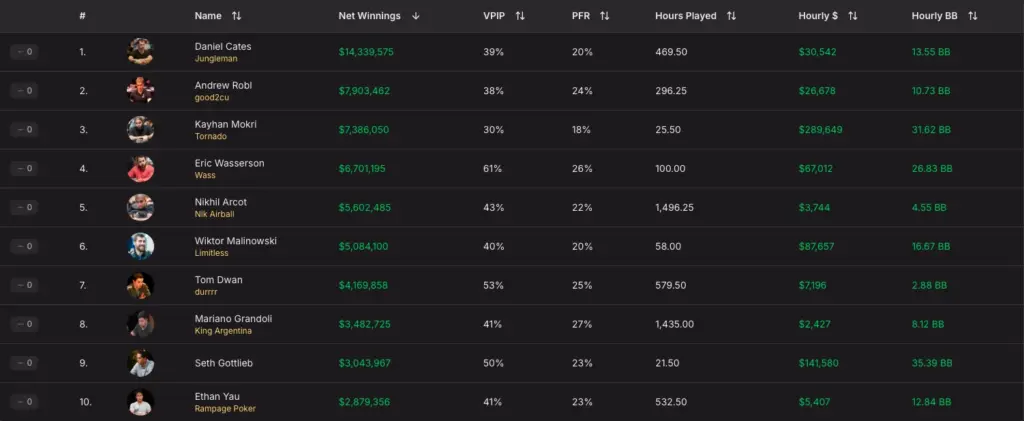
Perhaps unsurprisingly, Daniel “Jungleman” Cates sits comfortably at the top of the leaderboard. Widely regarded as one of the strongest No-Limit Hold'em players of his generation, Cates has consistently excelled in some of poker's toughest televised lineups.
Close behind him are familiar names such as Andrew Robl, Kayhan Mokri, Tom Dwan, and Rick Salomon. Although each player reached the top differently, they all share one thing in common: a willingness to battle regularly in the highest-stakes cash games ever shown on television.
The leaderboard also highlights an interesting aspect of televised poker. Since classic poker TV shows produced relatively few episodes each year, building a large profit required consistent success over many years rather than simply playing a high volume of sessions. As a result, these rankings reflect longevity just as much as individual performances.
All-Time Poker Livestream Leaderboard
While the all-time televised cash game leaderboard reflects the golden age of poker on television, the livestream leaderboard tells the story of the game's modern era.
Shows like Hustler Casino Live, Live at the Bike, Bally Live Poker, and Poker at the Lodge have dramatically increased both the number of games played and the amount of publicly available data. Instead of a handful of edited episodes each season, today's poker fans can watch live cash games several times a week, with some productions broadcasting for hundreds of hours every year.
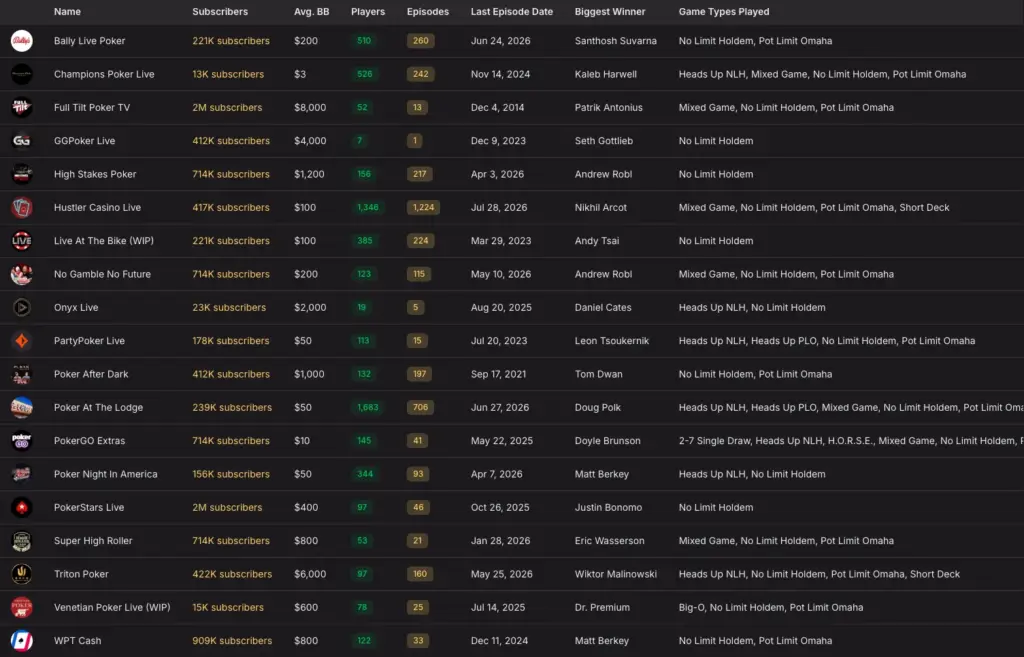
As a result, the all-time livestream leaderboard looks noticeably different from its televised counterpart.
The larger sample sizes also make the leaderboard a fascinating record of the modern high-stakes scene. Rather than being defined by a few iconic sessions, today's rankings reflect years of consistent participation in one of poker's most competitive and widely viewed environments.
How Poker TV Shows Evolved Into Livestreams
For much of the 2000s, poker TV shows followed a familiar formula. Episodes were carefully edited, commentary was added in post-production, and viewers saw only the most entertaining hands from each session. This approach helped create iconic series like High Stakes Poker and Poker After Dark, where every episode felt like a highlight reel rather than a complete poker session.
As technology improved, however, the way fans consumed poker began to change. Faster internet connections, YouTube, and dedicated streaming platforms made it possible to broadcast cash games live, allowing viewers to experience every decision, conversation, and momentum swing as they happened. Instead of waiting a week for the next edited episode, fans could now watch hours of uninterrupted high-stakes poker several times a week.
This shift also changed the games themselves. Traditional poker TV shows often featured invitation-only lineups with a relatively small group of elite professionals. Modern livestreams still attract many of the world's best players, but they also include successful entrepreneurs, content creators, celebrities, and wealthy recreational players. The result is a wider variety of playing styles and personalities, making the broadcasts appealing to both serious poker fans and casual viewers.
The move to livestreaming also explains why today's leaderboards look so different from those of the television era. Modern productions generate far more hours of publicly available cash game footage than classic poker shows ever did, giving players many more opportunities to build long-term results. Rather than replacing televised games, livestreams have expanded on their foundation, bringing the game to a larger audience while preserving the excitement that made the original poker TV shows so memorable.
Final Thoughts
From the groundbreaking episodes of High Stakes Poker to today's record-breaking livestreams, poker TV shows have played a defining role in the game's growth. They introduced millions of viewers to high-stakes cash games, showcased poker's biggest personalities, and created many of the hands that fans still talk about years later.
While classic television productions and modern livestreams differ in format, both have contributed to poker's evolution in their own way. Traditional broadcasts laid the foundation with carefully produced episodes and unforgettable lineups, while livestreams expanded the concept by making high-stakes poker more accessible and more frequent than ever before.
Thanks to databases like HighRoll Poker, fans can now look beyond memorable moments and compare results across different eras of televised poker. Although no leaderboard can fully capture a player's skill or the countless variables that influence cash game results, they provide a fascinating way to explore poker history through real data.
Whether you prefer the legendary lineups of Poker After Dark, the iconic battles of High Stakes Poker, or the nonstop action of modern livestreams, one thing is certain: poker has never been more entertaining to watch, and the next unforgettable moment could be just one session away.
Related reading: If you are strictly interested in the biggest winners and most iconic hands from the Lodge or HCL, read our comprehensive guide on all-time Hustler Casino Live results.
Frequently Asked Questions (FAQ)